
 cleft palate

- Cleft palate is a congenital disease in which the palate does not fully fuse during the fetal period.This affects eating, speech, and hearing.
- G-type mutation in DNA region rs2240307Research shows that people with the disease tend to be at higher risk of developing
- Early surgical treatment and comprehensive intervention by a specialized teamcan prevent complications and improve quality of life.
Overview A congenital condition, cleft lip and palate is characterized by an opening or cleft that occurs when the roof of the mouth (palate) does not fully fuse during fetal development. The palate includes the hard palate at the front and the soft palate at the back. Fissures can affect either or both of these areas and can range from a small opening at the back of the mouth to a large fissure that reaches into the nasal cavity. This condition may occur as part of a syndrome with other abnormalities or alone. People with cleft lip and palate are at risk for problems with eating, speaking, and hearing. Eating problems are caused by food and liquids returning to the nose through the opening in the roof of the mouth. Speech problems are also common, and the palate plays an important role in pronunciation, affecting clarity of voice and sound. Also, fluid buildup and infection in the middle ear caused by a fissure causing the Eustachian tube to malfunction can lead to hearing loss. Treatment usually involves surgery to close the tear and may require multiple surgeries as the child grows. Early treatment by a team of experts, including speech therapists, otolaryngologists, and maxillofacial surgeons, can go a long way in preventing complications and improving quality of life. A study by Yue Han and colleagues at Nanjing Medical University revealed that the risk of developing cleft palate is associated with a DNA region called rs2240307. There are three genotypes in this DNA region: AA, AG, and GG, and it was found that people with the G genotype tend to have a higher risk of cleft palate.
What is cleft palate?
Cleft palate is a congenital disorder characterized by an opening or cleft that occurs when the roof of the mouth (palate) does not fully fuse during fetal development.The palate includes the hard palate at the front and the soft palate at the back, and clefts can affect either or both.
Causes and mechanisms of cleft palate
Cleft palate is caused by a combination of genetic and environmental factors. The main factors are as follows.
- Genetic factors:G-type mutation in DNA region rs2240307 is associated with risk of developing disease
- Genetic factors:Mutations in the DNA region rs730570 are also involved in cleft palate
- Syndromic:May occur as part of a syndrome with other birth defects
- Single occurrence:There are cases where it occurs alone without any other abnormalities.
Main symptoms and complications of cleft palate
If you have a cleft palate, the following problems may occur:
- Dietary issues:Food or liquid flowing back into the nose through the opening in the roof of the mouth
- Speech disorder:The palate plays an important role in pronunciation and influences clear speech.
- Hearing impairment:Fluid accumulation and infection in the middle ear caused by Eustachian tube dysfunction due to fissures, leading to hearing loss
Difference between cleft palate and cleft lip
| Comparison items | cleft palate | cleft lip |
|---|---|---|
| part | upper part of the mouth (palate) | upper lip |
| appearance | It may be difficult to tell from the outside | clearly visible externally |
| influence | Eating/Speech/Hearing | Appearance/Breastfeeding |
| simultaneous occurrence | There are cases where both occur simultaneously as cleft lip and palate. | |
Cleft palate treatment
Treatment involves closing the fissure.surgeryContains. Multiple surgeries may be required as the child grows.
- Surgery:Cleft closure surgery (usually around 12 to 18 months)
- Speech therapy:Improving pronunciation and vocalization
- ENT treatment:Middle ear infection management and hearing protection
- Orthodontics:Adjustment of tooth alignment and bite
Speech therapist/otolaryngologist/maxillofacial surgeonEarly treatment by a team of experts is important to prevent complications and improve quality of life.
The relationship between genes and cleft palate
Relationship between DNA region rs2240307 and onset risk
A study by Yue Han et al. of Nanjing Medical University (1) revealed that the DNA region rs2240307 is associated with the risk of developing cleft palate.
- There are three genotypes of rs2240307: AA, AG, and GG.
- Genotype with type G mutation(AG/GG) people tend to have a higher risk of cleft palate
Genotype distribution in Japanese (rs2240307)
| Genotype | Percentage of Japanese people | percentage of the world |
|---|---|---|
| AA type | 72.4% | 97.1% |
| AG type | 25.3% | 2.8% |
| GG type | 2.2% | 0.1%以下 |
Genotype distribution in Japanese (rs730570)
| Genotype | Percentage of Japanese people | percentage of the world |
|---|---|---|
| GG type | 80.8% | 3.1% |
| GA type | 18.1% | 29.0% |
| AA type | 1.0% | 67.8% |
Rationale for testing
Superficial DNA region: cleft palate
The gene region most strongly associated with cleft palate is rs2240307. The distribution of isomorphic genotypes in Japan is as follows.
- AA
72.4 % - AG
25.3 % - GG
2.2 %
Another gene region involved in cleft palate is rs730570. The distribution of isomorphic genotypes in Japan is as follows
- GG
80.8 % - GA
18.1 % - AA
1.0 %
Basis for inspection
A study by Yue Han and his colleagues at Nanjing Medical University revealed that the risk of developing cleft palate is linked to genes. There is a region called rs2240307 in the human genome, and there are two types of mutations, A and G, in the gene in this region. It was found that people with type A mutations tend to have a higher risk of cleft palate.
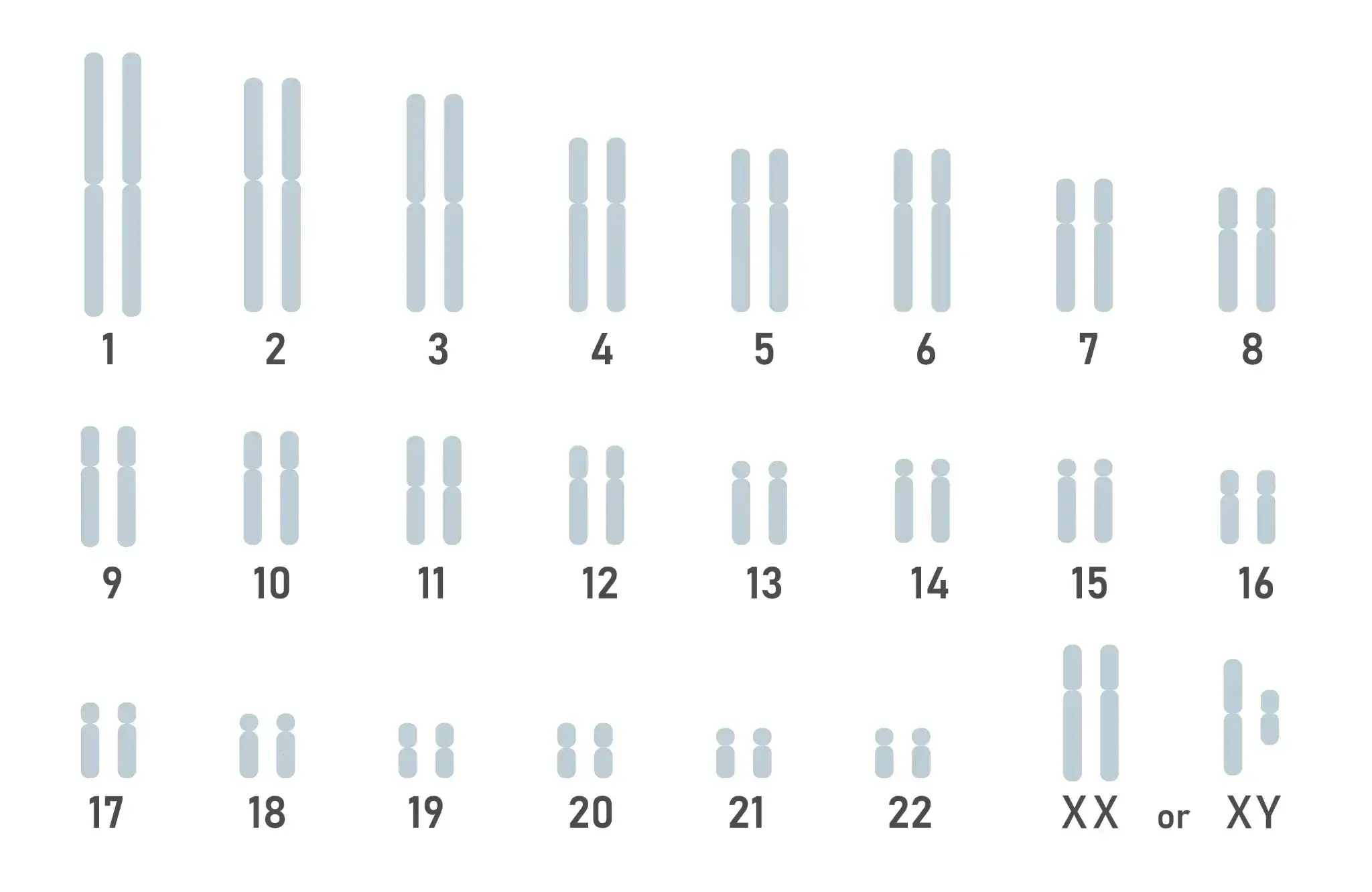
The DNA region investigated this time
Schematic diagram of DNA map present in cells
- ■
- ■
- ■
- ■
- ■
- ■
- ■
- ■
- ■
Related genes
| Related genes | AXIN2 |
|---|---|
| Related genes | LINC00523 |
Frequently asked questions (FAQ)
Q1. What is cleft palate?
Cleft palate is a congenital disorder that occurs when the roof of the mouth (palate) does not fully fuse during fetal development.It can affect the hard palate, soft palate, or both, causing problems with eating, speech, and hearing.
Q2. What is the cause of cleft palate?
What causes cleft palate?A combination of genetic and environmental factorsIt is. People with the G-type mutation in the DNA region rs2240307 tend to have a higher risk of developing the disease (1). Nutritional deficiencies and drug exposure during pregnancy may also play a role.
Q3. What is the treatment for cleft palate?
Treatment involves closing the fissure.surgerymay require multiple surgeries to accommodate growth.Speech therapist/otolaryngologist/maxillofacial surgeonEarly intervention by a specialized team such as the following is important.
Q4. Can genetic testing determine the risk of cleft palate?
By examining the genotype of the DNA region rs2240307,Understanding trends in the risk of developing cleft palateYou can. Studies have shown that people with the G mutation genotype (AG/GG) tend to be at higher risk (1).
Q5. What is the difference between cleft palate and cleft lip?
cleft palate isCleft in the upper part of the mouth (palate)and cleft lip iscleft upper lipIt is. Sometimes both occur at the same time (cleft lip and palate). In some cases, cleft palate is difficult to tell from the outside, whereas cleft lip can be clearly seen from outside.
References
- Reference link 1: 2014 Aug., Yue Han, J Oral Pathol Med
- Reference link 2: 2019 Oct., Lulin Huang, PLoS Genet