
 cleft lip

- Cleft lip is a malformation in which the upper lip is congenitally separated.It occurs in approximately 1 in 700 people.
- Type A mutation in DNA region rs730570Research shows that people with the disease tend to be at higher risk of developing
- surgerycan repair cracks and improve facial appearance and function.
Overview Cleft lip is a congenital abnormality in which the upper lip is separated or split. The severity of this abnormality can range from a small cut in the lip to a large gap extending into the nose. Cleft lip can occur on one or both sides and can also affect the upper jaw bone and gums. A cleft lip occurs during early pregnancy when the tissues in the lips and mouth area do not fuse together properly. Causes can be a combination of genetic and environmental factors, such as certain drugs, malnutrition, or exposure to harmful substances during pregnancy. Externally, a cleft lip is a noticeable gap in the upper lip and can also affect the shape of the nose. This can cause problems with eating, speaking, and ear infections. A cleft lip can occur on its own, or it can be combined with a cleft palate, which is a split in the roof of the mouth. Treatment for cleft lip includes surgery. This repairs cracks and improves the appearance and function of your face. Surgery is usually performed within the first year of life and may require additional treatment and support. A study by Huang et al. from the University of Electronic Science and Technology of China revealed that the risk of developing cleft lip is associated with a DNA region called rs730570. There are three genotypes in this DNA region: GG, GA, and AA, and it was found that people with genotype A tend to have a higher risk of cleft lip.
What is cleft lip?
Cleft lip is a malformation in which the upper lip is congenitally separated or split.The incidence is approximately 1 in 700 people, with a slightly higher incidence of approximately 1 in 500 people in Asian populations.
Causes and mechanisms of cleft lip
Cleft lip occurs when the tissues in the lips and oral cavity area do not fuse together properly during early pregnancy (4 to 7 weeks). The following factors are involved in a complex manner:
- Genetic predisposition:Family history increases risk of developing
- Environmental factors:Associated with taking certain drugs, smoking and drinking alcohol during pregnancy
- Malnutrition:It has been reported that folic acid deficiency increases the risk of developing the disease.
- Exposure to hazardous substances:Exposure to chemicals during pregnancy is a risk factor
Classification of cleft lip
Cleft lip is classified as follows depending on the degree of abnormality and location of occurrence.
| classification | Features | Frequency of occurrence |
|---|---|---|
| Unilateral cleft lip | A tear occurs on one side of the lip. | Approximately 75% of the total |
| bilateral cleft lip | Cracks occur on both sides of the lips | Approximately 25% of the total |
| cleft lip and palate | Combination of cleft lip and cleft palate | Approximately 50% of cleft lip cases |
Difference between cleft lip and cleft palate
cleft lipis a cleft that occurs in the upper lip;cleft palateis a fissure that occurs in the roof of the mouth (palate).
- Cleft lip: A cleft occurs from the upper lip to the nose.
- Cleft palate: A cleft occurs in the hard and soft palate in the oral cavity.
- Cleft lip may occur alone or in combination with cleft palate.
Main symptoms and effects of cleft lip
In addition to its cosmetic characteristics, cleft lip can cause the following functional problems:
- Difficulty feeding:Inability to suck properly during the newborn period
- Speech disorder:Difficulty learning normal pronunciation
- Recurrent otitis media:Abnormal Eustachian tube function increases the risk of infection
- Malalignment of teeth:Affects the upper jaw bone and gums, causing problems with tooth alignment
Cleft lip treatment
The center of treatment issurgeryIt will be held according to the following schedule.
- Labiaplasty:Performed at 3 to 6 months of age to repair cleft lip
- Palatoplasty:(At the time of complication) Perform palate repair at 9 to 18 months of age
- Additional surgery:Corrective surgery will be performed as necessary as the child grows.
- Adjunctive therapy:Orthodontics, language training, hearing tests, etc. are performed in parallel.
The relationship between genes and cleft lip
Relationship between DNA region rs730570 and onset risk
A study by Huang et al. from the University of Electronic Science and Technology of China found that the DNA region rs730570 is associated with the risk of developing cleft lip.
- There are three genotypes of rs730570: GG, GA, and AA.
- Genotype with type A mutationpeople tend to be at higher risk of cleft lip
Genotype distribution in Japanese (rs730570)
| Genotype | Percentage of Japanese people | percentage of the world |
|---|---|---|
| GG type | 80.8% | 3.1% |
| GA type | 18.1% | 29.0% |
| AA type | 1.0% | 67.8% |
Rationale for testing
External DNA region: cleft lip
The gene region that most strongly affects cleft lip is rs730570. The distribution of isomorphic genotypes in Japan is as follows.
- GG
80.8 % - GA
18.1 % - AA
1.0 %
Basis for inspection
A study by Huang et al. from the University of Electronic Science and Technology of China revealed that the risk of developing cleft lip is related to genes. There is a region called rs730570 in the human genome, and there are two types of mutations, G and A, in the gene in this region. It was found that people with the type A mutation tend to have a higher risk of cleft lip.
The DNA region investigated this time
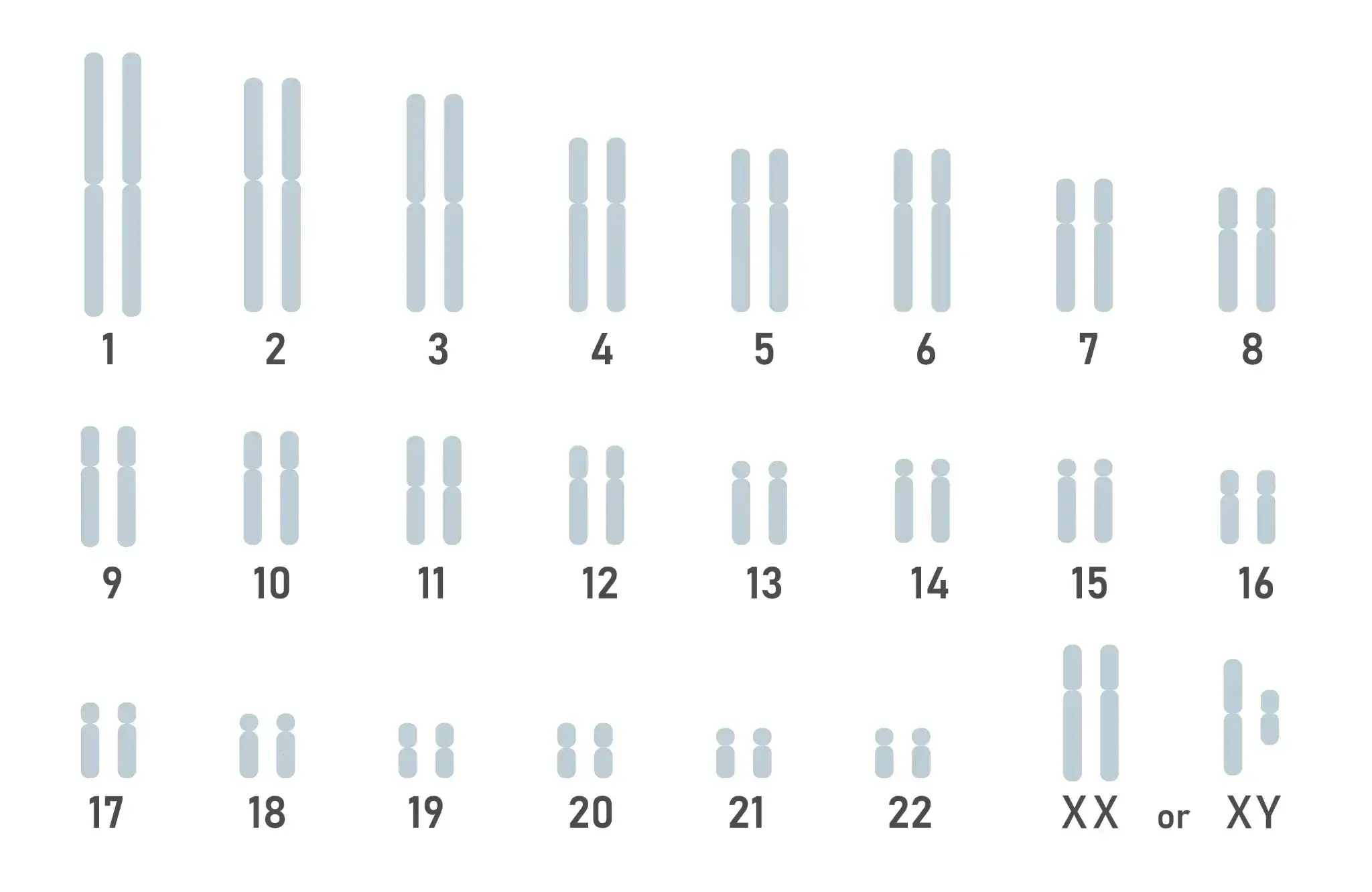
Schematic diagram of DNA map present in cells
- ■
- ■
- ■
- ■
- ■
- ■
- ■
- ■
- ■
Related genes
| Related genes | LINC00523 |
|---|
Frequently asked questions (FAQ)
Q1. What is cleft lip?
Cleft lip is a malformation in which the upper lip is congenitally separated or split.It occurs in approximately 1 in 700 people, can be unilateral or bilateral, and may be accompanied by cleft palate. It occurs early in pregnancy due to a combination of genetic and environmental factors.
Q2. What is the cause of cleft lip?
Cleft lip occurs during early pregnancy (4 to 7 weeks) when the tissues in the lip and oral cavity area do not fuse together properly. The cause isGenetic predisposition, taking certain medications, malnutrition (folate deficiency), exposure to harmful substances during pregnancyMultiple factors are involved in a complex manner.
Q3. What is the difference between cleft lip and cleft palate?
cleft lipis a cleft that occurs in the upper lip;cleft palateis a fissure that occurs in the roof of the mouth (palate). Cleft lip can occur on its own, but it can also occur in combination with cleft palate.
Q4. Can genetic testing determine the risk of cleft lip?
By examining the genotype of the DNA region rs730570,Understanding trends in the risk of developing cleft lipYou can. Studies have found that people with the genotype A tend to be at higher risk.
Q5. What is the treatment for cleft lip?
The center of treatment issurgeryIt is. A cheiloplasty is usually performed around 3 to 6 months of age to repair the cleft. As they grow, they may need support such as additional surgery, orthodontics, or language training.
References
- Reference link 1: 2019 Oct., Lulin Huang, PLoS Genet