
 chronic myeloid leukemia

- Chronic myeloid leukemia (CML) is a blood cancer in which granulocytes are overproduced due to an abnormality in the Philadelphia chromosome.The annual incidence rate is approximately 1 to 2 cases per 100,000 people.
- C-type mutation in DNA region rs4869742A study at Sungkyunkwan University School of Medicine found that people with this condition tend to have a higher risk of developing chronic myeloid leukemia.
- The prevalence of type C mutation (CC+CT) in Japanese people is33.9%This is a low percentage compared to the global average of 90.7%.
Overview Chronic myeloid leukemia (CML) is a type of cancer that starts in the bone marrow (the part of the bone where new blood cells are made). In particular, overproduction of granulocytes, a type of immature white blood cell, occurs, which negatively affects normal blood cell production and function. One of the characteristics of CML is its association with the Philadelphia chromosome (the chromosome where the genetic abnormality occurs). The Philadelphia chromosome occurs when parts of chromosomes 9 and 22 are swapped, leading to the production of a protein that causes overproduction of white blood cells. There may be no symptoms in the early stages, but as the disease progresses, symptoms include fatigue, weight loss, sweating at night, and swelling and pain in the spleen on the left side of the abdomen. Additionally, an abnormal increase in white blood cells weakens your immune system, making you more susceptible to infections. CML is typically divided into three stages: chronic, accelerated, and blast crisis. The chronic stage is stable and often treatable, whereas the accelerated and blast stages progress more rapidly and are more difficult to treat. CML is treated with drugs called tyrosine kinase inhibitors (TKIs), which block the action of genes produced by the Philadelphia chromosome. This drug has made it possible to significantly improve the longevity and quality of life of patients. Research by Kim and colleagues at Sungkyunkwan University School of Medicine revealed that the risk of developing chronic myeloid leukemia is associated with a DNA region called rs4869742. There are three genotypes in this DNA region: CC, CT, and TT, and it was found that people with the T genotype tend to have a higher risk of developing chronic myeloid leukemia.
What is chronic myeloid leukemia (CML)?
Chronic myeloid leukemia (CML) is a blood cancer in which the bone marrow produces too many granulocytes, a type of immature white blood cell.The Philadelphia chromosome, caused by the translocation of parts of chromosomes 9 and 22, causes the BCR-ABL fusion gene to produce an abnormal tyrosine kinase protein, which causes uncontrolled white blood cell proliferation.
Main causes of chronic myeloid leukemia
The following factors are involved in the development of CML:
- Philadelphia chromosome (Ph chromosome):Generated by reciprocal translocation t(9;22)(q34;q11) between chromosomes 9 and 22. Detected in approximately 95% of CML patients
- BCR-ABL fusion gene:Formed on the Ph chromosome and produces a tyrosine kinase that is always active. causes hyperproliferation of white blood cells
- Environmental factors:High doses of radiation exposure are one risk factor. Long-term exposure to chemicals (such as benzene) has also been linked.
Chronic myeloid leukemia stages and symptoms
CML is classified into three stages, each with different symptoms and treatment response.
| disease stage | Main symptoms | Features |
|---|---|---|
| chronic phase | No symptoms to mild fatigue/splenomegaly | Approximately 90% of patients are diagnosed during this period. High therapeutic effect |
| acceleration period | Fever, weight loss, bone pain, increased splenomegaly | Blasts appear in the blood at 10-19%. Increased treatment resistance |
| acute crisis stage | Severe infection, bleeding tendency, organ failure | Blasts increased to over 20%. Course similar to acute leukemia |
How to diagnose chronic myeloid leukemia
The following tests are used to diagnose CML:
- Blood test:A significant increase in the number of white blood cells (more than 100,000/μL in some cases), increased basophils, and increased platelets were confirmed.
- Bone marrow examination:Bone marrow aspiration evaluates cell composition and blast percentage in bone marrow
- Chromosome testing (karyotype analysis):Detects the presence or absence of the Philadelphia chromosome. Essential for definitive diagnosis
- FISH test:Rapid detection of BCR-ABL fusion genes using fluorescence in situ hybridization
- RT-PCR test:Quantitative measurement of BCR-ABL mRNA. Used to monitor treatment effectiveness
Comparison of treatments for chronic myeloid leukemia
| treatment method | Target | Features |
|---|---|---|
| Tyrosine kinase inhibitors (TKIs) | First choice for chronic phase | Imatinib, dasatinib, nilotinib, etc. 5 year survival rate approximately 90% |
| Allogeneic hematopoietic stem cell transplantation | TKI resistance/acceleration phase/blast crisis phase | The only radical treatment. Matched donor required. There is a risk of transplant-related death. |
| chemotherapy | In case of blast crisis/TKI intolerance | Decreases the white blood cell count with hydroxyurea, etc. Symptomatic treatment |
CML isWith the advent of TKIs, the prognosis has significantly improved, and the 5-year survival rate for patients who start treatment in the chronic stage is approximately 90%.has been reached.
Relationship between genes and chronic myeloid leukemia
Relationship between DNA region rs4869742 and chronic myeloid leukemia
A 2011 study by Kim et al. of Sungkyunkwan University School of Medicine revealed that the risk of developing chronic myeloid leukemia is associated with the DNA region rs4869742.
- There are three genotypes of rs4869742: CC, CT, and TT.
- Genotype with type C mutation(CC type/CT type) people tend to have a higher risk of chronic myeloid leukemia
- This gene region is related to the CCDC170 gene and may be involved in controlling blood cell proliferation.
Comparison of genotype distribution in Japanese and the world (rs4869742)
| Genotype | Percentage of Japanese people | percentage of the world |
|---|---|---|
| CC type | 3.5% | 48.4% |
| CT type | 30.4% | 42.3% |
| TT type | 66.0% | 9.2% |
The prevalence of type C mutation (CC+CT) in Japanese people is33.9%, which is lower than the global average of 90.7%. This indicates that the frequency of the rs4869742 risk variant, type C, is distributed lower than the world average in the Japanese population.
Rationale for testing
External DNA region: chronic myeloid leukemia
The gene region that most strongly affects chronic myeloid leukemia is rs4869742. The distribution of isomorphic genotypes in Japan is as follows.
- CC
3.5 % - CT
30.4 % - TT
66.0 %
Basis for inspection
Research by Kim and colleagues at Sungkyunkwan University School of Medicine revealed that the risk of developing chronic myeloid leukemia is related to genes. There is a region called rs4869742 in the human genome, and there are two types of mutations, C and A, in the gene in this region. It was found that people with type C mutations tend to have a higher risk of developing chronic myeloid leukemia.
The DNA region investigated this time
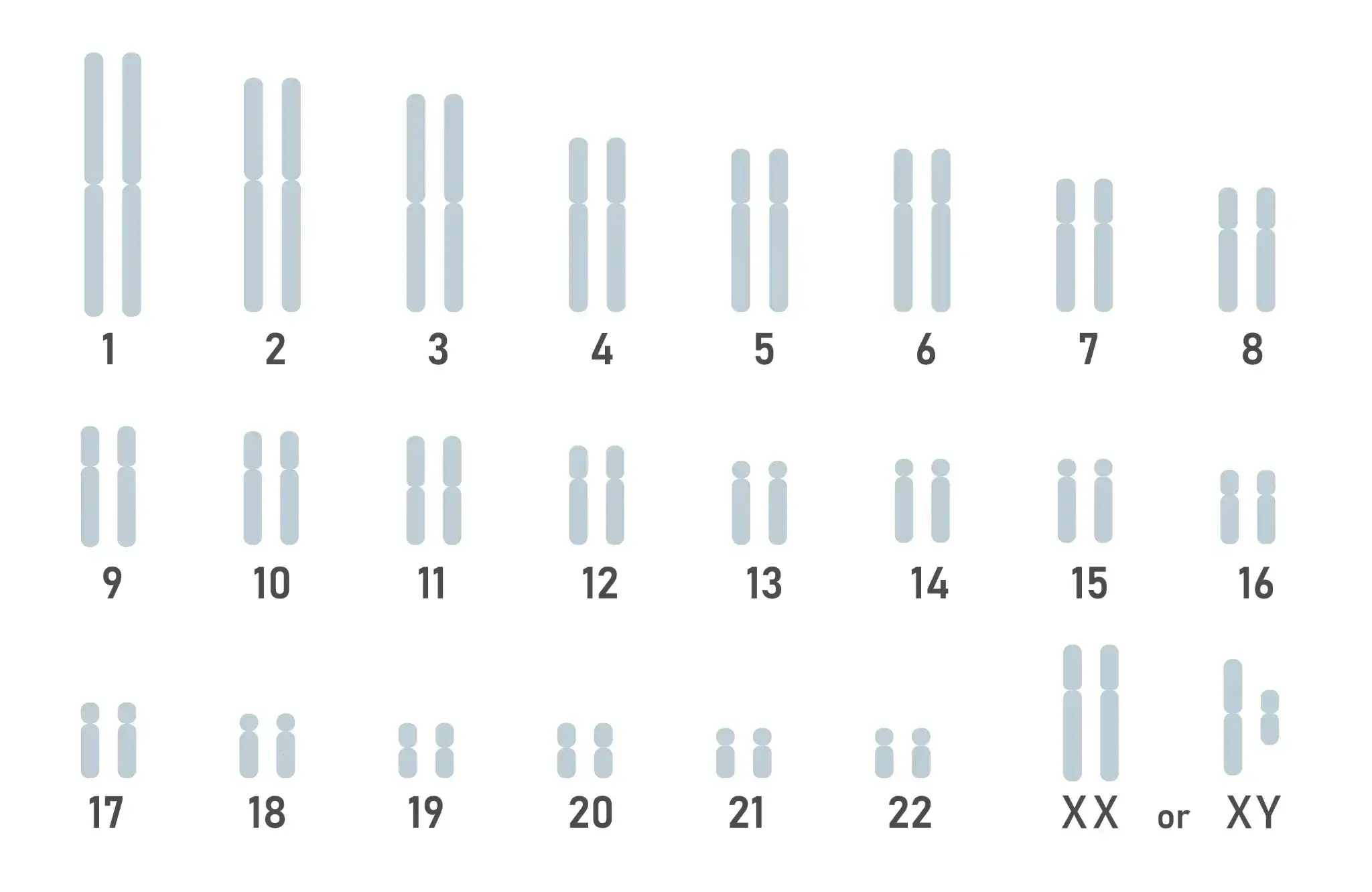
Schematic diagram of DNA map present in cells
- ■
- ■
- ■
- ■
- ■
- ■
- ■
- ■
- ■
Related genes
| Related genes | CCDC170 |
|---|
Frequently asked questions (FAQ)
Q1. What is chronic myeloid leukemia (CML)?
Chronic myeloid leukemia (CML) is a type of blood cancer in which the bone marrow produces too many immature white blood cells (granulocytes).It is caused by the Philadelphia chromosome, which is caused by a translocation between chromosomes 9 and 22, and the BCR-ABL fusion gene produces an abnormal tyrosine kinase, causing uncontrolled proliferation of white blood cells. The annual incidence is approximately 1 to 2 cases per 100,000 people.
Q2. What are the main symptoms of chronic myeloid leukemia?
In the early stage (chronic stage)Often asymptomaticHowever, as it progressesFatigue, weight loss, sweating at night, pain in the left side of the abdomen due to enlarged spleenwill appear. During the accelerated phase and acute crisis phase, fever, bone pain, bleeding tendency, and susceptibility to infections become prominent, making treatment difficult.
Q3. Is chronic myeloid leukemia related to genes?
Yes.A 2011 study by Kim et al. of Sungkyunkwan University School of Medicine found that the DNA region rs4869742 is associated with the risk of developing chronic myeloid leukemia.There are three genotypes of rs4869742: CC, CT, and TT, and people with the C mutation genotype tend to be at higher risk.
Q4. What is the distribution of chronic myeloid leukemia genotype (rs4869742) in Japanese people?
The genotype distribution of rs4869742 in Japanese people isCC type 3.5%, CT type 30.4%, TT type 66.0%It is. Globally, 48.4% are CC type, 42.3% are CT type, and 9.2% are TT type, and Japanese people have a lower prevalence of type C mutation than the world average.
Q5. What treatments are available for chronic myeloid leukemia?
The first choice is tyrosine kinase inhibitors (TKIs), such as imatinib, dasatinib, and nilotinib.With the advent of TKIs, the 5-year survival rate for chronic stage CML has improved to approximately 90%. Allogeneic hematopoietic stem cell transplantation is considered in cases of TKI resistance or accelerated phase/blast crisis phase. Chemotherapy (such as hydroxyurea) is used to acutely reduce the white blood cell count.
References
- Reference link 1: 2011 Jun., Dong Hwan Dennis Kim, Blood