
 Chronic low-grade inflammation

- Chronic low-grade inflammation is a mild inflammatory state that persists in the body without any symptoms.and is detected by a slight increase in CRP levels.
- G-type mutation in DNA region rs4774590Erasmus University research finds that people with the disease tend to be at higher risk of chronic low-grade inflammation.
- It is a risk factor for developing cardiovascular disease, type 2 diabetes, and certain cancers.Early detection through regular CRP testingis the key to prevention
Overview C-reactive protein (CRP) is a substance produced by the liver in response to inflammation in the body. Measurement of CRP levels in the blood is used to assess the progression of acute or chronic inflammation. Elevated CRP readings indicate that your body is mounting an immune response. Chronic low-grade inflammation does not show the large increases seen in acute inflammation, but CRP levels rise slightly above the normal range. Chronic low-grade inflammation refers to ongoing low-grade inflammation without obvious symptoms of inflammation such as swelling or pain. This condition can be harmful to your health over time and can lead to diseases such as cardiovascular disease, diabetes, and certain cancers. Therefore, by testing CRP levels, it is important to detect chronic inflammation early even when there are no symptoms, and to lead to early treatment. A study by Ligthart et al. from Erasmus University revealed that the risk of developing chronic low-grade inflammation is associated with a DNA region called rs4774590. There are three genotypes in this DNA region: GG, AG, and AA, and it was found that people with the G genotype tend to have a higher risk of chronic low-grade inflammation.
What is chronic low-grade inflammation?
Chronic low-grade inflammation is a state in which low-grade inflammation occurs continuously in the body without showing obvious inflammatory symptoms such as swelling or pain.Unlike acute inflammation, it is difficult to notice because there are no symptoms.
What is CRP (C-reactive protein)? Role as an indicator of inflammation
CRP (C-reactive protein) is a protein produced by the liver in response to inflammation in the body.It is. By measuring the CRP level in the blood, the presence and extent of inflammation can be objectively evaluated.
- Acute inflammation:CRP level significantly increased (10 mg/L or more)
- Chronic low-grade inflammation:CRP level is slightly above the normal range (about 1-3 mg/L)
- Normal range:CRP level less than 1mg/L
Disease risks caused by chronic low-grade inflammation
Chronic low-grade inflammation progresses without any noticeable symptoms and increases the risk of the following diseases:
| Disease category | specific disease | mechanism |
|---|---|---|
| cardiovascular system | Arteriosclerosis, myocardial infarction, stroke | Arterial plaque forms due to chronic inflammation of blood vessel walls |
| metabolic system | Type 2 diabetes/metabolic syndrome | Increased insulin resistance worsens blood sugar control |
| tumor | Colon cancer, lung cancer, etc. | Persistent inflammation promotes DNA damage in cells |
| nervous system | alzheimer's disease | Chronic inflammation in the brain accelerates neurodegeneration |
Difference between acute inflammation and chronic low-grade inflammation
| Comparison items | acute inflammation | Chronic low-grade inflammation |
|---|---|---|
| symptoms | Swelling, redness, pain, fever | No symptoms |
| CRP value | Significantly increased to over 10mg/L | Slight increase of about 1-3 mg/L |
| duration | Converges in a few days to weeks | Lasts for months to years |
| cause | Infectious diseases/trauma/surgery | Obesity, smoking, stress, aging, genetic factors |
| Health effects | Healing response (normal immune defense function) | Increased risk of developing cardiovascular disease, diabetes, and cancer |
Relationship between genes and chronic low-grade inflammation
Relationship between DNA region rs4774590 and chronic low-grade inflammation
A study by Ligthart et al. from Erasmus University revealed that the risk of developing chronic low-grade inflammation is associated with the DNA region rs4774590.
- There are three genotypes of rs4774590: GG, GA, and AA.
- Genotype with type G mutationPeople with type GG and type GA tend to have a higher risk of chronic low-grade inflammation.
Comparison of genotype distribution in Japanese and the world (rs4774590)
| Genotype | Percentage of Japanese people | percentage of the world |
|---|---|---|
| GG type | 28.4% | 35.6% |
| GA type | 49.7% | 48.1% |
| AA type | 21.7% | 16.2% |
Comparison of genotype distribution in Japanese and the world (rs7280982)
| Genotype | Percentage of Japanese people | percentage of the world |
|---|---|---|
| GG type | 27.4% | 58.6% |
| GA type | 49.8% | 35.8% |
| AA type | 22.6% | 5.4% |
Comparison of genotype distribution in Japanese and the world (rs9987289)
| Genotype | Percentage of Japanese people | percentage of the world |
|---|---|---|
| AA type | 0.1%以下 | 0.8% |
| AG type | 1.9% | 16.6% |
| GG type | 98.0% | 82.4% |
The G-type mutation prevalence (GG+GA) in rs4774590 in Japanese people is78.1%This is a slightly lower percentage than the global average of 83.7%. On the other hand, for rs7280982, the proportion of AA type is 22.6% in Japanese people, compared to the world average of 5.4%, which is a large difference, indicating genetic diversity between populations.
Rationale for testing
Representative DNA region: chronic low-grade inflammation
The gene region that most strongly influences chronic low-grade inflammation is rs4774590. The distribution of isomorphic genotypes in Japan is as follows.
- GG
28.4 % - GA
49.7 % - AA
21.7 %
Another gene region involved in chronic low-grade inflammation is rs7280982. The distribution of isomorphic genotypes in Japan is as follows
- GG
27.4 % - GA
49.8 % - AA
22.6 %
Another gene region involved in chronic low-grade inflammation is rs9987289. The distribution of isomorphic genotypes in Japan is as follows
- AA
0.1%以下 - AG
1.9 % - GG
98.0 %
Basis for inspection
A study by Ligthart et al. from Erasmus University revealed that the risk of developing chronic low-grade inflammation is linked to genes. There is a region called rs4774590 in the human genome, and there are two types of mutations, G and A, in the gene in this region. It was found that people with type G mutations tend to have a higher risk of chronic low-grade inflammation.
The DNA region investigated this time
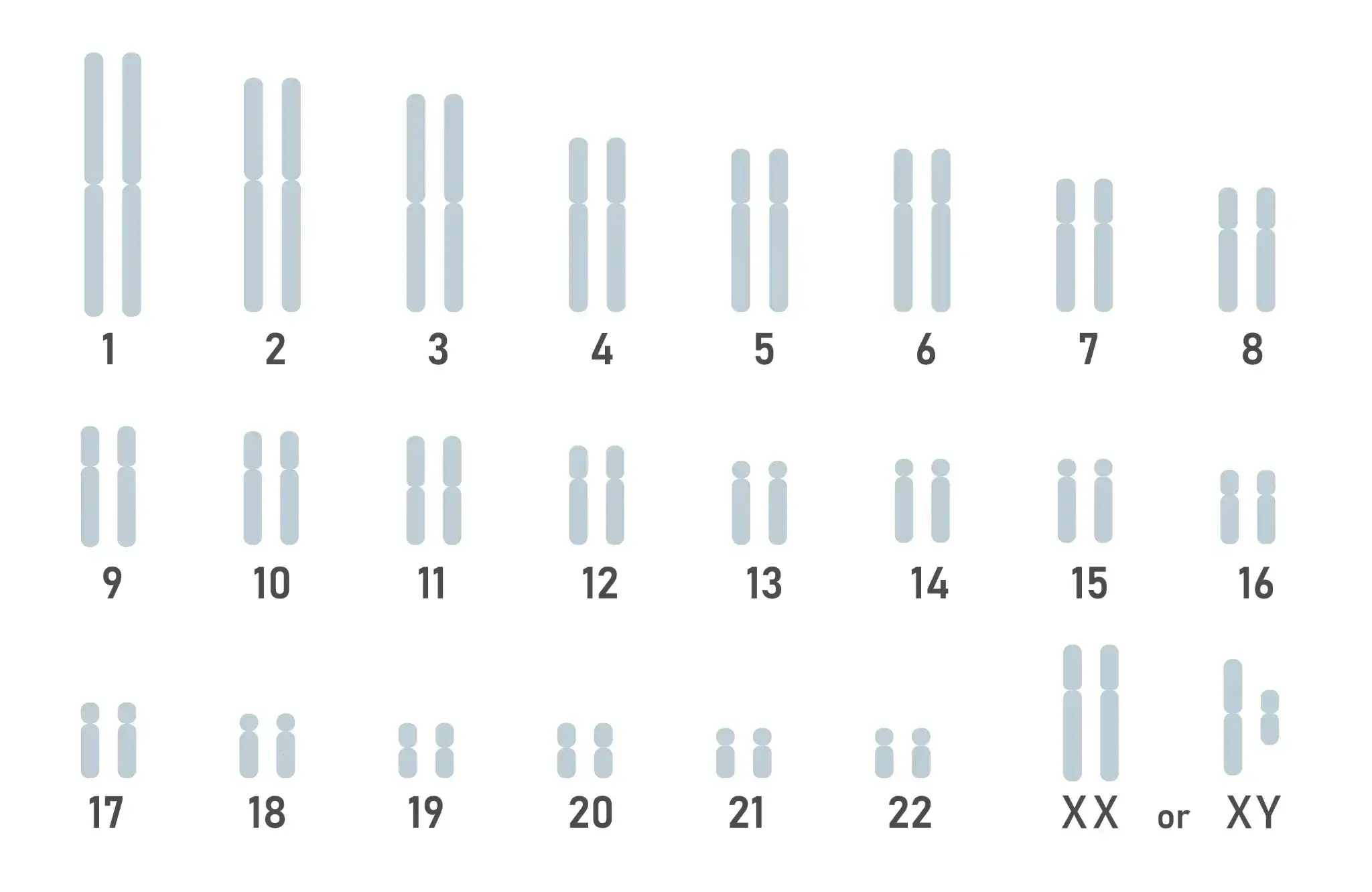
Schematic diagram of DNA map present in cells
- ■
- ■
- ■
- ■
- ■
- ■
- ■
- ■
- ■
Related genes
| Related genes | DMXL2 |
|---|---|
| Related genes | CBR1-AS1 |
| Related genes | PPP1R3B-DT |
Frequently asked questions (FAQ)
Q1. What is chronic low-grade inflammation?
Chronic low-grade inflammation is a state in which low-grade inflammation occurs continuously in the body without showing obvious symptoms such as swelling or pain.It is detected when CRP (C-reactive protein) levels are slightly above the normal range. It is attracting attention as a risk factor for developing cardiovascular diseases, type 2 diabetes, and certain cancers.
Q2. Is chronic low-grade inflammation related to genes?
Yes.A study by Ligthart et al. from Erasmus University found that the DNA region rs4774590 is associated with the risk of chronic low-grade inflammation.There are three genotypes of rs4774590: GG, GA, and AA, and people with the G-type mutation tend to be at higher risk.
Q3. Can chronic low-grade inflammation be detected early with a CRP test?
CRP (C-reactive protein) is a protein produced by the liver in response to inflammation.By measuring CRP levels with a blood test, chronic inflammation can be detected early even when there are no symptoms. High-sensitivity CRP (hsCRP) testing is particularly effective.
Q4. What genetic regions are associated with chronic low-grade inflammation?
There are three major genetic regions associated with chronic low-grade inflammation. most strongly influencedrs4774590(Related gene: DMXL2),rs7280982(Related gene: CBR1-AS1),rs9987289(Related gene: PPP1R3B-DT).
Q5. What are the disease risks caused by chronic low-grade inflammation?
Chronic low-grade inflammation iscardiovascular disease(arteriosclerosis/myocardial infarction),type 2 diabetes、certain cancers(Colon cancer, lung cancer, etc.)alzheimer's diseaseincreases the risk of developing such things. Since there are no symptoms, early detection through regular CRP tests is important.
References
- Reference link 1: 2018 Nov., Symen Ligthart, Am J Hum Genet
- Reference link 2: 2020 Feb., Xikun Han, Eur J Epidemiol
- Reference link 3: 2016 Jun., Symen Ligthart, BMC Genomics