
 celiac disease

- Celiac disease is an autoimmune disease in which the immune system attacks the villi of the small intestine due to gluten ingestion.Approximately 1% of the world's population is affected by the disease.
- G-type mutation in DNA region rs13397Research shows that people with the disease tend to be at higher risk of developing
- strict gluten-free dietis the only effective treatment, and lifelong dietary management is essential.
Overview Celiac disease is an autoimmune disease that affects the digestive system. The main feature is the inability to process gluten, which is found in wheat, barley and rye. When you ingest gluten, your immune system attacks your small intestine and damages the villi, which are important for nutrient absorption. As a result, a variety of symptoms appear, including diarrhea, abdominal pain, weight loss, fatigue, anemia, osteoporosis, and skin rash due to malabsorption of nutrients. It can occur at any age, and a strict gluten-free diet is the only effective treatment. Following this diet will reduce symptoms and reduce the risk of complications. Slightly strict restrictions are necessary, but essential for maintaining good health. A study by Trynka et al. at the University of Groningen revealed that the risk of developing celiac disease is associated with a DNA region called rs13397. There are three genotypes in this DNA region: GG, AG, and AA, and it was found that people with the A genotype tend to have a higher risk of developing celiac disease.
What is celiac disease?
Celiac disease is an autoimmune disease in which the immune system attacks and damages the villi in the small intestine due to ingestion of gluten, which is found in wheat, barley, and rye.Approximately 1% of the world's population is affected, and the prevalence is estimated to be even higher if undiagnosed cases are included.
Causes and mechanisms of celiac disease
Celiac disease is caused by a combination of genetic predisposition and environmental factors (gluten intake).
- Abnormal immune response:When gliadin contained in gluten penetrates the small intestine mucosa, the immune system begins to attack it as a foreign substance.
- Villous damage:The immune response causes the villi in the small intestine to atrophy, reducing the area for nutrient absorption.
- Genetic predisposition:The risk of developing the disease is concentrated in people who carry the HLA-DQ2 or HLA-DQ8 genes (approximately 95% of patients are HLA-DQ2 positive)
The main risk factors are:
- Family history (incidence rate in first-degree relatives is approximately 10%)
- Complications with other autoimmune diseases such as type 1 diabetes
- Chromosomal abnormalities such as Down syndrome and Turner syndrome
- Possesses type G mutation in DNA region rs13397
Main symptoms of celiac disease
The symptoms areGastrointestinal symptoms and systemic symptomsIt is roughly divided into two types.
- Chronic diarrhea/abdominal bloating
- Weight loss/growth disorder (children)
- Iron deficiency anemia/fatigue
- Osteoporosis (due to calcium malabsorption)
- Dermatitis herpetiformis (skin blisters/rash)
Difference between celiac disease and wheat allergy
| Comparison items | celiac disease | wheat allergy |
|---|---|---|
| cause | Autoimmune reaction to gluten | IgE antibody response to wheat proteins |
| Pathogenesis | Damage to small intestinal villi | Immediate reaction due to histamine release |
| Symptoms appear | A few hours to a few days later | Several minutes to several hours after ingestion |
| Scope of influence | All wheat, barley, and rye | wheat only |
| treatment method | lifetime gluten-free diet | Wheat removal (possibility of acquiring resistance) |
Risk of complications from celiac disease
Without proper treatment, the following complications may occur:
- Nutrient malabsorption syndrome(Chronic deficiency of vitamins and minerals)
- osteoporosis(calcium/vitamin D absorption disorder)
- Increased risk of infertility and miscarriage
- intestinal lymphoma(Increased risk in long-term untreated cases)
Diagnostic method
It is diagnosed by the following tests.
- Serum anti-tTG (tissue transglutaminase) antibody test
- Anti-EMA (anti-endomysial) antibody test
- Biopsy using small intestine (confirmation of villous atrophy)
- HLA-DQ2/DQ8 genetic testing
The relationship between genes and celiac disease
Relationship between DNA region rs13397 and onset risk
A study by Trynka et al. from the University of Groningen found that the DNA region rs13397 is associated with the risk of developing celiac disease.
- There are three genotypes of rs13397: GG, GA, and AA.
- Genotype with type G mutationpeople tend to be at higher risk of celiac disease
Genotype distribution in Japanese (rs13397)
| Genotype | Percentage of Japanese people | percentage of the world |
|---|---|---|
| GG type | 10.8% | 69.2% |
| GA type | 44.1% | 27.8% |
| AA type | 45.0% | 2.8% |
Rationale for testing
Superficial DNA region: celiac disease
The gene region most strongly associated with celiac disease is rs13397. The distribution of isomorphic genotypes in Japan is as follows.
- GG
10.8 % - GA
44.1 % - AA
45.0 %
Another gene region involved in celiac disease is rs4819388. The distribution of isomorphic genotypes in Japan is as follows
- TT
10.3 % - TC
43.6 % - CC
45.9 %
Another gene region involved in celiac disease is rs58911644. The distribution of isomorphic genotypes in Japan is as follows
- AA
73.2 % - AT
24.6 % - TT
2.0 %
Another gene region involved in celiac disease is rs13015714. The distribution of isomorphic genotypes in Japan is as follows
- GG
13.7 % - GT
46.6 % - TT
39.6 %
Basis for inspection
A study by Trynka et al. from the University of Groningen revealed that the risk of developing celiac disease is linked to genes. There is a region called rs13397 in the human genome, and there are two types of mutations, G and A, in the gene in this region. It was found that people with the G-type mutation tend to have a higher risk of celiac disease.
The DNA region investigated this time
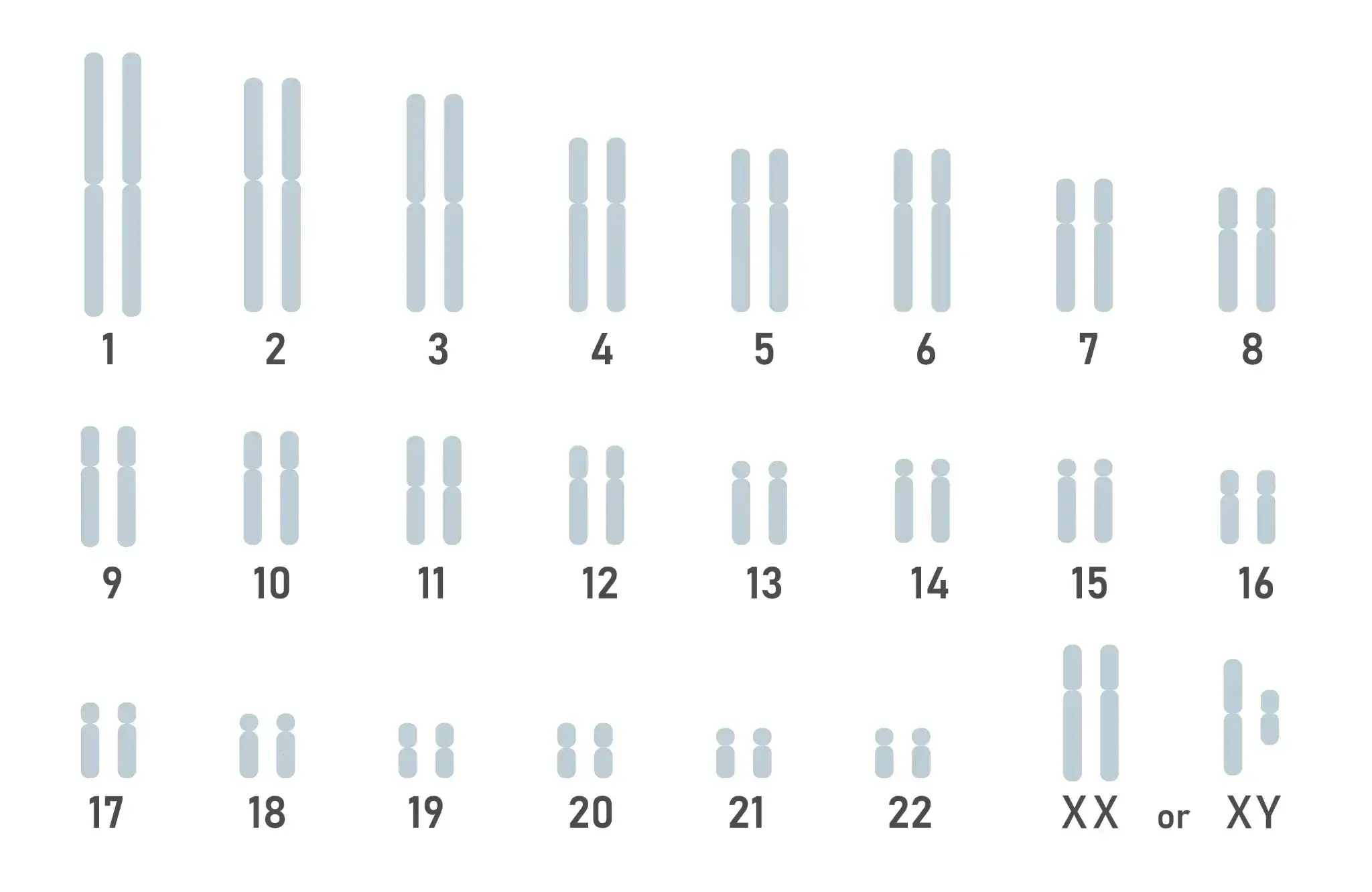
Schematic diagram of DNA map present in cells
- ■
- ■
- ■
- ■
- ■
- ■
- ■
- ■
- ■
Related genes
| Related genes | TMEM187 |
|---|---|
| Related genes | ICOSLG |
| Related genes | GATD3 |
| Related genes | IL18R1 |
Frequently asked questions (FAQ)
Q1. What is celiac disease?
Celiac disease is an autoimmune disease in which the immune system attacks and damages the villi of the small intestine due to ingestion of gluten, which is found in wheat, barley, and rye.It affects approximately 1% of the world's population and causes malabsorption of nutrients and various systemic symptoms.
Q2. What is the cause of celiac disease?
The main cause isAbnormal immune response to glutenIt is. When people with a genetic predisposition (HLA-DQ2/DQ8) ingest gluten, their immune system attacks the small intestinal mucosa. Carriers of the G mutation in the rs13397 DNA region tend to be at higher risk.
Q3. How is celiac disease diagnosed?
Blood test (anti-tTG antibody/anti-EMA antibody)andsmall intestine biopsyis the main diagnostic method. Screening is performed with a blood test, and if the test is positive, small intestine tissue is collected under an endoscope to confirm villous atrophy.
Q4. Can genetic testing determine the risk of celiac disease?
By examining the genotype of DNA region rs13397,Understanding trends in the risk of developing celiac diseaseYou can. A study by Trynka et al. at the University of Groningen found that people with the G mutation genotype tend to be at higher risk.
Q5. What is the treatment for celiac disease?
A strict gluten-free diet is the only effective treatment.By continuing a diet that completely eliminates wheat, barley, and rye throughout your life, you can expect to recover your small intestine and improve your symptoms.
References
- Reference link 1: 2011 Nov., Gosia Trynka, Nat Genet
- Reference link 2: 2010 Apr., Patrick C A Dubois, Nat Genet
- Reference link 3: 2008 Apr., Karen A Hunt, Nat Genet