
 cardiovascular disease

- Cardiovascular disease develops as arteriosclerosis progresses due to a decrease in HDL cholesterol (good).A group of diseases, including myocardial infarction, stroke, and coronary artery disease.
- T-type mutation in DNA region rs1805081A study by Zahedan University of Medical Sciences found that people with
- The T mutation (TT+TC) prevalence among Japanese people is93.2%This is a high percentage compared to the world average of 86.1%.
Overview HDLC is called "good" cholesterol because it plays an important role in the cardiovascular system and reduces the risk of heart disease. HDLC transports cholesterol from arteries and tissues back to the liver, where it is processed and excreted from the body. This process prevents cholesterol buildup and plaque formation on artery walls, preventing arteriosclerosis and cardiovascular disease. Low HDLC levels have been shown to increase the risk of cardiovascular disease. Low HDLC results in a lack of protective cholesterol and increases the risk of plaque buildup in the arteries, increasing the risk of coronary artery disease, heart attack, and stroke. Conversely, higher HDLC lowers these risks. Understanding this relationship is important for cardiovascular disease prevention. Also, regularly monitoring HDLC levels is important in assessing cardiovascular health. Testing your HDLC levels can help reduce your risk of cardiovascular disease by making lifestyle changes such as diet and exercise, and if necessary, taking medication. A study by Afzali et al. of Zahedan University of Medical Sciences revealed that the risk of cardiovascular disease is associated with a DNA region called rs1805081. There are three genotypes in this DNA region: TT, TC, and CC, and it was found that people with the T genotype tend to have a higher risk of cardiovascular disease.
What is cardiovascular disease?
Cardiovascular disease is a general term for diseases that affect the heart and blood vessels, and includes coronary artery disease, myocardial infarction, stroke, and arteriosclerosis.A decrease in HDL cholesterol (good cholesterol) is one of the major risk factors, and lifestyle changes and regular check-ups are essential for prevention.
What is the role of HDL cholesterol?
HDL cholesterol (HDLC) is called "good cholesterol" and plays an important protective role in the cardiovascular system.The main features of HDLC are:
- Cholesterol reverse transport:Transports cholesterol accumulated in arteries and tissues back to the liver
- Inhibition of plaque formation:Prevents cholesterol accumulation in artery walls and prevents arteriosclerosis
- Antioxidant/anti-inflammatory effect:Suppresses vascular inflammation and protects endothelial function
Why is low HDL cholesterol dangerous?
When HDLC decreases, the reverse cholesterol transport function becomes insufficient, increasing the risk of:
- Progression of arteriosclerosis:Plaque builds up on artery walls, narrowing blood vessels
- Coronary artery disease:Reduced blood flow to the heart, causing angina pectoris and myocardial infarction
- Stroke:Brain tissue is damaged due to occlusion or rupture of cerebral blood vessels
Conversely, it has been confirmed that these risks are reduced when HDLC is high.
Comparison of cardiovascular disease risk factors and prevention measures
| risk factors | influence | Preventive measures |
|---|---|---|
| low hdl cholesterol | Acceleration of arteriosclerosis, plaque accumulation | Aerobic exercise (150 minutes or more per week) and intake of omega-3 fatty acids |
| high LDL cholesterol | Cholesterol deposits in blood vessel walls | Limit saturated fatty acids and actively intake dietary fiber |
| smoking | Damage to vascular endothelium, decreased HDL | No smoking |
| lack of exercise | Decreased HDL, increased risk of obesity | Establishing a regular exercise habit |
| genetic predisposition | Increased risk due to rs1805081 T mutation | Individualized prevention based on genetic testing |
The relationship between genes and cardiovascular disease
Relationship between DNA region rs1805081 and cardiovascular disease
A study by Afzali et al. from Zahedan University of Medical Sciences revealed that the risk of cardiovascular disease is associated with the DNA region rs1805081.
- There are three genotypes of rs1805081: TT, TC, and CC.
- Genotype with T-type mutation(TT type/TC type) people tend to have a higher risk of cardiovascular disease
- This region is located on the NPC1 gene and is involved in cholesterol metabolism
Comparison of genotype distribution in Japanese and the world (rs1805081)
| Genotype | Percentage of Japanese people | percentage of the world |
|---|---|---|
| TT type | 54.8% | 39.4% |
| TC type | 38.4% | 46.7% |
| CC type | 6.7% | 13.8% |
The T mutation prevalence rate (TT+TC) in Japanese people is93.2%This is approximately 1.1 times higher than the global average of 86.1%. In particular, the prevalence of the TT type (homozygote) is approximately 1.4 times the world average, suggesting that genetic risks associated with cardiovascular disease are more widely distributed in the Japanese population.
Other related DNA regions
In addition to rs1805081, the following four DNA regions are associated with cardiovascular disease.
| DNA region | Related genes | Percentage of major types in Japanese people | Percentage of major types in the world |
|---|---|---|---|
| rs149615216 | LIPG | CC type 99.9% | CC type 98.5% |
| rs7323893 | TET1P1 | TT type 99.9% | TT type 98.6% |
| rs41292412 | MIR3591 | CC type 99.9% | CC type 98.4% |
| rs174570 | FADS2 | CC type 44.6% | CC type 75.0% |
Rationale for testing
Superficial DNA region: cardiovascular disease
The gene region most strongly associated with cardiovascular disease is rs1805081. The distribution of isomorphic genotypes in Japan is as follows.
- TT
54.8 % - TC
38.4 % - CC
6.7 %
Another gene region involved in cardiovascular disease is rs149615216. The distribution of isomorphic genotypes in Japan is as follows
- CC
99.9 % - CT
0.1%以下 - TT
0.1%以下
Another gene region involved in cardiovascular disease is rs7323893. The distribution of isomorphic genotypes in Japan is as follows
- TT
99.9 % - TC
0.1%以下 - CC
0.1%以下
Another gene region involved in cardiovascular disease is rs41292412. The distribution of isomorphic genotypes in Japan is as follows
- CC
99.9 % - CT
0.1%以下 - TT
0.1%以下
Another gene region involved in cardiovascular disease is rs174570. The distribution of isomorphic genotypes in Japan is as follows
- CC
44.6 % - CT
44.3 % - TT
11.0 %
Basis for inspection
A study by Afzali et al. of Zahedan University of Medical Sciences revealed that the risk of developing cardiovascular disease is associated with genes. There is a region called rs1805081 in the human genome, and there are two types of mutations, T and C, in the gene in this region. It was found that people with T-type mutations tend to have a higher risk of cardiovascular disease.
The DNA region investigated this time
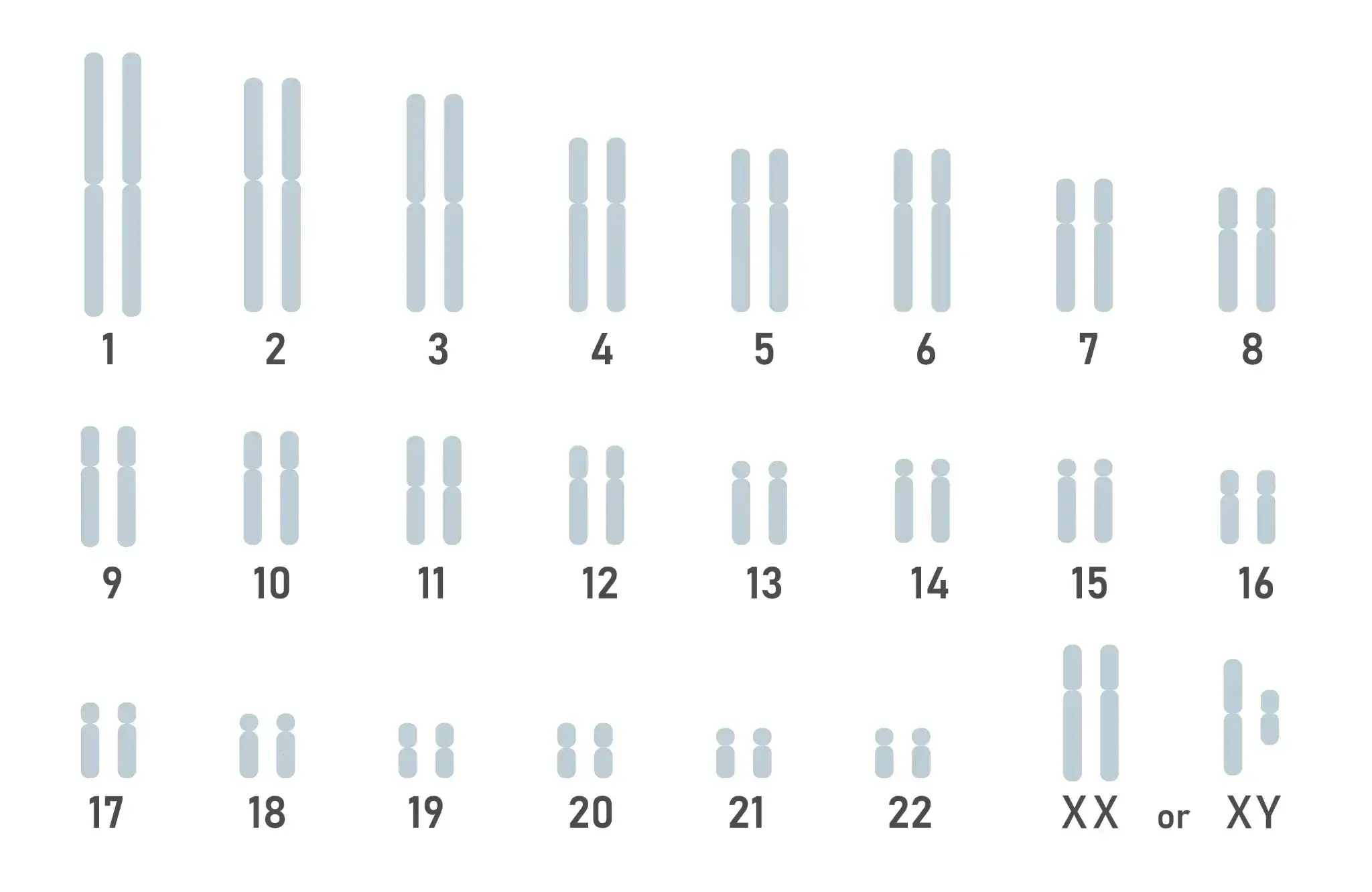
Schematic diagram of DNA map present in cells
- ■
- ■
- ■
- ■
- ■
- ■
- ■
- ■
- ■
Related genes
| Related genes | NPC1 |
|---|---|
| Related genes | LIPG |
| Related genes | TET1P1 |
| Related genes | MIR3591 |
| Related genes | FADS2 |
Frequently asked questions (FAQ)
Q1. What is cardiovascular disease?
Cardiovascular disease is a general term for diseases that affect the heart and blood vessels.This includes coronary artery disease, myocardial infarction, stroke, and arteriosclerosis. A decrease in HDL cholesterol (good cholesterol) is one of the main risk factors, and the risk of developing the disease increases as plaque builds up on artery walls.
Q2. Why does low HDL cholesterol increase the risk of cardiovascular disease?
HDL cholesterol plays the role of "reverse transport", transporting cholesterol from arteries and tissues back to the liver.When HDL decreases, this transport function becomes insufficient, making it easier for plaque to accumulate on artery walls. As a result, arteriosclerosis progresses, increasing the risk of myocardial infarction and stroke.
Q3. Is there a relationship between cardiovascular disease and genes?
Yes.A study by Afzali et al. of Zahedan University of Medical Sciences found that the DNA region rs1805081 is associated with the risk of cardiovascular disease.There are three genotypes of rs1805081: TT, TC, and CC, and people with the T mutation tend to have a higher risk of cardiovascular disease.
Q4. What is the distribution of cardiovascular disease genotype (rs1805081) in Japanese people?
The genotype distribution of rs1805081 in Japanese people isTT type 54.8%, TC type 38.4%, CC type 6.7%It is. Worldwide, 39.4% are TT type, 46.7% are TC type, and 13.8% are CC type, and Japanese people have a TT type (homozygous) prevalence rate that is approximately 1.4 times higher than the world average.
Q5. How can I prevent cardiovascular disease?
Regular monitoring of HDL cholesterol levels and lifestyle changes are the basics of prevention.It is recommended to get into the habit of aerobic exercise (at least 150 minutes a week), limit your intake of saturated fatty acids, stop smoking, drink alcohol in moderation, and consume omega-3 fatty acids. Drug therapy will also be considered if necessary.
References
- Reference link 1: 2017 Jan., Masoumeh Afzali, Biomed Rep
- Reference link 2: 2021 Dec., Ruifang Li-Gao, Diabetes
- Reference link 3: 2011 Feb., Guillaume Lettre, PLoS Genet
- Reference link 4: 2021 Dec., Sarah E Graham, Nature
- Reference link 5: 2009 Jan., Yurii S Aulchenko, Nat Genet