
 Calcium concentration in the blood

- Calcium concentration in the blood is an important mineral indicator involved in bones, muscles, nerves, and blood coagulation.The normal value for adults is 8.5 to 10.5 mg/dL.
- G-type mutation in DNA region rs12498138Research reveals that people with ADHD tend to have higher blood calcium levels
- Abnormalities in calcium concentrationParathyroid dysfunction and vitamin D deficiencysuggests a health problem, such as
Overview The feature of calcium measurement is that it quantitatively evaluates the calcium concentration in the body. Calcium is an important mineral required for many physiological processes, including bones, muscles, nerves, and blood clotting. Usually, the focus is on the calcium level in the blood, which is expressed in milligrams per deciliter (mg/dL) or millimoles per liter (mmol/L). Normal calcium levels for adults are approximately 8.5 to 10.5 mg/dL. Any deviation from this range may indicate a health condition or genetic factors. For example, hypercalcemia suggests hyperparathyroidism or malignancy. On the other hand, hypocalcemia may reflect hypoparathyroidism or vitamin D deficiency. Calcium measurements take into account not only the actual concentration, but also the interaction with genetic and environmental factors and lifestyle. These provide information to understand their effects on health and disease. A study by Sinnott-Armstrong et al. at Stanford University revealed that calcium concentration in the blood is associated with a DNA region called rs12498138. There are three genotypes in this DNA region: GG, GA, and AA, and it has been found that people with the G genotype tend to have high calcium levels in their blood.
What is calcium concentration in the blood?
Blood calcium concentration is an index that quantitatively evaluates the amount of calcium ions contained in serum.Calcium is an essential mineral for physiological processes in the human body, such as bones, muscles, nerve transmission, and blood coagulation.
Meaning of normal and abnormal values of calcium concentration
The normal value of blood calcium for adults is8.5〜10.5 mg/dL(2.1-2.6 mmol/L). Outside this range, the following health conditions are suggested:
| condition | calcium level | Main cause |
|---|---|---|
| Hypercalcemia | More than 10.5 mg/dL | Hyperparathyroidism/malignant tumor |
| normal range | 8.5〜10.5 mg/dL | - |
| hypocalcemia | Less than 8.5 mg/dL | Hypoparathyroidism/vitamin D deficiency |
Main physiological role of calcium
Calcium is involved in four important physiological functions:
- Formation of bones and teeth:Approximately 99% of the body's calcium is stored in bones and teeth
- Muscle contraction:Regulate muscle contraction and relaxation
- Nerve transmission:involved in the transmission of nerve impulses
- Blood clotting:Functions as a cofactor in the coagulation cascade
Factors affecting calcium concentration
Calcium concentration in the blood fluctuates depending on the following factors:
- Genetic factors:G-type mutation carriers in the DNA region rs12498138 tend to have higher concentrations.
- Nutritional intake:Dietary intake of calcium and vitamin D
- Hormone regulation:Adjustment by parathyroid hormone (PTH) and calcitonin
- Kidney function:Balance of calcium reabsorption and excretion
Relationship between genes and blood calcium concentration
Relationship between DNA region rs12498138 and calcium concentration
A study by Sinnott-Armstrong et al. at Stanford University found that blood calcium levels are associated with the DNA region rs12498138.
- There are three genotypes of rs12498138: GG, GA, and AA.
- Genotype with type G mutationPeople tend to have higher blood calcium levels
Genotype distribution in Japanese (rs12498138)
| Genotype | Percentage of Japanese people | percentage of the world |
|---|---|---|
| GG type | 83.4% | 82.8% |
| GA type | 15.8% | 16.3% |
| AA type | 0.7% | 0.8% |
Rationale for testing
Surface DNA region: blood calcium concentration
The gene region that most strongly affects blood calcium concentration is rs12498138. The distribution of isomorphic genotypes in Japan is as follows.
- GG
83.4 % - GA
15.8 % - AA
0.7 %
Another gene region involved in blood calcium concentration is rs6684472. The distribution of isomorphic genotypes in Japan is as follows
- CC
42.7 % - CT
45.2 % - TT
11.9 %
Another gene region involved in blood calcium concentration is rs78783493. The distribution of isomorphic genotypes in Japan is as follows
- CC
99.9 % - CT
0.1%以下 - TT
0.1%以下
Basis for inspection
A study by Sinnott-Armstrong et al. at Stanford University revealed that blood calcium levels are related to genes. There is a region called rs12498138 in the human genome, and there are two types of mutations, G and A, in the gene in this region.People with the G mutation tend to have higher levels of calcium in their blood.I understand that.
The DNA region investigated this time
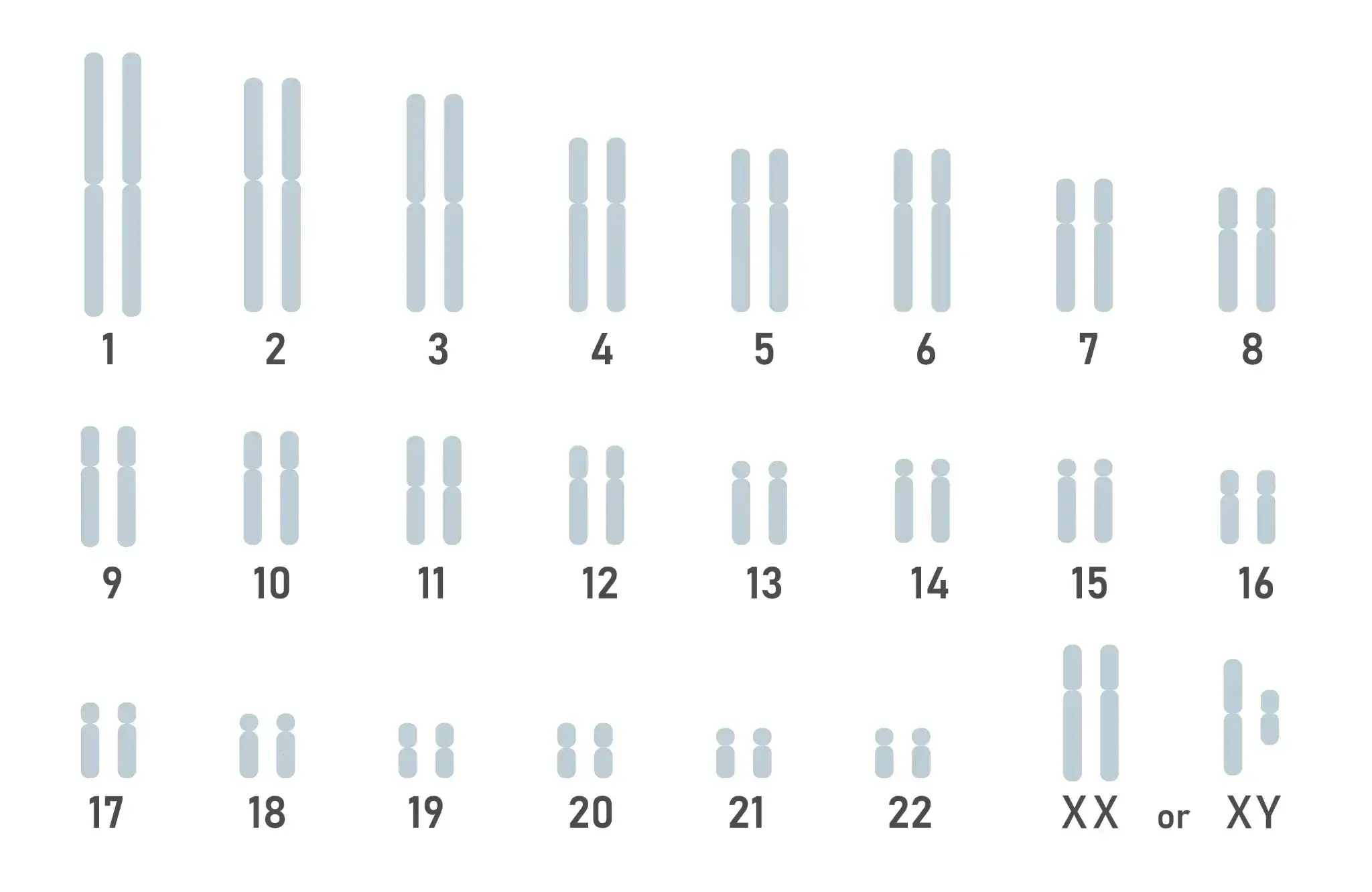
Schematic diagram of DNA map present in cells
- ■
- ■
- ■
- ■
- ■
- ■
- ■
- ■
- ■
Related genes
| Related genes | GOLGB1 |
|---|---|
| Related genes | RPS27P5 |
| Related genes | FAM178B |
Frequently asked questions (FAQ)
Q1. What is the calcium concentration in the blood?
Blood calcium concentration is an index that quantitatively evaluates the amount of calcium ions contained in serum.The normal value for adults is 8.5 to 10.5 mg/dL, and it is involved in important physiological functions such as bone metabolism, muscle contraction, nerve transmission, and blood coagulation.
Q2. Is calcium concentration related to genes?
According to research by Sinnott-Armstrong et al. at Stanford University,DNA region rs12498138 is associated with blood calcium concentrationIt turns out that. People with the G mutation genotype tend to have high blood calcium levels.
Q3. What is the cause of abnormal calcium concentration?
HypercalcemiaThe main causes are hyperparathyroidism and malignant tumors.hypocalcemiais caused by hypoparathyroidism and vitamin D deficiency. Genetic factors, environmental factors, and lifestyle also have a complex effect.
Q4. What is the normal value for calcium concentration?
The normal value of blood calcium for adults is8.5〜10.5 mg/dL(2.1-2.6 mmol/L). A value outside this range may indicate a health problem such as parathyroid dysfunction or vitamin D deficiency.
References
- Reference link 1: 2021 Feb., Nasa Sinnott-Armstrong, Nat Genet