
 bulimia nervosa

- Bulimia nervosa is a type of eating disorderIt is a disease in which overeating and compensatory behaviors (vomiting, laxative use, etc.) are repeated, and the incidence is high among women in their teens to 20s.
- Genotype of DNA region rs77600076linked to risk of bulimia nervosa, Australian twin study provides evidence
- The Japanese rs77600076 genotype is99.9% are type AA, and the proportion of type AA is higher than the world average (93.1% type AA).
Overview An eating disorder is a disease in which abnormal eating behavior continues, affecting the perception of weight and body shape, and affecting both the mind and body. It is subdivided according to symptoms, such as anorexia nervosa, bulimia nervosa, and bulimia nervosa. (Reference link 1) This disease is said to be most common among young people in their teens to 20s, and is more common in women. Genetic factors have also been pointed out, and studies on twins have reported that eating disorders have a genetic component. (Reference link 2) Eating disorders have a major impact on daily life and social life, and can cause physical complications such as malnutrition, vomiting, and diarrhea, and can sometimes be life-threatening. You can check your risk for eating disorders by testing yourself genetically. 2. Rationale An Australian research team conducted a comprehensive genetic analysis of 2,564 female twins using data from twins registered in Australia. Focusing on bulimia nervosa, after comparing 151 people with the problem and 2,291 people without the problem, it was detected that the genotype of the DNA region ``rs77600076'' was related to bulimia nervosa. This DNA region has three genotypes: ``AA type,'' ``AC type,'' and ``CC type.'' However, the genetic type of Asian and East Asian people is all ``AA type'' (reference link 3), and there is still no clear report on the relationship between ``bulimia nervosa'' and ``A'' and ``C.'' 3. Mechanism of action Regarding how the DNA region "rs77600076" is related to bulimia nervosa, there have been no reports on its mode of action or mechanism. However, the DNA region "rs77600076" is located on chromosome 21 and may be involved in the expression of a nearby gene called "TMPRSS15." This gene can make an enzyme that converts trypsinogen in the pancreas to trypsin, which can cause abnormalities in gastrointestinal motility, malabsorption of nutrients, and poor growth in the body. Therefore, mutations in the gene "TMPRSS15" may be associated with eating disorders, and the DNA region "rs77600076" may also be involved. (Reference link 4) As mentioned above, the DNA region "rs77600076" is one of the notable single nucleotide polymorphisms associated with the risk of bulimia nervosa.
What is bulimia nervosa?
Bulimia nervosa is a type of eating disorder, and is a mental illness in which the patient repeatedly engages in ``overeating,'' in which a large amount of food is ingested in a short period of time, and ``compensatory behaviors,'' such as vomiting and the use of laxatives, to prevent weight gain.There are several types of eating disorders, including anorexia nervosa, bulimia nervosa, and bulimia nervosa, in which abnormal eating-related behaviors persist and affect perceptions of weight and body shape. (Reference link 1)
Characteristics and risk factors of bulimia nervosa
Bulimia nervosa has the following characteristics and risk factors:
Characteristics of onset
- Age of onset:Incidence rate is high in young people in their teens to 20s
- Gender:A higher proportion of women than men
- Genetic factors:Twin studies have reported that there is a genetic component (Reference link 2)
Effect on the body
- Malnutrition:Nutritional deficiencies and electrolyte abnormalities due to repeated overeating and vomiting
- Digestive system:Physical complications such as vomiting and diarrhea
- Hazard to life:If severe, it may be life-threatening
social impact
- Daily life:Abnormal eating behavior interferes with daily activities
- Social life:Impact on interpersonal relationships, occupation, and studies occurs.
Types and comparison of eating disorders
| Comparison items | anorexia nervosa | bulimia nervosa |
|---|---|---|
| Main symptoms | Extreme dietary restrictions/weight loss | Repeated overeating and compensatory behavior |
| weight change | Significantly underweight | Normal to slightly overweight |
| physical complications | Malnutrition, osteoporosis, amenorrhea | Electrolyte abnormalities, tooth erosion, salivary gland swelling |
| Age of onset | Late teens to early 20s | Late teens to 20s |
The relationship between genes and bulimia nervosa
Relationship between DNA region rs77600076 and bulimia nervosa
A comprehensive genetic analysis conducted by an Australian research team on 2,564 female twins found that the genotype of the DNA region rs77600076 is associated with bulimia nervosa.
- There are three genotypes of rs77600076: AA, AC, and CC.
- Confirmed the relationship by comparing 151 people with symptoms and 2,291 people without symptoms.
- Almost all Asian/East Asian genetic typesAA type
- There are no clear reports regarding the specific relationship between “bulimia nervosa” and “A” and “C.”
Comparison of genotype distribution in Japanese and the world (rs77600076)
| Genotype | Percentage of Japanese people | percentage of the world |
|---|---|---|
| AA type | 99.9% | 93.1% |
| AC type | 0.1%以下 | 6.6% |
| CC type | 0.1%以下 | 0.1% |
The prevalence of type AA in Japanese people is99.9%, which is higher than the global average of 93.1%. AC type and CC type are almost never confirmed in Japanese people. (Reference link 3)
What is the mechanism of action of bulimia nervosa?
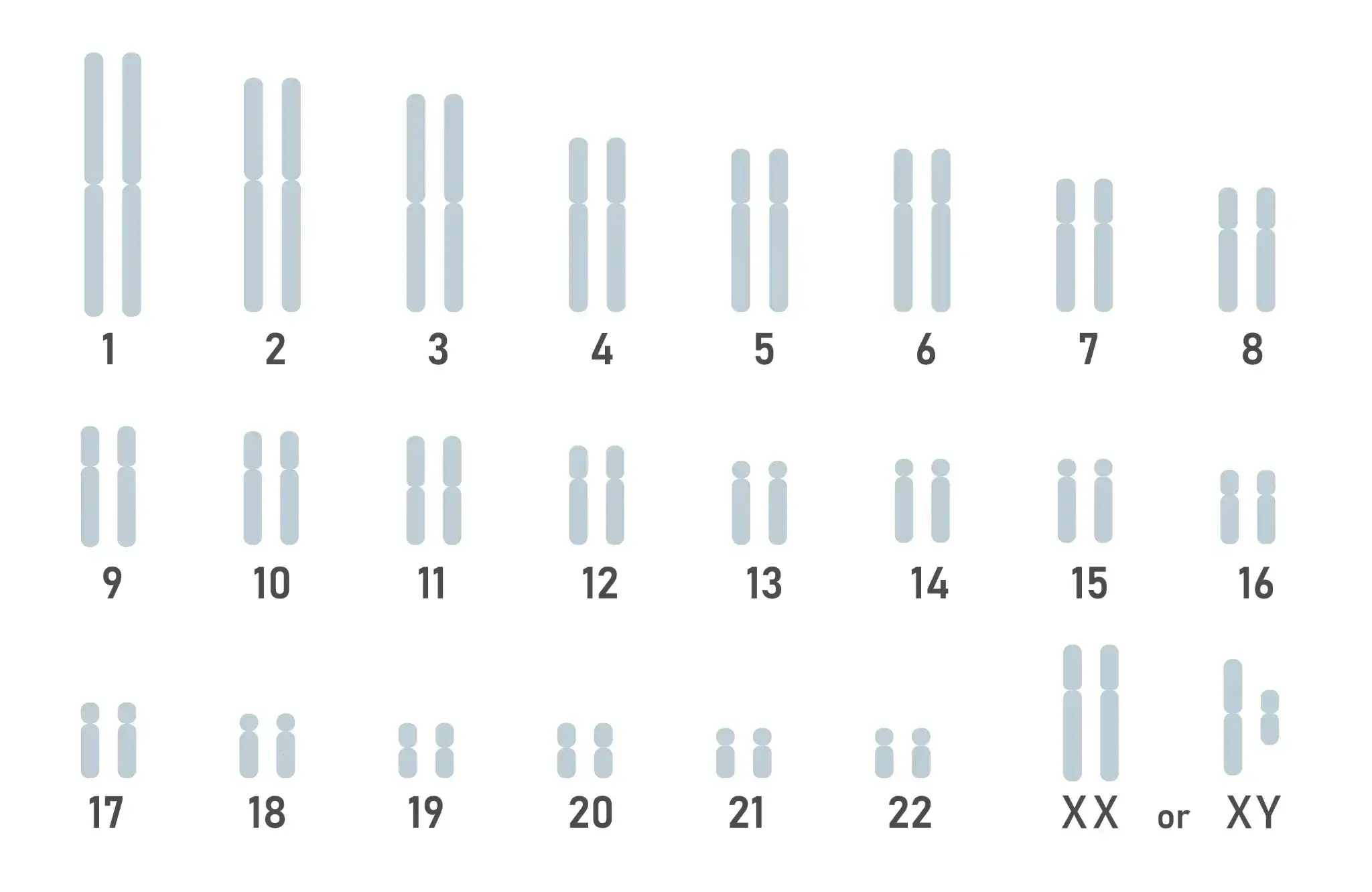
The DNA region rs77600076 is located on chromosome 21 and may be involved in the expression of the nearby TMPRSS15 gene.
- TMPRSS15 gene:Produces an enzyme that converts trypsinogen in the pancreas to trypsin
- Effect on digestion:May cause abnormalities in gastrointestinal motility, malabsorption of nutrients, and poor growth of the body
- Connection with eating disorders:Mutations in the TMPRSS15 gene are associated with eating disorders, and it has been suggested that rs77600076 may also be involved (Reference link 4)
From the above,The DNA region rs77600076 is one of the notable single nucleotide polymorphisms (SNPs) associated with the risk of bulimia nervosa.It is. You can check your risk for eating disorders by testing yourself genetically.
Rationale for testing
Superficial DNA region: Bulimia nervosa
The gene region that most strongly influences bulimia nervosa is rs77600076. The distribution of isomorphic genotypes in Japan is as follows.
- AA
99.9 % - AC
0.1%以下 - CC
0.1%以下
Basis for inspection
An Australian research team conducted a comprehensive genetic analysis of 2,564 female twins using data from twins registered in Australia. Focusing on bulimia nervosa, a comparison of 151 people with symptoms and 2,291 people without symptoms revealed that the genotype of the DNA region rs77600076 was associated with bulimia nervosa.
The DNA region investigated this time
Schematic diagram of DNA map present in cells
- ■
- ■
- ■
- ■
- ■
- ■
- ■
- ■
- ■
Related genes
| Related genes | CHODL |
|---|
Frequently asked questions (FAQ)
Q1. What is bulimia nervosa?
Bulimia nervosa is a type of eating disorder, and is a mental illness in which the patient repeatedly engages in ``overeating,'' in which a large amount of food is ingested in a short period of time, and ``compensatory behaviors,'' such as vomiting and the use of laxatives, to prevent weight gain.The incidence is high among women in their teens to 20s, and it has serious effects on both the mind and body, including nutritional disorders, electrolyte abnormalities, and gastrointestinal complications. In severe cases, it may be life-threatening.
Q2. Is bulimia nervosa related to genes?
Yes.Genetic analysis conducted by an Australian research team on 2,564 female twins found that the genotype of the DNA region rs77600076 is associated with bulimia nervosa.There are three genotypes of rs77600076: AA, AC, and CC, and their association has been confirmed by comparing 151 people who developed the disease and 2,291 people who did not develop the disease.
Q3. What is the distribution of the genotype (rs77600076) in Japanese people?
The genotype distribution of rs77600076 in Japanese people isAA type 99.9%, AC type 0.1%以下, CC type 0.1%以下It is. Almost all Asian and East Asian people have the AA genotype. Worldwide, 93.1% are type AA, 6.6% are type AC, and 0.1% are type CC, and Japanese people have a higher proportion of type AA than the world average.
Q4. What is the mechanism of action of bulimia nervosa?
DNA region rs77600076 isLocated on chromosome 21 and may be involved in the expression of the nearby TMPRSS15 geneThere is. TMPRSS15 is a gene that produces an enzyme that converts trypsinogen in the pancreas to trypsin, and mutations in it can cause abnormalities in gastrointestinal motility, poor nutrient absorption, and poor physical growth. It has been suggested that this mechanism may influence the risk of eating disorders.
References
- Reference link 1: Information on “Eating Disorders” National Center of Psychiatry and Neurology
- Reference link 2: 2013 Sep., Tracey D Wade, Int J Eat Disord.
- Reference link 3: DNA Information on region “rs77600076” NIH
- Reference link 4: Information on the gene “TMPRSS15” NIH
- Reference link 5: 2013 Sep., Tracey D Wade, Int J Eat Disord