
 breast cancer

- Breast cancer is a cancer in which the female hormone ``estrogen'' is deeply involved.Approximately 1 in 9 Japanese women develops the disease.
- AA type of DNA region rs6507583 of gene SETBP1Research shows that people with the disease tend to be at higher risk of developing
- With early detection and early treatmentThe 5-year survival rate for stage I is approximately 90%periodic check-ups and lifestyle improvements are the key to prevention.
Overview Breast cancer is a type of cancer that occurs in the breast. The onset of breast cancer is often detected by finding a lump, but a lump does not necessarily mean it is a malignant tumor; about 80% to 90% of cases are benign breast diseases. The female hormone ``estrogen'' is deeply involved in the development of breast cancer, and the chance of developing cancer increases if you are exposed to ``estrogen'' for a long period of time. Therefore, age at menarche, menopause, childbirth, and breastfeeding history are considered risk factors. Common cancer risk factors such as smoking, alcohol consumption, and obesity may also be associated with the development of breast cancer. Furthermore, it is estimated that 5% to 10% of breast cancer cases are due to genetics in the family history. A recent study reported that polymorphisms in the gene ``SETBP1'' influence the risk of developing breast cancer to some extent. 2. Rationale A study by the Medical Research Council (MRC) revealed that a specific DNA region called rs6507583 in the SETBP1 gene is associated with the incidence of breast cancer. (Reference link 1) There are three genetic types of the DNA region ``rs6507583'': ``AA'', ``AG'', and ``GG'', and although there are a certain number of breast cancer patients with the ``AG type'', it has been found that the majority are ``AA type''. In Japan, the percentage of genotypes is 78.5% for the AA type, 20.2% for the AG type, and 1.3% for the GG type. (Reference link 2) According to the National Cancer Center, breast cancer is the most common cancer among women in Japan, with approximately 1 in 9 women likely to develop the disease. Approximately 14,650 people died from breast cancer in 2020, and the number of deaths is increasing every year. (Reference link 3) On the other hand, breast cancer is a disease that is easily cured if detected and treated early, and the 5-year survival rate is 90%, especially in the early stage of cancer, ``Stage I''. Knowing the genetic tendencies of breast cancer through genetic testing is expected to be useful for early detection, early treatment, and prevention, such as regular breast cancer screening, getting into the habit of exercise, and improving lifestyle habits such as avoiding smoking and drinking alcohol. 3. Mechanism of action The gene SETBP1, which is one of the risk factors for breast cancer, is located on chromosome 18 of the 24 human chromosomes. This gene has been confirmed to be highly expressed in many cancers, including breast cancer, and is known to promote tumor growth. (Reference link 4) In fact, in a disease called ``SchinzelGiedion syndrome,'' mutations in the gene ``SETBP1'' have been reported to cause malformations in multiple organs, and the incidence of tumors has been reported to be higher than normal. (Reference link 5) Generally speaking, malignant tumors grow faster than benign tumors, and are characterized by the ability to spread and invade surrounding areas, and metastasize to other parts of the body. Research has revealed that the gene ``SETBP1'' promotes the ``proliferation, migration, invasion, and metastasis'' of breast cancer cells. (Reference link 6) The DNA region ``rs6507583'' is located in the control site of the gene ``SETBP1'', and in fact, ``a high proportion of breast cancer patients'' are type AA, so it is attracting attention as one of the single nucleotide polymorphisms that may be involved in breast cancer.
What is breast cancer?
Breast cancer is a type of cancer that occurs in the breast, and is a disease that is closely related to the female hormone ``estrogen''.Approximately 1 in 9 Japanese women develops this disease, making it the disease with the highest incidence among female cancers. Approximately 14,650 people died from breast cancer in 2020.
Breast cancer causes and risk factors
Long-term exposure to estrogen plays a major role in the development of breast cancer. Specific risk factors are as follows.
- Hormone-related factors:Early age at menarche, late age at menopause, no history of childbirth, no history of breastfeeding
- Lifestyle factors:smoking, drinking, obesity
- Genetic factors:Family history (5-10% of cases are hereditary)
- Genetic mutation:Polymorphism in DNA region rs6507583 of SETBP1 gene
Detection and symptoms of breast cancer
The main reason for the discovery of breast cancer is"lump"It is. However, even if there is a lump, about 80-90% of cases are benign breast disease.
- Breast lump/induration
- Abnormal secretion from the nipples
- Breast skin changes (twitching, dimples)
- Swollen axillary lymph nodes
5-year survival rate by stage of breast cancer
| stage | 5 year survival rate | Features |
|---|---|---|
| Phase I | Approximately 90% | Tumor is 2 cm or less, no lymph node metastasis |
| Phase II | Approximately 80% | Tumor 2-5 cm or axillary lymph node metastasis |
| Phase III | Approximately 50-60% | Tumor >5 cm or multiple lymph node metastases |
| Stage IV | Approximately 30-40% | Metastasis to distant organs |
How to prevent breast cancer
The following measures can help reduce your risk of breast cancer:
- Regular breast cancer screening(mammography/ultrasound examination)
- moderate exercise habitsmaintenance (more than 150 minutes of aerobic exercise per week)
- Smoking/excessive drinkingavoidance of
- appropriate weight(BMI 18.5-24.9)
- genetic testingUnderstand genetic risk by
The relationship between genes and breast cancer
Relationship between DNA region rs6507583 and onset risk
A study by the UK Medical Research Council (MRC) (reference link 1) revealed that the DNA region rs6507583 of the gene "SETBP1" is associated with the risk of developing breast cancer.
- There are three genotypes of rs6507583: AA, AG, and GG.
- Breast cancer patients have a high proportion of type AAResearch has confirmed that
- Although there are a certain number of people with AG type, most are AA type.
Genotype distribution in Japanese (rs6507583)
| Genotype | Percentage of Japanese people | percentage of the world |
|---|---|---|
| AA type | 71.5% | 83.5% |
| AG type | 26.0% | 15.6% |
| GG type | 2.3% | 0.7% |
Mechanism of action of SETBP1 gene
The gene SETBP1 is located on human chromosome 18 and has been confirmed to be highly expressed in multiple cancers including breast cancer.
- SETBP1 has the function of promoting tumor growth
- breast cancer cellsProliferation, migration, invasion, metastasisResearch has shown that it promotes (reference link 6)
- It has been reported that Schinzel-Giedion syndrome has a higher tumor incidence than normal due to mutations in SETBP1 (Reference link 5)
- DNA region rs6507583 is located at the control site of SETBP1
Rationale for testing
Surface DNA region: Breast cancer
The gene region that most strongly affects breast cancer is rs6507583. The distribution of isomorphic genotypes in Japan is as follows.
- AA
71.5 % - AG
26.0 % - GG
2.3 %
Another gene region involved in breast cancer is rs2048672. The distribution of isomorphic genotypes in Japan is as follows
- CC
32.7 % - CA
48.9 % - AA
18.3 %
Another gene region involved in breast cancer is rs2822999. The distribution of isomorphic genotypes in Japan is as follows
- TT
62.1 % - TG
33.3 % - GG
4.4 %
Another gene region involved in breast cancer is rs117618124. The distribution of isomorphic genotypes in Japan is as follows
- TT
99.9 % - TC
0.1%以下 - CC
0.1%以下
Another gene region associated with breast cancer is rs9959491. The distribution of isomorphic genotypes in Japan is as follows
- CC
28.9 % - CT
49.7 % - TT
21.3 %
Another gene region involved in breast cancer is rs2853667. The distribution of isomorphic genotypes in Japan is as follows
- AA
77.4 % - AG
21.1 % - GG
1.4 %
Basis for inspection
Research by the UK Medical Research Council (MRC) has revealed that the risk of developing breast cancer is linked to genes. There are two types of mutations, A and G, in the DNA region rs6507583 of the gene "SETBP1", and people with type AA tend to have a higher risk of breast cancer (Reference link 1).
The DNA region investigated this time
Schematic diagram of DNA map present in cells
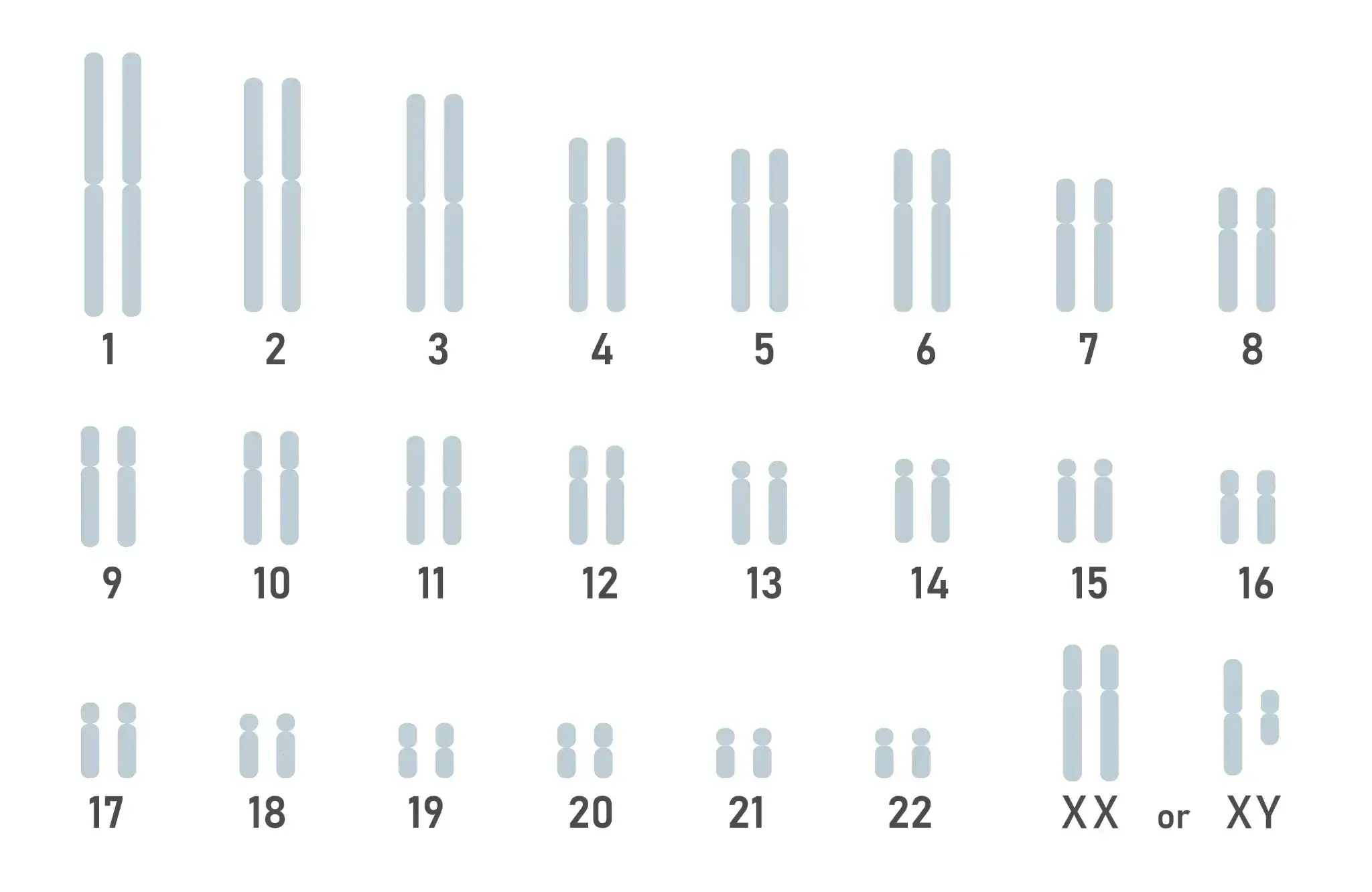
- ■
- ■
- ■
- ■
- ■
- ■
- ■
- ■
- ■
Related genes
| Related genes | SETBP1 |
|---|---|
| Related genes | LINC-PINT |
| Related genes | NRIP1 |
| Related genes | GAREM1 |
| Related genes | PA2G4P3 |
| Related genes | TERT |
Frequently asked questions (FAQ)
Q1. What is breast cancer?
Breast cancer is a type of cancer that occurs in the breast, and is a disease that is closely related to the female hormone estrogen.Approximately 1 in 9 Japanese women develops this disease, making it the disease with the highest incidence among female cancers. Although it is often discovered as a lump, approximately 80-90% of cases are benign.
Q2. What are the causes and risk factors for breast cancer?
The main cause isLong-term exposure to estrogenIt is. Hormone-related risk factors include early age at menarche, late menopause, and no history of childbirth. Smoking, drinking alcohol, and obesity are also related, and genetic factors due to family history account for 5 to 10% of the total. AA type carriers of the SETBP1 DNA region rs6507583 tend to be at higher risk (Reference link 1).
Q3. What is the survival rate for breast cancer?
Breast cancer isDiseases that can be easily cured with early detection and treatmentIt is. The 5-year survival rate for stage I (stage 1) is approximately 90%. Early detection through regular mammography and ultrasound examinations is important.
Q4. Can genetic testing determine the risk of breast cancer?
By examining the genotype of DNA region rs6507583,Understand breast cancer risk trendsYou can. A study by the UK Medical Research Council (MRC) revealed that the proportion of type AA breast cancer patients is high (reference link 1).
Q5. How can I prevent breast cancer?
For breast cancer preventionAttend regular breast cancer screenings, maintain moderate exercise habits, avoid smoking and excessive drinking, and maintain a healthy weight.is valid. Understanding genetic risks through genetic testing also helps with early detection and prevention.
References
- Reference link 1: 2015 Oct., Kyriaki Michailidou, nature genetics.
- Reference link 2: Information on DNA region "rs6507583" TogoVar
- Reference link 3: Summary of the latest cancer statistics Cancer Information Service
- Reference link 4: Information on the gene “SETBP1” My Cancer Genome
- Reference link 5: 2010 May., Alexander Hoischen, nature genetics.
- Reference link 6: 2017 Jun., Liang-liang Chen, BJC.
- Reference link 7: 2020 Mar., Xiang Shu, Nat Commun
- Reference link 8: 2011 Dec., Qiuyin Cai, Hum Mol Genet
- Reference link 9: 2017 Nov., Kyriaki Michailidou, Nature
- Reference link 10: 2022 Jul., Xueyao Wu, Am J Hum Genet
- Reference link 11: 2017 Dec., Roger L Milne, Nat Genet