
 Challenge spirit

- A spirit of challenge is a characteristic that indicates a tendency toward risk-taking behavior and decision-making.is influenced by both genetic and environmental factors.
- G-type mutation in DNA region rs4938247Research shows that people with a tendency to have a strong spirit of challenge
- The prevalence of type G (GG) among Japanese people is16.6%This is a high percentage compared to the world average of 2.0%.
Overview Challenging spirit refers to the extent to which you take risky actions and decisions. Risk is any activity that exposes you to loss or danger, such as gambling, mountain biking, skateboarding, or substance abuse. People who are high in the spirit of challenge tend to be less reluctant to take risks, while people with a low spirit of challenge tend to avoid risks. Research shows that challenge spirit is influenced by both environmental and genetic factors. Examples of environmental factors include the influence of family environment, friends, romantic partners, and cultural background. Genetic factors play a role, with genetic variations in the dopamine receptor D4 (DRD4), with certain mutations associated with increased curiosity-seeking and risk-taking. By understanding the spirit of challenge, you can understand the possibility that you will take actions or make decisions that involve risk. It is important to use these results to promote safer decision-making and reduce the negative effects of risky behaviors and decisions. A study by Linnér et al. at Vrije Universiteit Amsterdam revealed that the spirit of challenge is associated with a DNA region called rs4938247. There are three genotypes in this DNA region: CC, CG, and GG, and it was found that people with the G type mutation tend to have a strong desire to take on challenges.
What is the spirit of challenge?
Challenging spirit is a trait that indicates the extent to which a person engages in risky behavior and decision-making.Risk here refers to activities that expose you to loss or danger (gambling, mountain biking, skateboarding, drug abuse, etc.).
Characteristics of people with high and low challenge spirit
There are clear differences in behavioral tendencies depending on the degree of challenge spirit.
| Comparison items | A person with a strong spirit of challenge | People with low challenge spirit |
|---|---|---|
| risk tolerance | Less resistance to taking risks | tend to avoid risks |
| behavior pattern | Likes new challenges and exciting activities | Choose safe and stable behavior |
| decision making | Quick and intuitive judgment | careful and analytical judgment |
What are the factors that influence the spirit of challenge?
The spirit of challengeBoth environmental and genetic factorsis affected by.
- Environmental factors:Family environment, friendships, romantic relationships, cultural background
- Genetic factors:Genetic variations in dopamine receptor D4 (DRD4) play a role, with certain mutations associated with increased tendency to pursue curiosity and take risks
Benefits of understanding the spirit of challenge
By understanding the level of the spirit of challenge, you can expect the following effects.
- Understand the possibility that you will take actions or make decisions that involve risk
- Promoting safer decision making
- Reducing the negative effects of risky actions and decisions
The relationship between genes and the spirit of challenge
Relationship between DNA region rs4938247 and the spirit of challenge
A study by Linnér et al. (2019) from Vrije Universiteit Amsterdam revealed that the DNA region rs4938247 is associated with the spirit of challenge.
- There are three genotypes of rs4938247: CC, CG, and GG.
- Genotype with type G mutationPeople tend to have a strong sense of challenge.
Genotype distribution in the Japanese and the world (rs4938247)
| Genotype | Percentage of Japanese people | percentage of the world |
|---|---|---|
| CC type | 34.9% | 73.1% |
| CG type | 48.3% | 24.7% |
| GG type | 16.6% | 2.0% |
Japanese people have a higher prevalence of type G mutation (CG type + GG type).64.9%This is a high percentage compared to the global average of 26.7%.
Rationale for testing
External DNA domain: Challenge spirit
The gene region that most strongly influences challenge spirit is rs4938247. The distribution of isomorphic genotypes in Japan is as follows.
- CC
34.9 % - CG
48.3 % - GG
16.6 %
Basis for inspection
Research by Linnér et al. at Vrije Universiteit Amsterdam has revealed that the spirit of challenge is linked to genes. There is a region called rs4938247 in the human genome, and there are two types of mutations, C and G, in the gene in this region.People with type G mutation tend to have a high degree of challenge spirit.I found out that there is.
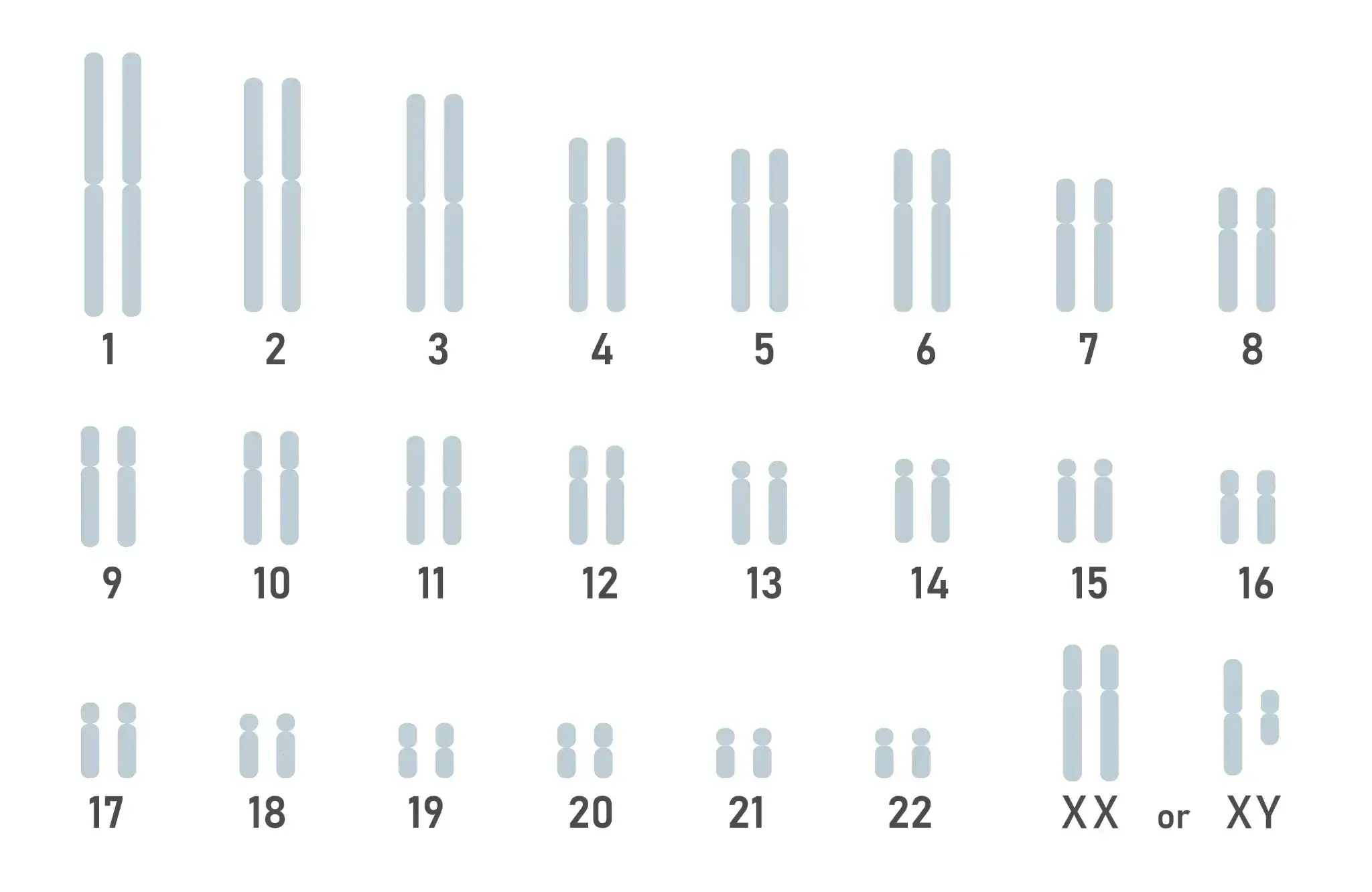
The DNA region investigated this time
Schematic diagram of DNA map present in cells
- ■
- ■
- ■
- ■
- ■
- ■
- ■
- ■
- ■
Related genes
| Related genes | RPL15P15 |
|---|
Frequently asked questions (FAQ)
Q1. What is the spirit of challenge?
Challenging spirit is a trait that indicates the extent to which a person engages in risky behavior and decision-making.It refers to a tendency toward loss and risk-taking behaviors such as gambling, extreme sports, and drug abuse, and is influenced by both genetic and environmental factors.
Q2. What genes are related to the spirit of challenge?
According to a study by Linnér et al. of Vrije Universiteit Amsterdam,DNA region rs4938247was found to be related to a spirit of challenge. People with type G mutation tend to have a strong sense of challenge.
Q3. What is the difference between people with high challenge spirit and people with low challenge spirit?
People with a strong spirit of challengeLess resistance to taking risks, likes new challenges and exciting activities. People with low scores tend to avoid risks and tend to choose safe and stable actions.
Q4. Is the spirit of challenge influenced by genetics or the environment?
both genetic and environmental factorsis affected by. Genetic mutations in dopamine receptor D4 (DRD4) are involved as a genetic factor, and environmental factors include family environment, friendships, and cultural background.
References
- Reference link 1: 2019 Feb., Richard Karlsson Linnér, Nat Genet