
 cerebral aneurysm

- A cerebral aneurysm is a disease in which the walls of arteries in the brain become weakened and the blood vessels bulge out like balloons.rupture, which can cause subarachnoid hemorrhage and increase the risk of death.
- G-type mutation in DNA region rs116969723A Massachusetts General Hospital study finds that people with this condition tend to have a higher risk of developing brain aneurysms.
- The prevalence of type G mutation (GG+GA) in Japanese people is99.7%This is the same level as the world average of 99.9%, but Japanese people have the GA type.10.0%This is approximately 25 times higher than the world average of 0.4%.
Overview A cerebral aneurysm is a condition in which the wall of an artery in the brain becomes weakened, causing part of the blood vessel to bulge out like a balloon. Small cerebral aneurysms may have no symptoms, but if they rupture, they can cause subarachnoid hemorrhage, which can be life-threatening. Causes of brain aneurysms include genetics, high blood pressure, arteriosclerosis, smoking, excessive drinking, and head trauma, which place stress on blood vessel walls. Having a family history of brain aneurysms also increases your risk. When a cerebral aneurysm grows large, it can cause symptoms such as headaches, blurred vision, facial pain, and paralysis. If it ruptures, it can cause sudden severe headaches, loss of consciousness, nausea, and impaired motor function, increasing the risk of death, so immediate treatment is required. Imaging techniques such as cerebral angiography, CT scan, MRI, and MRA are used for diagnosis. This allows us to understand the location, shape, and size of the aneurysm and decide on a treatment plan. A study by Hong et al. at Massachusetts General Hospital revealed that the risk of developing a cerebral aneurysm is associated with a DNA region called rs116969723. There are three genotypes in this DNA region: GG, AG, and AA, and it was found that people with the G genotype tend to have a higher risk of brain aneurysm.
What is a cerebral aneurysm?
A cerebral aneurysm is a disease in which the walls of arteries in the brain weaken, causing parts of the blood vessels to bulge out like balloons.Small cerebral aneurysms may be asymptomatic, but if they rupture, they can cause subarachnoid hemorrhage, which can be life-threatening.
What are the causes and risk factors of cerebral aneurysms?
Six major risk factors are involved in the development of cerebral aneurysms. These factors place stress on blood vessel walls and promote aneurysm formation.
- Genetic predisposition:If your family has a history of brain aneurysm, your risk of developing the disease increases.
- High blood pressure:Persistent high blood pressure damages blood vessel walls
- Arteriosclerosis:Blood vessels become less elastic and their walls become weaker
- Smoking:Damages blood vessel endothelial cells and increases the risk of aneurysm formation
- Excessive drinking:Increases the burden on blood vessel walls by increasing blood pressure
- Head injury:Blood vessel walls are damaged by external shocks
Symptoms of cerebral aneurysm: difference between unruptured and ruptured
| Comparison items | Unruptured cerebral aneurysm | ruptured cerebral aneurysm |
|---|---|---|
| subjective symptoms | No symptoms if small | sudden severe headache |
| neurological symptoms | When it gets older, it can cause headaches, vision problems, facial pain and paralysis. | Consciousness disorder/motor dysfunction |
| Systemic symptoms | Usually none | Nausea/vomiting |
| mortality risk | low | High (needs immediate treatment) |
How to diagnose a cerebral aneurysm
The following imaging techniques are used to diagnose brain aneurysms: Using these tools, we can determine the location, shape, and size of the aneurysm and decide on a treatment plan.
- Cerebral angiography:A detailed examination that uses a catheter to directly image the inside of a blood vessel.
- CT scan:Quickly check for bleeding using X-ray tomography
- MRI:Obtaining detailed images of the brain using magnetic resonance
- MRA (Magnetic Resonance Angiography):Understand the condition of blood vessels without using contrast media
Association between genes and cerebral aneurysm risk
Relationship between DNA region rs116969723 and cerebral aneurysm
A study by Hong et al. at Massachusetts General Hospital (2019, J Clin (published in Med) revealed that the risk of developing a cerebral aneurysm is associated with the DNA region rs116969723.
- There are three genotypes of rs116969723: GG, GA, and AA.
- Genotype with type G mutation(GG type/GA type) people tend to have a higher risk of brain aneurysm
- This gene region is related to the LRRC3 gene
Comparison of genotype distribution in Japanese and the world (rs116969723)
| Genotype | Percentage of Japanese people | percentage of the world |
|---|---|---|
| GG type | 89.7% | 99.5% |
| GA type | 10.0% | 0.4% |
| AA type | 0.2% | 0.1%以下 |
The prevalence of type GA among Japanese people is10.0%This is approximately 25 times higher than the global average of 0.4%. This data indicates that the genetic risk distribution for cerebral aneurysms in the Japanese population differs from the global average.
Rationale for testing
Surface DNA region: cerebral aneurysm
The gene region that most strongly affects cerebral aneurysms is rs116969723. The distribution of isomorphic genotypes in Japan is as follows.
- GG
89.7 % - GA
10.0 % - AA
0.2 %
Basis for inspection
A study by Hong et al. at Massachusetts General Hospital revealed that the risk of developing a brain aneurysm is related to genes. There is a region called rs116969723 in the human genome, and there are two types of mutations, G and A, in the gene in this region. It was found that people with type G mutations tend to have a higher risk of brain aneurysms.
The DNA region investigated this time
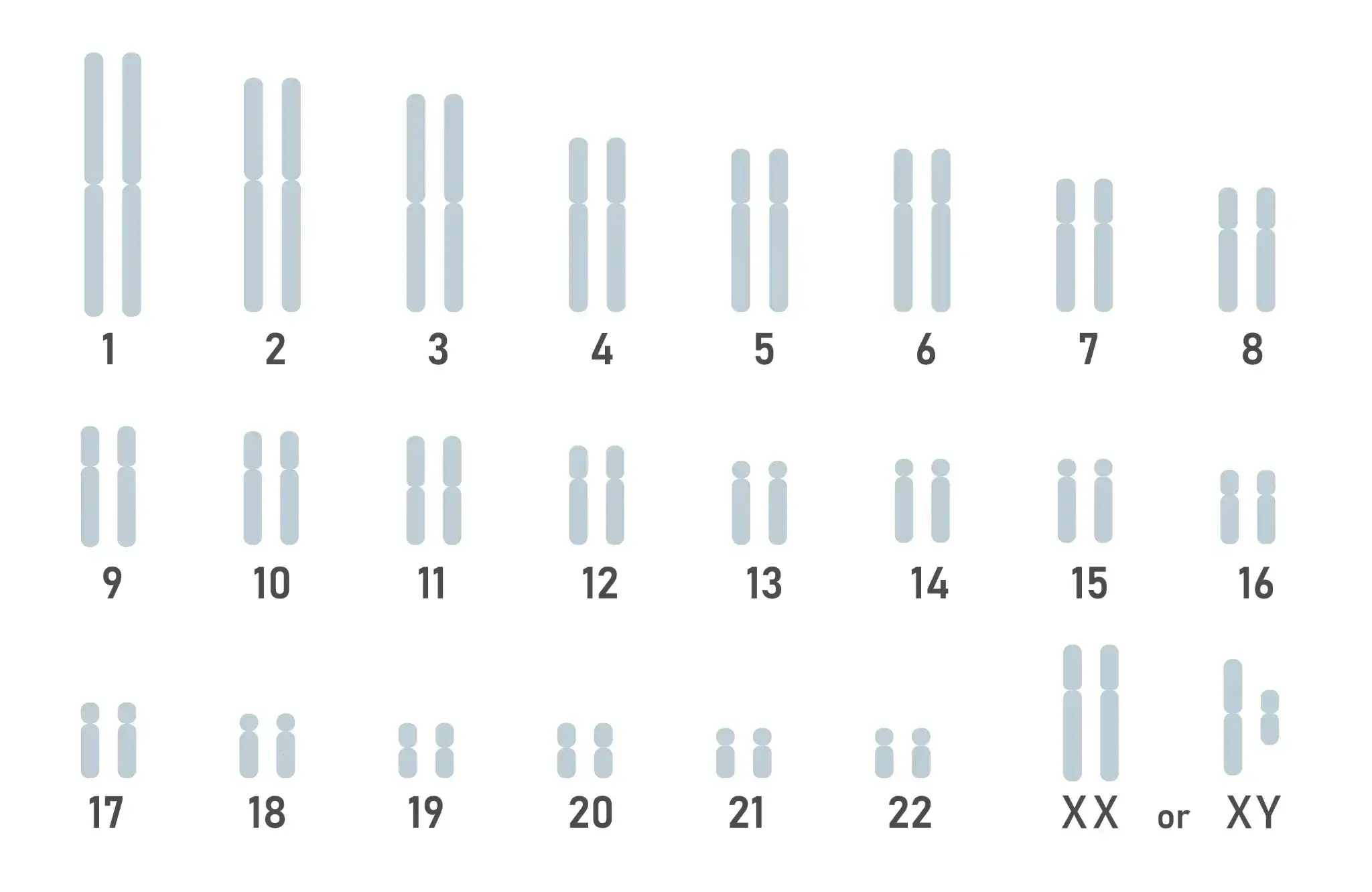
Schematic diagram of DNA map present in cells
- ■
- ■
- ■
- ■
- ■
- ■
- ■
- ■
- ■
Related genes
| Related genes | LRRC3 |
|---|
Frequently asked questions (FAQ)
Q1. What is a cerebral aneurysm?
A cerebral aneurysm is a disease in which the walls of arteries in the brain weaken, causing parts of the blood vessels to bulge out like balloons.Small brain aneurysms are asymptomatic, but if they grow large, they can cause headaches, blurred vision, facial pain, and paralysis. If it ruptures, it causes subarachnoid hemorrhage, which can cause sudden severe headaches, loss of consciousness, and impaired motor function, increasing the risk of death.
Q2. Are cerebral aneurysms related to genes?
Yes.A study by Hong et al. at Massachusetts General Hospital (2019, J Clin Med) found that the DNA region rs116969723 is associated with the risk of developing a cerebral aneurysm.There are three genotypes of rs116969723: GG, GA, and AA, and people with the G mutation genotype tend to have a higher risk of brain aneurysm.
Q3. What is the distribution of the genotype (rs116969723) associated with cerebral aneurysms in Japanese people?
The genotype distribution of rs116969723 in Japanese people isGG type 89.7%, GA type 10.0%, AA type 0.2%It is. Worldwide, 99.5% of people are type GG, 0.4% are type GA, and 0.1%以下 are type AA, and the proportion of Japanese people with type GA is about 25 times higher than the world average.
Q4. What are the main risk factors for cerebral aneurysms?
The main risk factors for cerebral aneurysm areGenetic predisposition, high blood pressure, arteriosclerosis, smoking, excessive drinking, head injuryThere are six. The risk of developing a brain aneurysm is particularly increased if there is a history of brain aneurysms in the family. These factors place stress on blood vessel walls and promote aneurysm formation.
References
- Reference link 1: 2019 Feb., Eun Pyo Hong, J Clin Med