
 bone density
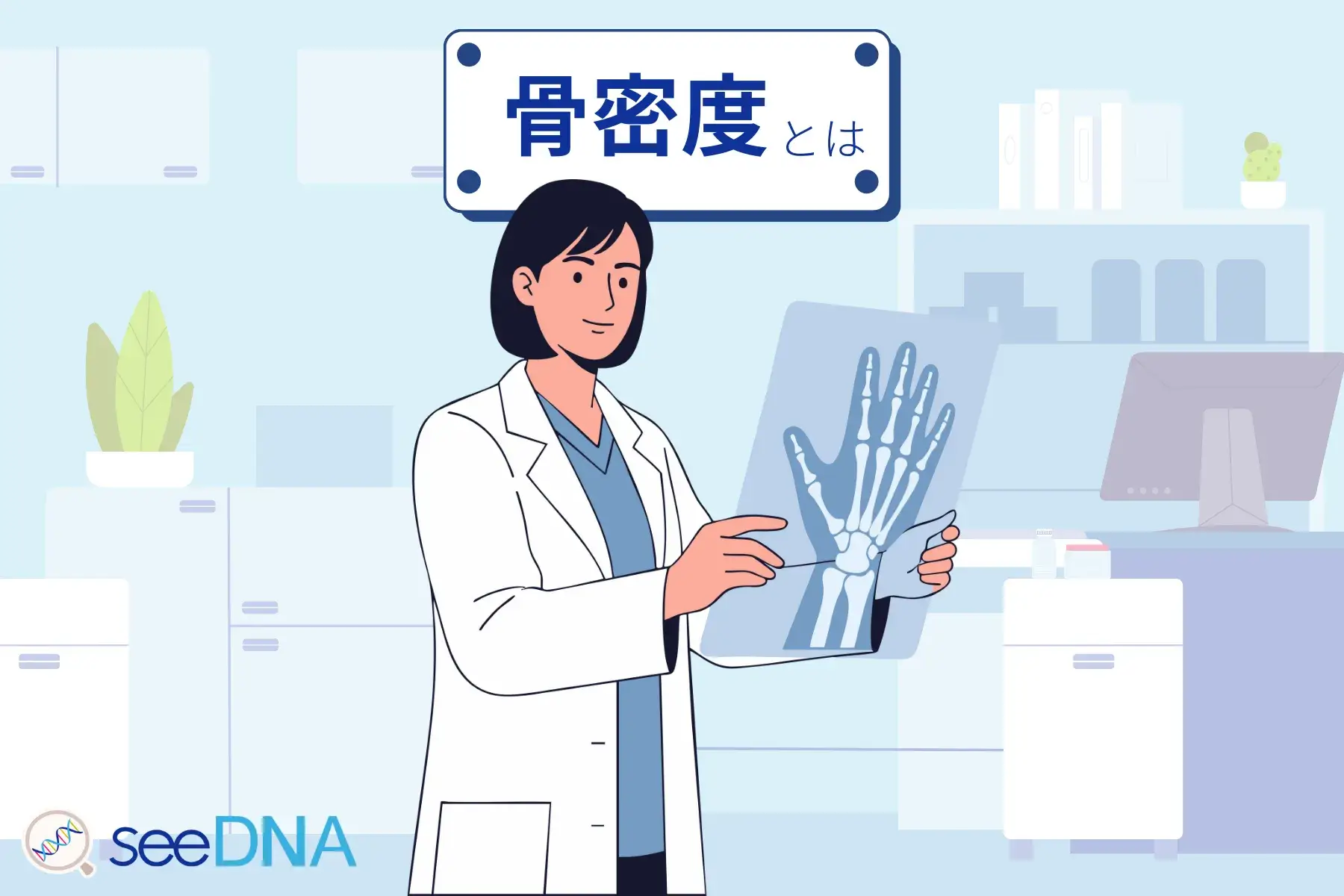
- Bone density is determined by the genotype of the RANKL gene (rs1021188)There are individual differences, and TT type carriers have a high risk of bone density loss.
- Approximately 47.4% of Japanese people are type TT.have a high genetic risk of osteoporosis.
- Intake of calcium, vitamin D, vitamin K and moderate exerciseis effective in maintaining bone density
Overview <>Are there people around you who are prone to injuries such as broken bones? Some people are physically strong and have never broken a bone, but why is that? Susceptibility to injury is influenced by factors such as the environment in which accidents and injuries are likely to occur and lifestyle habits, but it is also known that genes are also involved in bone strength (bone density). When bone density decreases, the risk of fracture increases. A condition in which bone density decreases is called osteoporosis, and as bone density decreases with age, fractures are a major cause of bedriddenness in the elderly. Surprisingly, genetic factors (constitution) are said to be involved in bone strength (high bone density) (Reference link 1). So, why not use a genetic test to find out whether your own bones are strong? 2. Rationale In order to maintain the quality and quantity of bone, the processes of ``osteoclasticity (breaking down old bone)'' and ``osteogenesis (building new bone)'' are important. When this balance is disrupted and ``bone fracture'' exceeds ``bone formation,'' bone density decreases. One of the causes of this was found to be the gene ``RANKL (receptor activator of nuclear factor kappa B (RANK) ligand)'' located on chromosome 13. One of the DNA regions belonging to this gene is "rs1021188". This DNA region was discovered in a genetic polymorphism analysis conducted on approximately 6,000 Swedes as a polymorphic DNA region associated with low bone density. "rs1021188" has three genotypes: "CC type," "CT type," and "TT type." The genotype types of Japanese people are "CC type" 9.7%, "CT type" 42.9%, and "TT type" 47.4% (Reference link 4). Among these, genetic types that include T, such as the CT type and the TT type, increase the amount of the gene RANKL and promote bone resorption, making it more likely that bone density will decrease. In particular, in the case of ``TT type,'' the amount of the gene ``RANKL'' increases, which tends to increase the risk of developing ``osteoporosis'' in the future. 3. Mechanism of action In order to maintain the quality and quantity of bone, it is important to repeat the cycle of ``osteolysis'' and ``osteogenesis.'' Osteoclasts release collagenase, an enzyme that degrades collagen, and cytokines, proteins that affect cell differentiation and proliferation, and absorb and remove damaged or aged bone tissue. Osteoblasts then maintain bone quality and quantity by forming new bone. If this cycle is disrupted by some factor and bone fracture exceeds bone formation, bone density decreases. (Reference link 2) The gene "RANKL" is also called osteoclast differentiation factor, and has the function of stimulating osteoclast maturation and promoting bone resorption. If the DNA region "rs1021188" is "CT type" or "TT type", osteoclasts are activated by increasing the amount of the gene "RANKL". This promotes bone resorption, which tends to reduce bone density (reference risks 3 and 5). Low bone density can lead to osteoporosis, and fractures in this condition can lead to bedriddenness. Therefore, it is important to actively consume nutrients that help bone formation, such as calcium, vitamin D, and vitamin K, and to continue light exercise such as regular walks.
What is bone density? An indicator that determines bone strength
Bone density is an indicator of the amount of calcium and minerals contained in bones, and directly reflects bone strength.When bone density decreases, the risk of fracture increases and is diagnosed as osteoporosis. Research has revealed that genetic factors (constitution) are deeply involved in high bone density (Reference link 1).
Reasons why bone density decreases - Balance between osteolysis and osteogenesis
Bone quality and quantity are maintained by the balance between osteoclasts (breaking down old bones) and osteogenesis (building new bones).When this balance is disrupted and bone fracture exceeds osteogenesis, bone density decreases (reference link 2).
| process | role | Cells involved |
|---|---|---|
| Bone fracture | Decomposes, absorbs, and removes old bone tissue | osteoclast |
| osteogenesis | Forms new bone tissue | osteoblasts |
What is the RANKL gene? - Gene that affects bone density
RANKL (receptor activator of nuclear factor-kappa B ligand) is a gene located on chromosome 13 that stimulates the maturation of osteoclasts and promotes bone resorption.
- Genetic polymorphism analysis of approximately 6,000 Swedes revealed that DNA regionsrs1021188discovered to be associated with decreased bone density
- rs1021188 hasCC type/CT type/TT typeThere are three genotypes of
- In CT and TT types (types that include the T allele), the amount of RANKL increases and bone resorption is promoted.
- especiallyTT typeThe amount of RANKL increases more and the risk of osteoporosis in the future tends to be higher.
Genotype distribution in Japanese (rs1021188)
| Genotype | Percentage of Japanese people | Effect on bone density |
|---|---|---|
| CC type | 9.7% | Low risk of bone density loss |
| CT type | 42.9% | Slightly higher risk of bone density loss |
| TT type | 47.4% | High risk of bone density loss |
Mechanism of action on bone density - Mechanism by which the RANKL gene reduces bone density
Osteoclasts release collagenase and cytokines to absorb and remove damaged and aged bone tissue.Afterwards, osteoblasts form new bone, maintaining bone quality and quantity (Reference link 2).
- The RANKL gene isosteoclast differentiation factoras a stimulation of osteoclast maturation
- When rs1021188 is CT type or TT type, RANKL amount increases and osteoclasts are activated.
- Bone density tends to decrease because bone resorption is promoted (Reference links 3, 5)
- Reduced bone density causes osteoporosis, and fractures can cause bedriddenness.
Measures to prevent bone density loss
In addition to genetic factors, the following lifestyle habits are effective in maintaining bone density.
- Calcium intake:Aim for 700-800mg per day, intake from milk, small fish, and soybean products.
- Ensuring vitamin D:Promotes absorption of calcium. Sunbathing 15-20 minutes/day or intake from seafood
- Vitamin K intake:Helps deposit calcium in bones. Natto and green and yellow vegetables are effective
- Moderate exercise:Continue doing exercises that put stress on your bones, such as walking and jogging, at least 3 times a week.
- Regular bone density tests:Bone density measurement once a year is recommended after the age of 40.
Rationale for testing
Surface DNA region: bone density
The gene region that most strongly influences bone density is rs1021188. The distribution of isomorphic genotypes in Japan is as follows.
- CC
9.1 % - CT
42.2 % - TT
48.5 %
Another gene region involved in bone density is rs10048146. The distribution of isomorphic genotypes in Japan is as follows
- AA
49.9 % - AG
41.4 % - GG
8.6 %
Another gene region involved in bone density is rs10045962. The distribution of isomorphic genotypes in Japan is as follows
- CC
39.0 % - CT
46.8 % - TT
14.0 %
Another gene region involved in bone density is rs12482821. The distribution of isomorphic genotypes in Japan is as follows
- TT
99.9 % - TG
0.1%以下 - GG
0.1%以下
Another gene region related to bone density is rs12967019. The distribution of isomorphic genotypes in Japan is as follows
- TT
39.0 % - TC
46.8 % - CC
14.0 %
Another gene region involved in bone density is rs2153672. The distribution of isomorphic genotypes in Japan is as follows
- CC
79.1 % - CT
19.6 % - TT
1.2 %
Another gene region involved in bone density is rs2234693. The distribution of isomorphic genotypes in Japan is as follows
- TT
33.2 % - TC
48.8 % - CC
17.8 %
Another gene region related to bone density is rs2710057. The distribution of isomorphic genotypes in Japan is as follows
- GG
1.4 % - GT
20.8 % - TT
77.7 %
Another gene region related to bone density is rs2836613. The distribution of isomorphic genotypes in Japan is as follows
- GG
5.7 % - GA
36.5 % - AA
57.7 %
The DNA region investigated this time
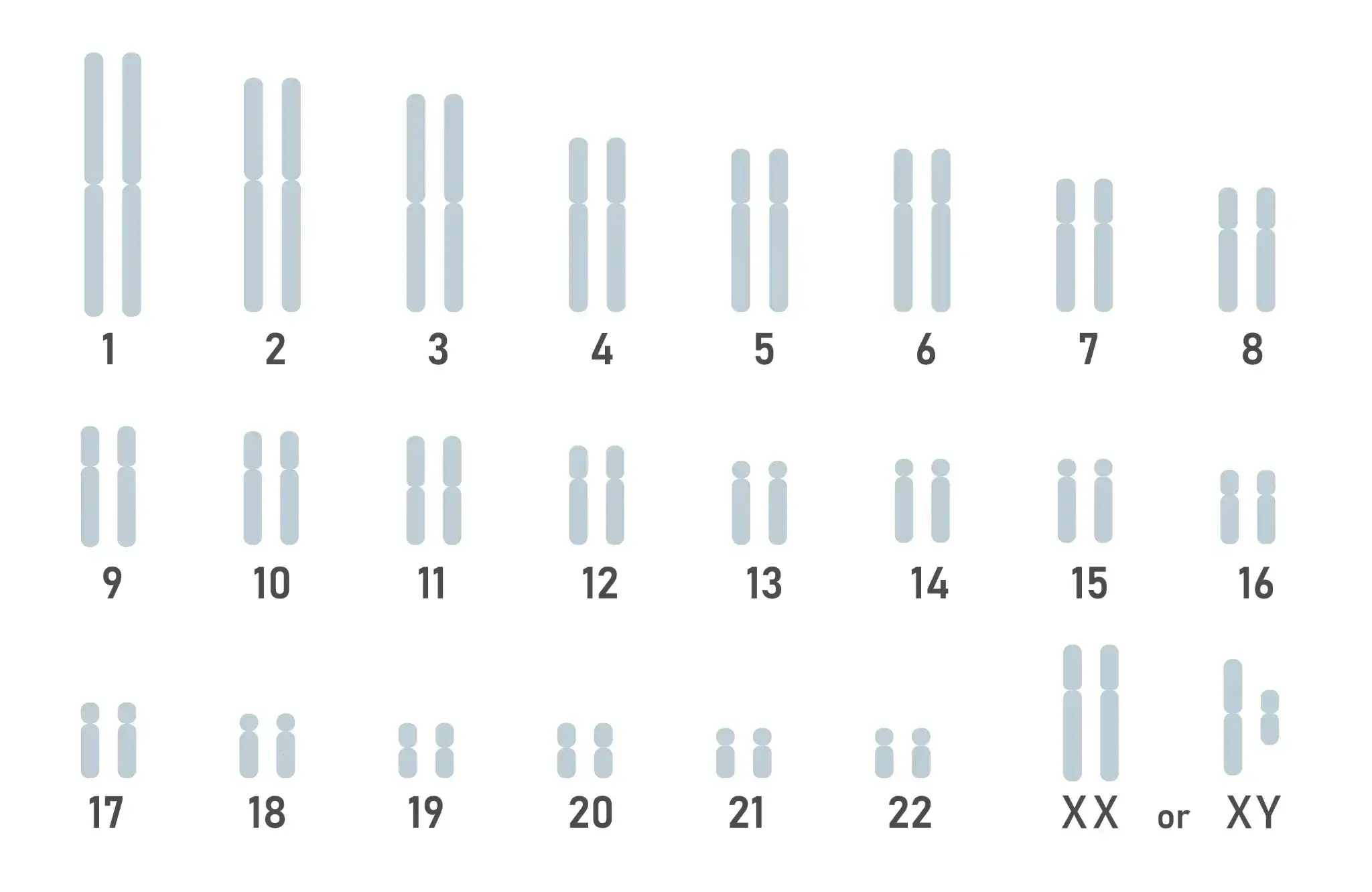
Schematic diagram of DNA map present in cells
- ■
- ■
- ■
- ■
- ■
- ■
- ■
- ■
- ■
Related genes
| Related genes | LINC02341 |
|---|---|
| Related genes | FOXL1 |
| Related genes | ARSB |
| Related genes | LINC00310 |
| Related genes | SMAD7 |
| Related genes | CLYBL |
| Related genes | ESR1 |
| Related genes | DACH2 |
| Related genes | ERG |
Frequently asked questions (FAQ)
Q1. What is bone density?
Bone density is an indicator of the amount of calcium and minerals contained in bones, and directly reflects bone strength.Osteoporosis is diagnosed when bone density decreases, and the risk of fracture increases significantly. The genotype of the RANKL gene (rs1021188) is deeply involved in high bone density (Reference link 1).
Q2. What is the gene RANKL that is involved in bone density?
RANKL (receptor activator of nuclear factor-kappa B ligand) is a gene located on chromosome 13 that stimulates osteoclast maturation and promotes bone resorption.In the TT type and CT type of DNA region rs1021188, the amount of RANKL increases and bone density is more likely to decrease. Approximately 47.4% of Japanese people have type TT (reference link 4).
Q3. How can I prevent bone density loss?
Active intake of calcium (700-800 mg/day), vitamin D (15-20 minutes of sunbathing/day), and vitamin K is recommended.In addition, continuing exercise that places moderate stress on the bones, such as walking or jogging, at least three times a week is effective in maintaining bone density. After the age of 40, annual bone density testing is recommended.
Q4. What is the relationship between bone density and osteoporosis?
Osteoporosis is a condition in which bone density decreases.Osteoporosis significantly increases the risk of fractures, and femoral fractures are a major cause of bedriddenness, especially in the elderly. It is important to understand the risk of bone density loss early through genetic testing and take preventive measures.
Q5. What is the distribution of bone density-related genotypes in Japanese people?
The genotype distribution of Japanese people in the DNA region rs1021188 isCC type 9.7%, CT type 42.9%, TT type 47.4%It is. Approximately half of the patients have the TT type (high risk of bone density loss), indicating the genetic background of osteoporosis risk in Japanese people (reference link 4).
References
- Reference link 1: 2011 Apr., Emma L Duncan, PLoS Genet.
- Reference link 2: 2007 Jul., Mone Zaidi, Nat Med.
- Reference link 3: 2013 Feb., Lavinia Paternoster, PLoS Genet.
- Reference link 4: Information on DNA region “rs1021188” NIH
- Reference link 5: 2010 Nov., Lavinia Paternoster, PLoS Genet.
- Reference link 6: 2010 Nov., Lavinia Paternoster, PLoS Genet
- Reference link 7: 2009 Nov., Fernando Rivadeneira, Nat Genet
- Reference link 8: 2019 Feb., John A Morris, Nat Genet
- Reference link 9: 2018 Jul., Stuart K Kim, PLoS One
- Reference link 10: 2009 Jan., Unnur Styrkarsdottir, Nat Genet