
 Ease of fracture
- Fracture susceptibility is associated with DNA region rs9980072 (near TERT gene)However, people with Risk Allele “G” are at slightly higher risk.
- Approximately 50% of Japanese people are type GAWhen combined with the GG type (26.6%), approximately 76.6% have the risk allele.
- by genetic testingEarly risk understandingThis allows for appropriate measures such as bone density management and fall prevention.
Overview "Fracture" refers to the breakage of a bone, and includes not only a break, but also a crack or missing part. A "fracture" occurs when a force is applied to a bone, and usually a bone does not break unless a very large force is applied. However, if the bone itself is weak, even a weak force can cause it to fracture, which is called a ``pathologic fracture.'' (Reference link 1) The most common cause of bone weakness is osteoporosis, but tumors such as cancer can cause parts of the bone to dissolve, and there are also reports that it is hereditary. (Reference links 1 and 2) Furthermore, there are various risks that affect the frequency of fractures, such as daily lifestyle patterns and intense exercise, but recent research reports have shown that fractures occur more frequently in certain genotypes of the gene TERT (EST2). (Reference link 2) Therefore, it is expected that confirming the "risk of fracture" through genetic testing will be useful in preventing the onset of the disease and taking early measures. 2. Rationale A research team from the Netherlands, the United States, Canada, the United Kingdom, China, Australia, and other countries conducted a comprehensive analysis using the genetic data of 20,439 fracture patients and 78,843 healthy individuals with roots in Europe, North America, Australia, and East Asia, 14,492 fracture patients and 130,563 healthy individuals in the United Kingdom, and 2,926 fracture patients and 17,710 healthy individuals in the United States. As a result, a strong relationship between 15 specific genetic polymorphisms and bone fractures was found. One of these is a genetic polymorphism called ``rs9980072'' in the DNA region near the ``TERT (EST2)'' gene. (Reference link 2) The DNA region "rs9980072" has three genotypes: "GG type", "GA type", and "AA type". The most common genotype among Japanese people is the GA type at 50.0%, followed by the GG type at 26.6% and the AA type at 23.4%. (Reference link 3) There is a report that Risk Allele ``G'' has a slightly higher risk of fracture. Therefore, it can be said that the "GA type" and "GG type", which are common in Japanese people, have a relatively high risk. 3. Mechanism of action The DNA region "rs9980072" is located on chromosome 21 and is close to the "TERT (EST2)" gene, so it is thought to be related to this gene. The "TERT (EST2)" gene produces the enzyme "telomerase" and creates the structure of the gene "telomere". Telomeres are structures at the ends of chromosomes and are thought to be involved in cell aging. (Reference link 4) The regulation of telomerase has been reported to be involved in the malignancy of many malignant tumors. Furthermore, telomerase is not only involved in the growth of malignant tumors, but is also thought to play an essential role in the maintenance of original cells. These roles include cell growth, protection, and regulation of ribonucleic acid (RNA). Furthermore, it has been suggested that telomerase may be involved in bone maintenance and strength, so the DNA region ``rs9980072'' is attracting attention as one of the single nucleotide polymorphisms associated with bone fracture risk.
What is the susceptibility to fracture?
A fracture refers to a break in a bone, and includes not only a break but also a crack or partial loss.Usually, a large external force is required to cause a fracture, but if the bone itself is weak, even a slight force can cause it (Reference link 1).
Causes and risk factors for fractures
Two factors are involved in the occurrence of fractures: the magnitude of external force and the strength of the bone.
- Traumatic fracture:Occurs when bones are subjected to large external forces such as falls or traffic accidents.
- Pathological fracture:Bones become weak due to osteoporosis, tumors, etc., and can occur with slight force.
- Stress fracture:Occurs due to accumulation of repeated small loads
The main causes of bone weakness are:
- osteoporosis(Main cause of bone density decline)
- Bone dissolution due to tumors such as cancer
- Genetic factors (such as mutations near the TERT gene)
- Aging, calcium deficiency, vitamin D deficiency
Comparison of fracture types and characteristics
| Comparison items | traumatic fracture | pathological fracture |
|---|---|---|
| cause | Large external force (fall/shock) | Weakening of bones (osteoporosis/tumor) |
| Occurrence conditions | Requires strong impact | Occurs even with slight force |
| Age of onset | All ages (sports/accidents) | Middle-aged and elderly (especially postmenopausal women) |
| prevention | Safety measures/protective equipment | Bone density management/genetic testing |
| genetic involvement | low | High (such as rs9980072) |
Relationship between gene TERT (EST2) and bone fractures
The DNA region rs9980072 is located on chromosome 21, near the TERT (EST2) gene.The TERT gene produces the enzyme telomerase, which creates the structure of telomeres (reference link 4).
- Telomere:A structure at the end of a chromosome that is involved in cell aging.
- Telomerase:Essential for cell growth, protection, and RNA regulation
- Relationship with bones:It is suggested that telomerase may also be involved in bone maintenance and strength.
Studies have shown that the regulation of telomerase is not only involved in the malignancy of malignant tumors, but is also essential for normal cell maintenance, and may also affect the maintenance of bone strength.
Measures to prevent fractures
You can reduce your risk of fractures by taking the following measures:
- Nutritional management:Calcium 700-800mg/day, vitamin D intake
- Exercise:Maintain bone density with weight-bearing exercise (walking, muscle training)
- Fall prevention:Preparation of living environment and balance training
- Regular inspection:Regular visits for bone density tests
- Genetic testing:Early understanding of risks and planning of countermeasures
Association between genes and fracture risk
Genetic analysis results from large-scale research
An international research team from the Netherlands, the United States, Canada, the United Kingdom, China, and Australia conducted a large-scale analysis that included 20,439 patients with fractures and 78,843 healthy controls (Reference link 2).
- Target groups with roots in Europe, North America, Australia, and East Asia
- Additional verification: 14,492 fracture patients + 130,563 healthy controls in the UK, 2,926 fracture patients + 17,710 healthy controls in the US
- total15 genetic polymorphismsshowed a strong association with fractures.
- One of them isrs9980072 near TERT (EST2) gene
Genotype distribution in Japanese (rs9980072)
| Genotype | Percentage of Japanese people | percentage of the world | risk trends |
|---|---|---|---|
| GG type | 26.6%(27.9%) | 50.4% | somewhat expensive |
| GA type | 50.0%(49.8%) | 41.1% | somewhat expensive |
| AA type | 23.4%(22.1%) | 8.4% | standard |
Risk Allele is "G", and approximately 76.6% of Japanese people belong to the GA or GG type, which has the G allele (Reference link 3).
Rationale for testing
Surface DNA region: Fracture susceptibility
The gene region that most strongly influences fracture susceptibility is rs9980072. The distribution of isomorphic genotypes in Japan is as follows.
- AA
22.1 % - AG
49.8 % - GG
27.9 %
Another gene region associated with fracture susceptibility is rs4869742. The distribution of isomorphic genotypes in Japan is as follows
- CC
3.5 % - CT
30.4 % - TT
66.0 %
Another gene region associated with fracture susceptibility is rs3736228. The distribution of isomorphic genotypes in Japan is as follows
- CC
54.8 % - CT
38.4 % - TT
6.7 %
Basis for inspection
An international research team from the Netherlands, the United States, Canada, the United Kingdom, China, and Australia conducted a comprehensive analysis using genetic data from 20,439 patients with fractures and 78,843 healthy individuals, and found that 15 genetic polymorphisms were strongly associated with bone fractures. rs9980072 is located near the TERT (EST2) gene, and people with Risk Allele "G" tend to have a slightly higher risk of fractures (Reference link 2).
The DNA region investigated this time
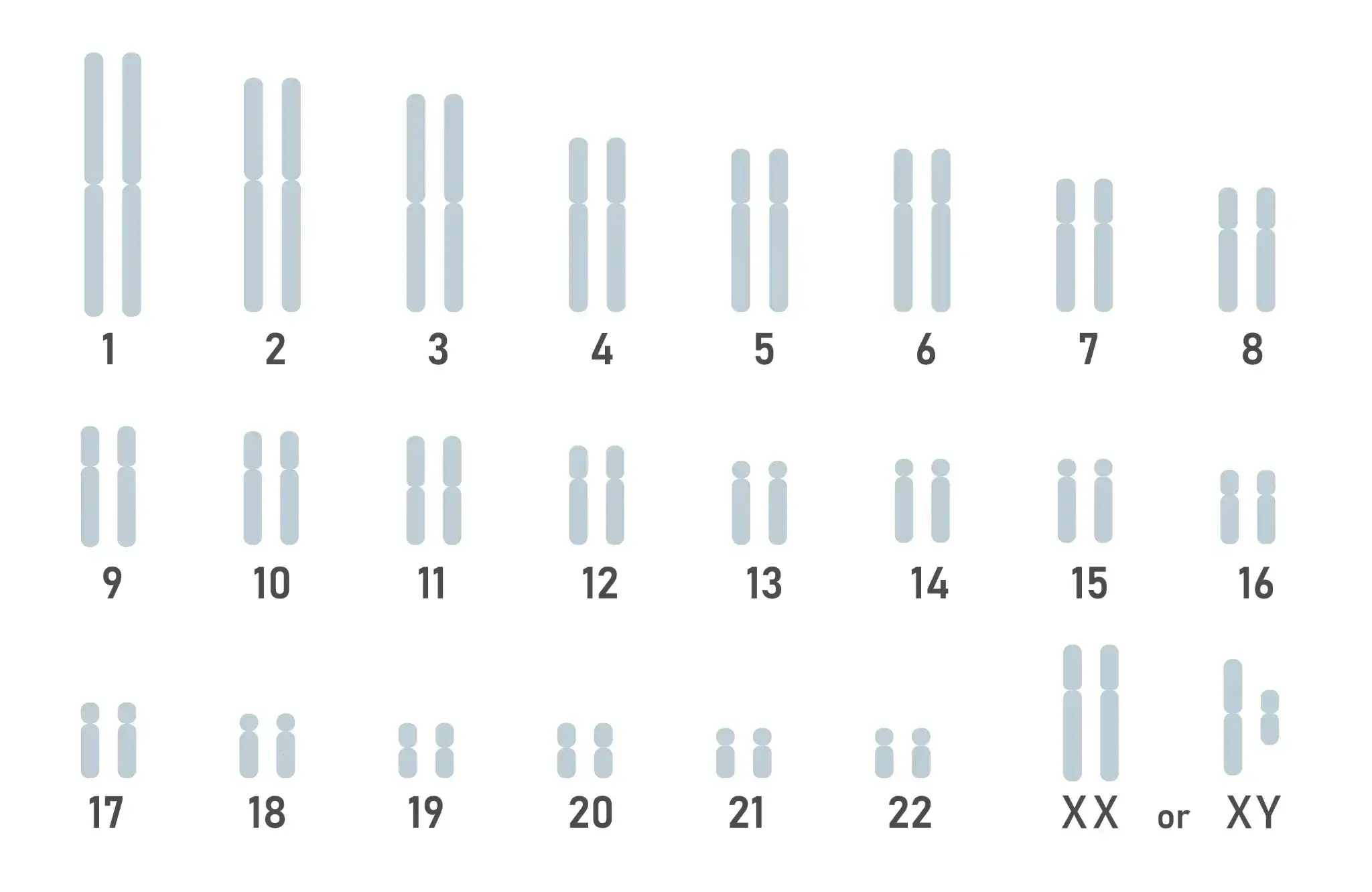
Schematic diagram of DNA map present in cells
- ■
- ■
- ■
- ■
- ■
- ■
- ■
- ■
- ■
Related genes
| Related genes | ETS2 |
|---|---|
| Related genes | CCDC170 |
| Related genes | LRP5 |
Frequently asked questions (FAQ)
Q1. What is the susceptibility to fracture?
Fracture susceptibility refers to the tendency of bones to break due to genetic factors or decreased bone density.Fractures include cracks and partial chips, and osteoporosis and mutations in the DNA region rs9980072 near the TERT gene are associated with the risk (Reference links 1 and 2).
Q2. What genes are associated with fracture risk?
The DNA region most strongly associated with fracture risk isrs9980072It is located near the TERT (EST2) gene. People with type GG or GA who have the Risk Allele “G” tend to have a slightly higher risk of fractures. In Japanese, GA type is the most common type at 50.0%, followed by GG type at 26.6%, for a total of about 76.6% (Reference links 2 and 3).
Q3. What is the relationship between bone fractures and osteoporosis?
Osteoporosis is a disease in which bone density decreases and bones become brittle.It is the main cause of pathological fractures. Osteoporosis patients can fracture even with slight external force, and genetic factors and lifestyle factors are involved in a complex manner (Reference link 1).
Q4. Can the risk of fracture be determined by genetic testing?
By examining the genotype of the DNA region rs9980072Understand fracture risk trendscan. In a large-scale study involving 20,439 fracture patients and 78,843 healthy subjects, 15 genetic polymorphisms showed a strong association with fractures (Reference link 2).
Q5. How can I prevent bone fractures?
To prevent fracturesAdequate intake of calcium and vitamin D, moderate weight-bearing exercise, and fall prevention measuresis valid. Understanding the risk through genetic testing and undergoing bone density testing early will increase the effectiveness of prevention.
References
- Reference link 1: Information on "Fracture" Japanese Orthopedic Association
- Reference link 2: 2018 Aug., Katerina Trajanoska, BMJ.
- Reference link 3: Information on DNA region “rs9980072” NIH
- Reference link 4: Information on the gene “TERT” NIH
- Reference link 5: 2018 Aug., Katerina Trajanoska, BMJ
- Reference link 6: 2019 Feb., John A Morris, Nat Genet