
 Body mass index (BMI)

- BMI (body mass index) is a physique index calculated by weight (kg) ÷ height (m)²It is used worldwide to determine obesity and underweight.
- C-type mutation in DNA region rs17782313A University of Cambridge study found that people with BMI tend to have a high BMI.
- BMI is 25 or moreHeart disease, diabetes, high blood pressureMaintaining a healthy weight is directly linked to health.
Overview Body mass index (BMI) is a numerical value that represents the balance between weight and height, and is an index used to evaluate your physique. This number is calculated by dividing your weight in kilograms by your height in meters squared. BMI is widely used as an easy way to determine whether a person is obese or underweight. Specifically, physique is classified into several categories based on BMI values. For example, a BMI of less than 18.5 is considered "underweight," 18.5 to 24.9 is considered "normal weight," 25.0 to 29.9 is "overweight," and 30.0 or more is considered "obese." In this way, BMI is a simple standard for determining whether you are at an appropriate weight. However, it may not be possible to determine whether you are at an appropriate weight based on your BMI value alone. For example, athletes with a lot of muscle mass may have a high BMI due to the weight of their muscles, which is actually a healthy body type. Additionally, BMI does not take into account differences in body fat due to age or gender, so these must also be taken into account when evaluating. BMI is also an important indicator for evaluating health risks, and the higher the BMI, the higher the risk of heart disease and diabetes. On the other hand, a low BMI can indicate malnutrition and weak bones. Therefore, maintaining a healthy weight range is important for long-term health. A study by Willer et al. at the University of Cambridge revealed that BMI is associated with a DNA region called rs17782313. There are three genotypes in this DNA region: TT, TC, and CC, and it was found that people with the C type mutation tend to have a high BMI.
What is BMI (body mass index)?
BMI (Body Mass Index) is a physique index calculated by dividing weight (kg) by the square of height (m).It has been adopted by the World Health Organization (WHO) as an international standard for measuring obesity and is widely used for health risk assessment.
BMI calculation method and standard value
The formula for calculating BMI is “Weight (kg) ÷ Height (m) ÷ Height (m)”. For example, if your weight is 70 kg and your height is 170 cm, 70 ÷ 1.7 ÷ 1.7 ≒ 24.2.
| BMI value | Classification (WHO standards) | Japanese Obesity Society Standards |
|---|---|---|
| Less than 18.5 | Underweight | low weight |
| 18.5〜24.9 | Normal weight | normal weight |
| 25.0〜29.9 | Overweight | Obesity (1 degree) |
| 30.0 or more | Obesity | Obesity (2 degrees or more) |
The Japan Obesity Society defines a BMI of 22 as the ``ideal weight with the lowest risk of disease.''
What are the health risks of having a high BMI?
A BMI of 25 or higher increases the risk of the following diseases:
- cardiovascular disease(Myocardial infarction/stroke): Approximately 1.5 times the risk of developing the disease if your BMI is 25 or higher.
- type 2 diabetes: Obesity is the main factor that increases insulin resistance
- high blood pressure: Blood pressure tends to increase with weight gain
- dyslipidemia: LDL cholesterol increases due to visceral fat accumulation
- certain cancers(Colon cancer, breast cancer, etc.): Studies have reported a relationship with obesity.
What are the risks of having a low BMI?
There are also health risks if your BMI is less than 18.5.
- malnutrition: Decreased immunity due to lack of necessary nutrients
- osteoporosis: Increased risk of fracture due to decreased bone density
- anemia: Blood problems due to iron and vitamin deficiency
- irregular menstruation:For women, low body weight affects hormonal balance.
Limitations and precautions of BMI
Although BMI is a simple index, it has the following limitations.
- Does not take muscle mass into account:Athletes have a high BMI due to muscle mass, but their body fat percentage may be low.
- Does not reflect body fat distribution: Health risks differ between visceral fat obesity (apple-shaped) and subcutaneous fat obesity (pear-shaped)
- Does not take into account age and gender differences:Even with the same BMI, body fat percentage differs depending on age and gender
It is important to evaluate your health condition comprehensively by using body fat percentage, waist circumference, blood tests, etc.
Relationship between genes and BMI (body mass index)
Relationship between DNA region rs17782313 and BMI
A study by Willer et al. at the University of Cambridge (1) revealed that the DNA region rs17782313 is associated with BMI.
- There are three genotypes of rs17782313: TT, TC, and CC.
- Genotype with type C mutationpeople tend to have a higher BMI
Genotype distribution in Japanese (rs17782313)
| Genotype | Percentage of Japanese people | percentage of the world |
|---|---|---|
| TT type | 54.1% | 59.2% |
| TC type | 38.9% | 35.4% |
| CC type | 6.9% | 5.3% |
Rationale for testing
Surface DNA region: body mass index
The gene region that most strongly influences body mass index is rs17782313. The distribution of isomorphic genotypes in Japan is as follows.
- TT
54.1 % - TC
38.9 % - CC
6.9 %
Another gene region related to body mass index is rs284077. The distribution of isomorphic genotypes in Japan is as follows
- TT
39.6 % - TC
46.6 % - CC
13.7 %
Another gene region related to body mass index is rs35557355. The distribution of isomorphic genotypes in Japan is as follows
- AA
14.7 % - AT
47.3 % - TT
37.8 %
Another gene region related to body mass index is rs4865290. The distribution of isomorphic genotypes in Japan is as follows
- GG
73.2 % - GA
24.6 % - AA
2.0 %
Another gene region related to body mass index is rs10788066. The distribution of isomorphic genotypes in Japan is as follows
- CC
42.1 % - CT
45.5 % - TT
12.3 %
Another gene region related to body mass index is rs11702843. The distribution of isomorphic genotypes in Japan is as follows
- GG
97.1 % - GA
2.8 % - AA
0.1%以下
Another gene region related to body mass index is rs1426654. The distribution of isomorphic genotypes in Japan is as follows
- AA
0.1%以下 - AG
0.9 % - GG
99.0 %
Another gene region related to body mass index is rs1482853. The distribution of isomorphic genotypes in Japan is as follows
- CC
28.9 % - CA
49.7 % - AA
21.3 %
Another gene region related to body mass index is rs17749561. The distribution of isomorphic genotypes in Japan is as follows
- GG
99.9 % - GA
0.1%以下 - AA
0.1%以下
Basis for inspection
A study by Willer et al. at the University of Cambridge revealed that variations in body mass index are linked to genes. There are two types of mutations in the rs17782313 region, T and C, and people with type C mutations tend to have a high BMI (1).
The DNA region investigated this time
Schematic diagram of DNA map present in cells
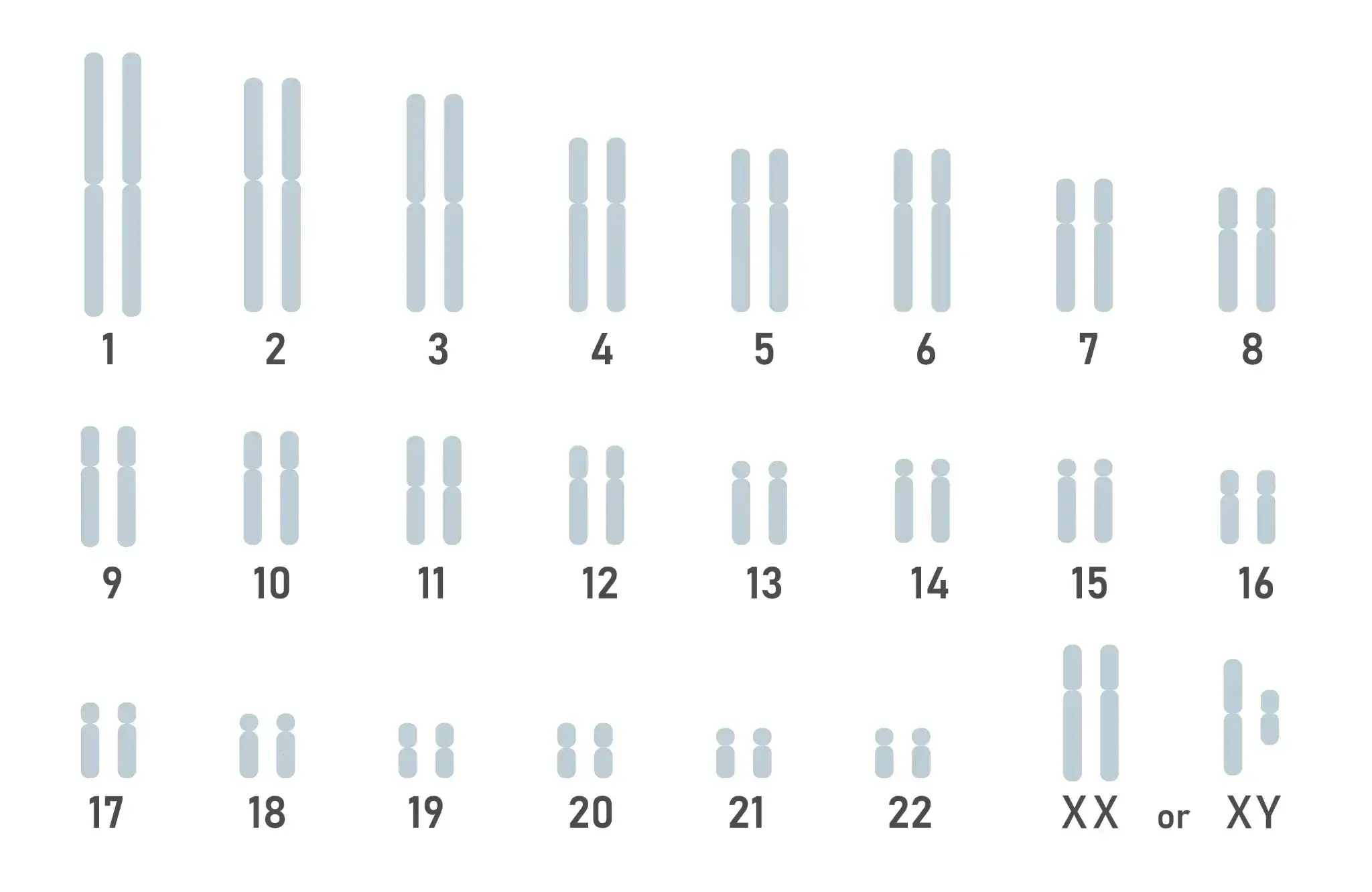
- ■
- ■
- ■
- ■
- ■
- ■
- ■
- ■
- ■
Related genes
| Related genes | RNU4-17P |
|---|---|
| Related genes | RN7SKP156 |
| Related genes | PPIAP63 |
| Related genes | SPATA18 |
| Related genes | NACAP2 |
| Related genes | LINC00114 |
| Related genes | SLC24A5 |
| Related genes | LEKR1 |
| Related genes | PHLPP1 |
Frequently asked questions (FAQ)
Q1. What is BMI (body mass index)?
BMI (Body Mass Index) is a physique index calculated by dividing weight (kg) by the square of height (m).According to WHO standards, a weight below 18.5 is considered underweight, 18.5 to 24.9 is normal weight, 25.0 to 29.9 is overweight, and 30.0 or above is obese.
Q2. Is there a relationship between BMI and genes?
According to research by Willer et al. at the University of Cambridge,DNA region rs17782313 is associated with BMIIt turns out that. People with the C mutation genotype tend to have a higher BMI (1).
Q3. How to calculate BMI?
BMI = Weight (kg) ÷ Height (m) ÷ Height (m) Calculate with. For example, if your weight is 70 kg and your height is 170 cm, 70 ÷ 1.7 ÷ 1.7 ≒ 24.2.
Q4. Can you judge your health condition based on BMI alone?
BMI is a simple physique index, butMuscle mass, body fat percentage, age, genderBecause it does not take into account health, there are limits to health judgments made on its own. It is recommended to use it in conjunction with other indicators such as body fat percentage and waist circumference.
Q5. What are the health risks of having a high BMI?
If your BMI is 25 or higher,Heart disease, type 2 diabetes, high blood pressure, dyslipidemia, certain cancersThe risk of developing is increased. According to a WHO report, it is estimated that approximately 39% of adults worldwide are overweight and approximately 13% are obese.
References
- Reference link 1: 2009 Jan., Cristen J Willer, Nat Genet
- Reference link 2: 2022 Dec., Jie Huang, Nat Commun
- Reference link 3: 2023 Jul., Tabea Schoeler, Nat Hum Behav
- Reference link 4: 2022 Nov., Fotios Koskeridis, Nat Commun
- Reference link 5: 2014 Aug., Molly Scannell Bryan, PLoS One
- Reference link 6: 2013 Sep., Margrit Urbanek, Hum Mol Genet