
 height at birth

- Height at birth is an important indicator of the health of fetal development, both genetic and environmental factors are involved
- T-type mutation in DNA region rs6449353Research has found that people with a tendency to be taller at birth
- maternalNutritional status, lifestyle habits, and genetic predispositioninfluences height at birth
Overview Height at birth is an important indicator of a baby's health and growth potential at the moment of birth. Being tall at birth often indicates that the baby was growing well in the womb, and is thought to have an impact on later physical growth and health. On the other hand, it is known that many external factors are involved when a child is short at birth, such as the mother's nutritional status, stress during pregnancy, smoking, and environmental factors. Until now, it was thought that height at birth was mainly influenced by the maternal environment and lifestyle, but recent research has revealed that genetic factors also play a large role. In other words, ``how tall a person is born'' is thought to be determined by both environmental and genetic factors. A study by van der Valk et al. of the Generation R Research Group revealed that height at birth is related to genes. There is a region called rs6449353 in the human genome, and there are two types of mutations, T and C, in the gene in this region. It was found that people with the T-type mutation tend to be taller at birth.
What is height at birth?
Height at birth is the height of a baby measured at the moment of birth, and is an important indicator of the state of growth in the womb and health potential.The average birth height of full-term infants (37 to 41 weeks) in Japan is approximately 48 to 50 cm (1).
What does height at birth mean?
Height at birth is one of the criteria for determining whether growth during the fetal period was normal.
- If you are tall:Indicates that in utero development was smooth and has a positive effect on subsequent physical growth.
- If you are short:There is a possibility of intrauterine growth retardation (IUGR), and the involvement of maternal environment and genetic factors is suggested.
Factors influencing height at birth
Height at birth is determined by the following factors:
- Genetic factors:Parents' height genes are directly involved in fetal development
- Maternal nutritional status:Malnutrition during pregnancy limits fetal growth
- Smoking during pregnancy:Reduces placental blood flow and inhibits fetal development
- Stress:Chronic stress increases cortisol secretion, which has negative effects on fetal growth
- Placenta function:Placental dysfunction reduces nutrient and oxygen supply
Comparison of genetic and environmental factors
| Comparison items | genetic factors | environmental factors |
|---|---|---|
| degree of influence | Approximately 40-60% | Approximately 40-60% |
| main factors | Parents' height genes/DNA mutations | Maternal nutrition and lifestyle habits |
| controllability | Impossible (congenital) | Possible (life improvement) |
| Impact period | Determined from the time of fertilization | whole pregnancy period |
| Research basis | GWAS (genome-wide association analysis) | Epidemiological survey/cohort study |
Relationship between height at birth and subsequent growth
Height at birth also affects long-term health, including:
- Correlation with adult height:Infants who are taller at birth tend to be taller as adults.
- Metabolic disease risk:Low birth weight and short stature are associated with increased risk of type 2 diabetes and cardiovascular disease in adulthood
- Cognitive development:Appropriate birth size also has a positive impact on cognitive development in childhood
Relationship between genes and height at birth
Relationship between DNA region rs6449353 and height at birth
A study by van der Valk et al. (1) of the Generation R Research Group found that the DNA region rs6449353 is associated with height at birth.
- There are three genotypes of rs6449353: TT, TC, and CC.
- Genotype with T-type mutationpeople tend to be taller at birth
Genotype distribution in Japanese (rs6449353)
| Genotype | Percentage of Japanese people | percentage of the world |
|---|---|---|
| TT type | 87.8% | 68.0% |
| TC type | 11.7% | 28.9% |
| CC type | 0.3% | 3.0% |
Rationale for testing
Physical DNA region: Height at birth
The gene region that most strongly influences height at birth is rs6449353. The distribution of isomorphic genotypes in Japan is as follows.
- TT
87.8 % - TC
11.7 % - CC
0.3 %
Another gene region associated with height at birth is rs12534093. The distribution of isomorphic genotypes in Japan is as follows
- TT
99.9 % - TA
0.1%以下 - AA
0.1%以下
Basis for inspection
van der of the Generation R Research Group A study by Valk et al. revealed that height at birth is related to genes. There is a region called rs6449353 in the human genome, and there are two types of mutations, T and C, in the gene in this region. It was found that people with the T-type mutation tend to be taller at birth.
The DNA region investigated this time
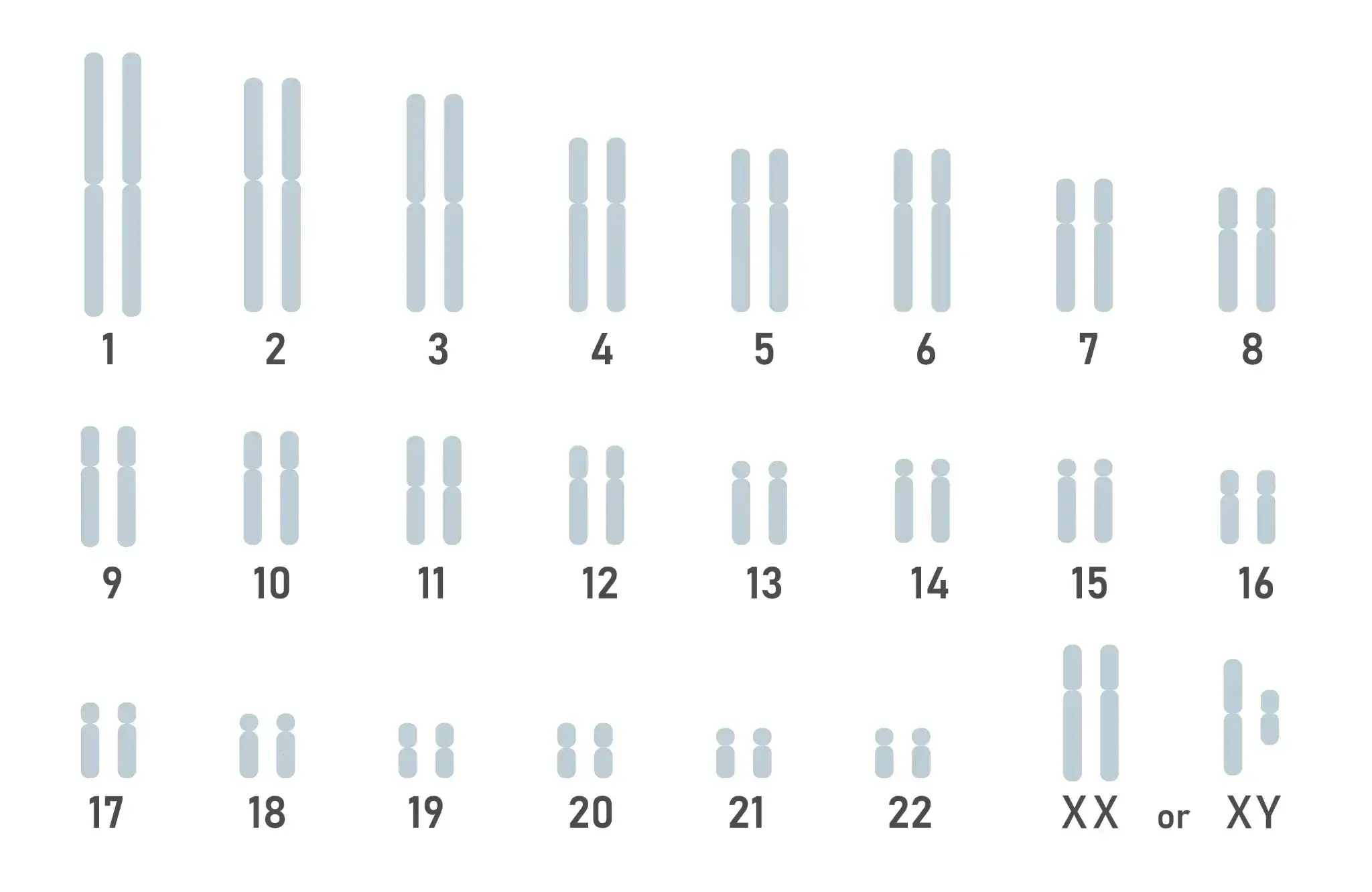
Schematic diagram of DNA map present in cells
- ■
- ■
- ■
- ■
- ■
- ■
- ■
- ■
- ■
Related genes
| Related genes | LCORL |
|---|---|
| Related genes | IGF2BP3 |
Frequently asked questions (FAQ)
Q1. What is height at birth?
Height at birth is the height of a baby measured at the moment of birth, and is an important indicator of the state of growth in the womb and health potential.The average birth height of full-term infants in Japan is approximately 48 to 50 cm (1).
Q2. Do genes affect height at birth?
Yes. van der of the Generation R Research Group According to research by Valk et al. (1),People with the T mutation in the DNA region rs6449353 tend to be taller at birthIt has been found that there is. Both genetic and environmental factors contribute to height at birth.
Q3. What is the cause of short height at birth?
The main causes of short height at birth are:Maternal nutritional deficiencies, smoking during pregnancy, chronic stress, placental insufficiency, genetic predispositionIt is. These factors alone or in combination limit fetal growth.
Q4. Does height at birth affect later growth?
Height at birth isPossibility of affecting subsequent physical growth and health statusThere is. Being tall at birth is an indicator of successful in-utero development, and a correlation with adult height has also been reported (2).
Q5. Can genetic testing determine the tendency for height at birth?
By examining the genotype of DNA region rs6449353,Understand risk trends related to height at birthYou can. In Japanese, the distribution is 87.8% for type TT, 11.7% for type TC, and 0.3% for type CC (1).
References
- Reference link 1: 2015 Feb., Ralf J P van der Valk, Hum Mol Genet
- Reference link 2: 2019 Oct., Xiao-Lin Yang, Front Genet