
 height
- The heritability of height is approximately 80%A University of Queensland study found that people with type A mutation in the rs1010415 DNA region tend to be taller.
- related to height9 gene regions(rs1010415, rs10890404, rs11062389, etc.) and9 related genes(RNA5SP86, KNCN, IGF2BP3, etc.) have been identified.
- In addition to genetic factors,Nutritionally balanced meals, sufficient sleep, and moderate exerciseis an important environmental factor that supports healthy growth.
Overview Height indicates the vertical length of the body, is determined mainly by the length of bones, and is an important indicator that reflects growth and development. Genetics plays a large role in height. The height of the parents often influences the height of the child, but the environment and lifestyle habits are also important. A balanced diet and enough sleep promote healthy growth. On the other hand, nutritional deficiencies and health problems can negatively impact growth. Height growth is generally evaluated using a growth curve. This is a way to check your growth compared to the standard height range for your age. If it is significantly larger or smaller than normal, it may indicate a growth disorder or hormonal problem and should be checked by a doctor. Height grows under the influence of genetics and environment. A healthy lifestyle and appropriate medical care are important to support healthy growth. Research by Yengo et al. at the University of Queensland revealed that the genetic factor for height is associated with a DNA region called rs1010415. There are three genotypes in this DNA region: GG, GA, and AA, and it was found that people with the A genotype tend to be taller.
What is height?
Height is an indicator of the vertical length of the body, determined primarily by bone length, and is an important physical measurement that reflects growth and development.The heritability of height is estimated to be approximately 80%, with the remaining 20% being influenced by environmental factors (nutrition, sleep, exercise).
What are the factors that determine height?
Height is determined by a combination of the following factors:
- Genetic factors (approximately 80%):Parents' height influences children's height, and multiple DNA regions including rs1010415 are involved
- Nutrition:A balanced diet containing protein, calcium, and vitamin D promotes growth.
- Sleep:Growth hormone is secreted during sleep (especially during deep sleep), so 8 to 10 hours of sleep a day is recommended.
- Exercise:Moderate exercise promotes bone growth and activates growth hormone secretion
Comparison of genetic and environmental influences on height
| factor | degree of influence | Specific example |
|---|---|---|
| genetic factors | Approximately 80% | 9 DNA regions including rs1010415 and rs10890404 |
| nutrition | Approximately 10% | Protein, calcium, vitamin D |
| sleep/exercise | Approximately 10% | Growth hormone secretion/epiphyseal stimulation |
How to evaluate height with growth curves
growth in heightgrowth curvewill be evaluated. Compare your height with the standard height range according to your age and judge it based on the standard deviation (SD).
- -2SD or less:There is a possibility of short stature, and testing for growth hormone secretion deficiency and hypothyroidism is recommended.
- +2SD or more:There is a possibility that you are tall, and a test for excessive secretion of growth hormone is recommended.
- -2SD〜+2SD:standard growth range
Lifestyle habits that support healthy height growth
The following lifestyle habits are effective for maximizing height growth.
- Balanced diet:Intake of 700-1,000 mg of calcium and 50-65 g of protein per day
- Adequate sleep:Ensure 8 to 10 hours of quality sleep a day during the growing period
- Moderate exercise:Exercises that place vertical loads on bones, such as jumping and stretching
- Periodic growth assessment:Height measurement once or twice a year and evaluation based on growth curve
Relationship between genes and height
Relationship between DNA region rs1010415 and height
A study by Yengo et al. (1) from the University of Queensland revealed that the DNA region rs1010415 is associated with genetic factors for height.
- There are three genotypes of rs1010415: GG, GA, and AA.
- Genotype with type A mutationpeople tend to be taller
Genotype distribution in Japanese (main areas)
| gene region | Genotype | Percentage of Japanese people | percentage of the world |
|---|---|---|---|
| rs1010415 | GG type | 33.2% | 46.4% |
| GA type | 48.8% | 43.3% | |
| AA type | 17.8% | 10.1% | |
| rs10890404 | AA type | 39.6% | 7.3% |
| AG type | 46.6% | 39.5% | |
| GG type | 13.7% | 53.0% | |
| rs11062389 | TT type | 23.1% | 42.8% |
| TC type | 49.9% | 45.2% | |
| CC type | 26.9% | 11.9% |
Rationale for testing
Physical DNA region: height
The gene region that most strongly influences height is rs1010415. The distribution of isomorphic genotypes in Japan is as follows.
- GG
33.2 % - GA
48.8 % - AA
17.8 %
Another gene region related to height is rs10890404. The distribution of isomorphic genotypes in Japan is as follows
- AA
39.6 % - AG
46.6 % - GG
13.7 %
Another gene region related to height is rs11062389. The distribution of isomorphic genotypes in Japan is as follows
- TT
23.1 % - TC
49.9 % - CC
26.9 %
Another gene region related to height is rs11144688. The distribution of isomorphic genotypes in Japan is as follows
- GG
87.8 % - GA
11.7 % - AA
0.3 %
Another gene region related to height is rs11684404. The distribution of isomorphic genotypes in Japan is as follows
- TT
31.6 % - TC
49.2 % - CC
19.1 %
Another gene region related to height is rs1197062. The distribution of isomorphic genotypes in Japan is as follows
- TT
91.5 % - TG
8.2 % - GG
0.1 %
Another gene region related to height is rs12479172. The distribution of isomorphic genotypes in Japan is as follows
- CC
40.2 % - CT
46.3 % - TT
13.3 %
Another gene region related to height is rs12526579. The distribution of isomorphic genotypes in Japan is as follows
- GG
46.6 % - GA
43.3 % - AA
10.0 %
Another gene region related to height is rs12534093. The distribution of isomorphic genotypes in Japan is as follows
- TT
99.9 % - TA
0.1%以下 - AA
0.1%以下
Basis for inspection
Research by Yengo et al. at the University of Queensland has revealed the genetic causes of height. There is a region called rs1010415 in the human genome, and there are two types of mutations, G and A, in the gene in this region. It was found that people with the G-type mutation tend to be taller.
The DNA region investigated this time
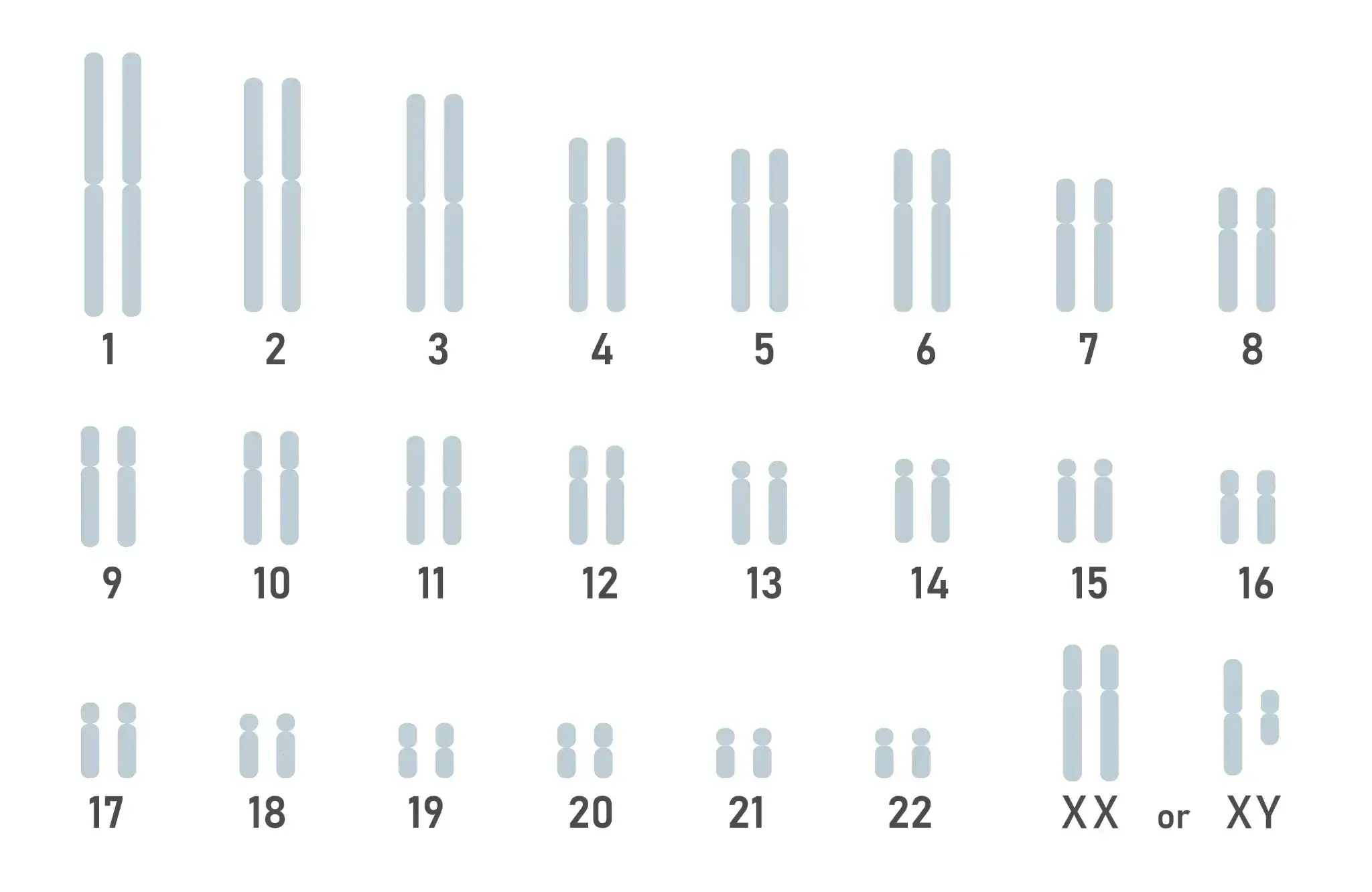
Schematic diagram of DNA map present in cells
- ■
- ■
- ■
- ■
- ■
- ■
- ■
- ■
- ■
Related genes
| Related genes | RNA5SP86 |
|---|---|
| Related genes | KNCN |
| Related genes | FOXM1 |
| Related genes | PCSK5 |
| Related genes | EIF2AK3 |
| Related genes | APPBP2-DT |
| Related genes | LINC01102 |
| Related genes | AFG1L |
| Related genes | IGF2BP3 |
Frequently asked questions (FAQ)
Q1. To what extent is height determined by genetics?
The heritability of height is approximately 80%.A study by Yengo et al. at the University of Queensland found that people with the type A mutation in the rs1010415 DNA region tend to be taller. The remaining 20% depends on environmental factors such as nutrition, sleep, and exercise (1).
Q2. What is the genetic region associated with height?
The main genetic regions related to height are:rs1010415、rs10890404、rs11062389、rs11144688、rs11684404、rs1197062、rs12479172、rs12526579、rs12534093Nine have been identified. Associated genes include RNA5SP86, KNCN, FOXM1, PCSK5, EIF2AK3, APPBP2-DT, LINC01102, AFG1L, and IGF2BP3 (1)(2).
Q3. What lifestyle habits are necessary for height growth?
For healthy height growth,A balanced diet containing protein, calcium, and vitamin D, sufficient sleep for 8 to 10 hours a day, and moderate exercise.is important. Growth hormone is secreted during sleep, so quality sleep is essential.
Q4. What is a growth curve?
A growth chart is a way to see your growth compared to standard height ranges for your age.Evaluation is based on standard deviation (SD), and if it is below -2SD or above +2SD, a growth disorder or hormonal abnormality is suspected, and diagnosis by a doctor is recommended.
Q5. Is there a difference in genotype distribution between Japanese and the rest of the world?
Yes, there are differences in genotype distribution between ethnic groups. For example, in rs1010415,33.2% of Japanese people have type GG.ButWorld average is 46.4%The world average for type AA is 10.1%, compared to 17.8% in Japan. These differences in distribution contribute to differences in average height between groups (1)(3).
References
- Reference link 1: 2022 Oct., Loïc Yengo, Nature
- Reference link 2: 2014 Nov., Andrew R Wood, Nat Genet
- Reference link 3: 2023 Jul., Tabea Schoeler, Nat Hum Behav
- Reference link 4: 2019 Jun., Genevieve L Wojcik, Nature