
 body fat percentage

- Body fat percentage is influenced by the FTO gene (rs8050136), and type AA people have a high BMI and are at the highest risk of obesity.
- 64.7% of Japanese people are CC type(a constitution that makes it difficult to gain weight), and only 3.8% are type AA.
- As we age, the influence of the FTO gene increases,Be careful about weight gain after pubertyis required
Overview Have you ever felt sad and wondered, ``Maybe it's my constitution that makes me gain weight so quickly even though I don't eat a lot?'' On the other hand, some people may be worried that ``My family has a lot of obese people, so I'll probably gain weight as I get older.'' It may be that your predisposition to gaining weight is strongly influenced by your genes. According to a study by Cincinnati Children's Hospital Medical Center, it was found that the gene "FTO" is involved in body mass index (BMI) (Reference link 1). BMI is a numerical value that expresses the degree of obesity and is calculated as "weight (kg) ÷ height (m) ÷ height (m)" (reference link 2). For adults, a BMI of 25.0 or higher is considered overweight, and a BMI of 30.0 or higher is considered obese. It has been revealed that a high BMI increases the risk of many diseases, including lifestyle-related diseases such as dyslipidemia, hypertension, and type 2 diabetes (Reference link 3). Why not take a genetic test to find out your constitution before a serious disease is discovered? 2. Rationale A study titled ``The relationship between BMI and the FTO gene'' was conducted at Cincinnati Children's Hospital Medical Center, and the results showed that BMI is influenced by the gene ``FTO''. This gene affects a region called ``rs8050136.'' The DNA region "rs8050136" can be divided into three genotypes: "CC type," "CA type," and "AA type." Among Japanese people, "CC type" accounts for 64.7%, "CA type" accounts for 31.5%, and "AA type" accounts for only 3.8% (Reference link 4). Research shows that people with an "A" tend to have a higher BMI. Additionally, people with type AA have a strong appetite and are prone to gaining weight. Therefore, they may be at the highest risk of obesity among the three types. On the other hand, people with the CC type have a low BMI and are less likely to gain weight. Furthermore, it has been shown that as a person gets older, the influence of the gene "FTO" has a greater influence on BMI. Therefore, even if people with type AA are thin in childhood, they may gain weight in adolescence, so they need to be careful (Reference link 5). By knowing your genetic type through genetic testing, you may be able to find new options for your future lifestyle. 3. Mechanism of action The gene "FTO" is located on chromosome 16 of the 24 human chromosomes and encodes a protein that performs oxidative demethylation of RNA. Previous research has confirmed that there is a relationship between FTO and BMI, and it has been reported that this gene is the one that most affects obesity. FTO, which is active in the hypothalamus, is thought to affect BMI by acting on the appetite regulating region. Additionally, this gene affects not only BMI but also body fat percentage and waist size, and is associated with the risk of multiple diseases including type 2 diabetes. Furthermore, "FTO" is also involved in the differentiation of adipocytes, controlling whether they become white adipocytes that store fat or brown adipocytes that burn fat. In this way, "rs8050136", a specific DNA region of the gene "FTO", is related to BMI and is one of the SNPs that is attracting attention (Reference links 6, 7, 8).
What is body fat percentage?
Body fat percentage is a health index that shows the percentage of fat in your body weight.It is closely related to BMI (weight kg ÷ height m ÷ height m), which indicates the degree of obesity, and a BMI of 25.0 or higher is considered "overweight," and a BMI of 30.0 or higher is considered "obese." People with a high BMI have an increased risk of multiple lifestyle-related diseases, including dyslipidemia, hypertension, and type 2 diabetes.
A study from Cincinnati Children's Hospital Medical Center found that BMI and body fat percentageFTO gene (DNA region rs8050136)It turns out that this is involved (Reference link 1). By knowing your physical constitution through genetic testing, you can manage your weight effectively.
What is the standard value for body fat percentage?
According to the standards of the Japan Obesity Society, the standard range of body fat percentage is as follows.
| classification | men | woman |
|---|---|---|
| low | less than 10% | less than 20% |
| standard | 10〜19% | 20〜29% |
| somewhat expensive | 20〜24% | 30〜34% |
| expensive | 25% or more | 35% or more |
Is the predisposition to gaining weight easily inherited?
The DNA region ``rs8050136'' of gene FTO is one of the genes that most influences obesity, as it is associated with BMI and body fat percentage.There are three genotypes in this region: CC type, CA type, and AA type.
- CC type (64.7% of Japanese):A constitution with a low BMI that makes it difficult to gain weight
- CA type (31.5% of Japanese):Intermediate BMI trend
- Type AA (3.8% of Japanese):Those with a high BMI and a strong appetite have the highest risk of obesity.
Research has confirmed that people with an "A" tend to have a higher BMI (reference link 4).
How does the influence of the FTO gene change with increasing age?
The older you get, the more the FTO gene affects your BMI.This has been shown (Reference link 5). Specifically, it has the following characteristics.
- Even if people with blood type AA are thin in childhood,Possibility of gaining weight after pubertyThere is
- As basal metabolism declines with age, genetic risks are more likely to become apparent.
- By knowing your genotype early on, you can make preventive lifestyle changes.
Body fat percentage risk comparison by genotype
| Comparison items | CC type | CA type | AA type |
|---|---|---|---|
| Percentage of Japanese people | 64.7% | 31.5% | 3.8% |
| BMI trend | low | middle | expensive |
| obesity risk | low risk | medium risk | high risk |
| appetite tendency | standard | Slightly active | vigorous |
Relationship between FTO gene and body fat percentage
What is the mechanism of action of the FTO gene?
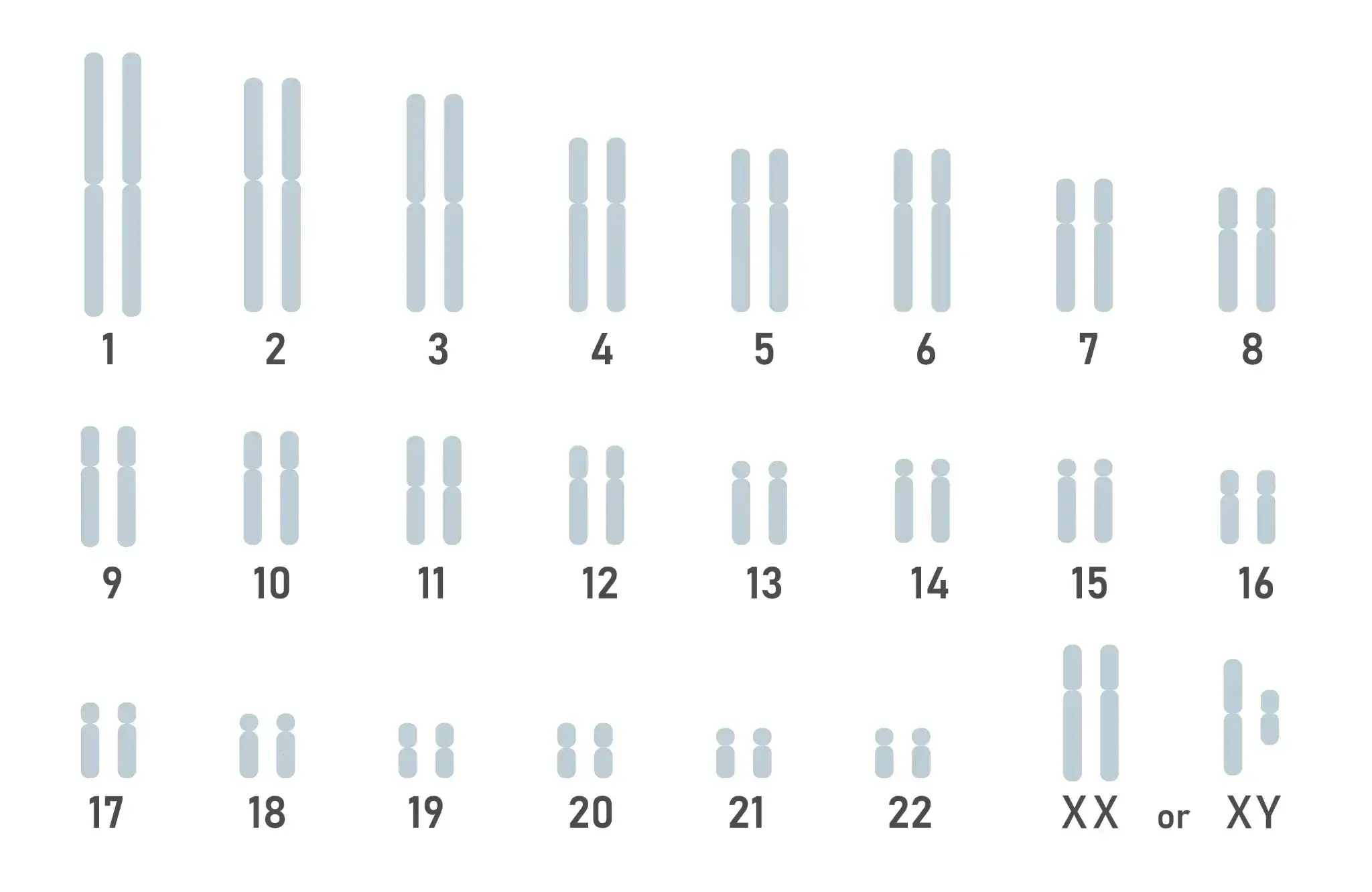
The FTO gene is located on chromosome 16 and encodes a protein that performs oxidative demethylation of RNA.It has been reported as the gene that most strongly influences obesity.
The mechanism by which the FTO gene affects BMI and body fat percentage is as follows.
- Effect on appetite regulation:Actively acts in the hypothalamus, affects the appetite regulating area and affects BMI
- Impact on body composition:Affects not only BMI but also body fat percentage and waist circumference
- Regulation of adipocyte differentiation:Controls whether the cells become white fat cells that store fat or brown fat cells that burn fat.
- Association with disease risk:Involved in the risk of multiple diseases including type 2 diabetes
In this way, the DNA region rs8050136 of the FTO gene is one of the SNPs (single nucleotide polymorphisms) that are attracting attention in relation to BMI and body fat percentage (Reference links 6, 7, 8).
Relationship between NPC1 gene (rs1805081) and body fat percentage
FTO is not the only gene associated with body fat percentage.DNA region rs1805081 of NPC1 geneis also involved in body fat percentage.
- TT type (54.8% of Japanese):Standard body fat percentage trend
- TC type (38.4% of Japanese):intermediate tendency
- CC type (6.7% of Japanese):Tendency to be affected by body fat percentage
Rationale for testing
Body surface DNA region: body fat percentage
The gene region that most strongly influences body fat percentage is rs8050136. The distribution of isomorphic genotypes in Japan is as follows.
- CC
68.3 % - CA
28.6 % - AA
2.9 %
Another gene region related to body fat percentage is rs1805081. The distribution of isomorphic genotypes in Japan is as follows
- TT
54.8 % - TC
38.4 % - CC
6.7 %
Basis for inspection
A study by Bahram Namjou and colleagues at Cincinnati Children's Hospital Medical Center found that BMI is influenced by the gene FTO. There are two types of mutations, C and A, in the DNA region rs8050136, and people with type A tend to have a high BMI. Among Japanese people, 68.3% have the CC type, 28.6% have the CA type, and 2.9% have the AA type, and are characterized by a higher prevalence of the CC type (a constitution that makes it difficult to gain weight) compared to the world average. The rs1805081 region of the NPC1 gene is also involved in body fat percentage, and multiple genes interact to determine body fat percentage.
The DNA region investigated this time
Schematic diagram of DNA map present in cells
- ■
- ■
- ■
- ■
- ■
- ■
- ■
- ■
- ■
Related genes
| Related genes | FTO |
|---|---|
| Related genes | NPC1 |
Frequently asked questions (FAQ)
Q1. What is body fat percentage?
Body fat percentage is an index that shows the percentage of fat in your body weight.The standard value for adult men is 10-19%, and for adult women 20-29%. A high body fat percentage increases the risk of lifestyle-related diseases such as dyslipidemia, hypertension, and type 2 diabetes. A BMI (weight kg ÷ height m ÷ height m) of 25.0 or above is considered "overweight" and 30.0 or above is considered "obese" (reference link 2).
Q2. Are genes related to body fat percentage?
Yes.FTO gene (rs8050136 region) affects BMI and body fat percentageThat's what a study at Cincinnati Children's Hospital Medical Center found. People with type AA have a high BMI and are at the highest risk of obesity, while people with type CC have a low BMI and are less likely to gain weight (Reference link 1).
Q3. What is the FTO gene?
FTO gene is located on chromosome 16This gene encodes a protein that performs oxidative demethylation of RNA. It works in the appetite-regulating area of the hypothalamus and influences BMI, body fat percentage, and waist circumference. It also plays a role in controlling adipocyte differentiation (white adipocytes or brown adipocytes) (reference links 6, 7, 8).
Q4. What can I do to lower my body fat percentage?
A combination of aerobic exercise (150 minutes or more per week) and strength trainingis effective. When it comes to meals, it is important to be conscious of high protein and low sugar content, and to keep the daily calorie intake below the calorie expenditure. For people with blood type AA who are genetically prone to gaining weight, systematic weight management is recommended from an early stage.
Q5. Is there a relationship between age and genetic influences?
Yes.The influence of the FTO gene has a greater influence on BMI as you get older.Research shows that. Even if people with blood type AA are thin during childhood, they may gain weight after adolescence, so it is important to manage their lifestyle habits from an early stage (Reference link 5).
References
- Reference link 1: 2013 Dec., Bahram Namjou, Front Genet.
- Reference link 2: Information on "BMI" Ministry of Health, Labor and Welfare
- Reference link 3: 2012 Sep., F. Xavier Pi-Sunyer, Obesity research.
- Reference link 4: Information on DNA region “rs8050136” NIH
- Reference link 5: 2008 Dec., Claire M A Haworth, Obesity (Silver Spring).
- Reference link 6: 2010 Nov., Elizabeth K Speliotes, Nat Genet.
- Reference link 7: 2009 Apr., A Haupt, Exp Clin Endocrinol Diabetes.
- Reference link 8: 2015 Sep., Melina Claussnitzer, N Engl J Med.
- Reference link 9: 2011 Jun., Tuomas O Kilpeläinen, Nat Genet
- Reference link 10: 2013 Feb., M den Hoed, Int J Obes (Lond)