
 BMI adjustment hip circumference

- BMI-adjusted hip circumference is a body shape evaluation index of hip size corrected by BMI.enables accurate fat distribution evaluation that eliminates physical differences.
- C-type mutation in DNA region rs16942341Research reveals that people with BMI tend to have larger BMI-adjusted hip circumference
- cardiovascular disease and metabolic syndromehealth risk assessmentIt is used as an important indicator in preventive medicine.
Overview BMI-adjusted hip circumference refers to the value of the hip circumference (hip size) adjusted based on the individual's BMI (body mass index). BMI is an index calculated based on weight and height, and indicates the standardness of a person's physique, but simply measuring hip circumference does not take into account differences in body shape. Therefore, BMI-adjusted hip circumference is used to more accurately assess how large a person's hip size is relative to their body shape. The reason for this adjustment is that even people with the same hip circumference have different body mass indexes and different health risks. For example, even if the hip size is the same, there are differences in fat accumulation and muscle mass between people with a low BMI and those with a high BMI, which can affect their body shape and health status. BMI-adjusted hip circumference is an evaluation method that takes these differences into consideration. Adjusted hip circumference is particularly useful in body shape and obesity research, health risk assessment, and body shape-related aesthetic evaluation. For example, if a person with a high BMI has the same hip size, BMI-adjusted hip circumference can be used to determine how large or small the hip size actually is compared to other people. A study by Shungin et al. at Umeå University revealed that changes in BMI-adjusted hip circumference are associated with a DNA region called rs16942341. There are three genotypes in this DNA region: CC, CT, and TT, and it was found that people with the C type mutation tend to have larger BMI-adjusted hip circumference.
What is BMI adjusted hip circumference?
BMI-adjusted hip circumference is a body image evaluation index that corrects the hip circumference (hip size) with BMI (body mass index).It eliminates body differences and allows you to accurately assess how large an individual's hip size is in relation to their body shape.
Why you need BMI adjusted hip circumference
A simple measurement of hip circumference cannot account for differences in body shape. There are three reasons for adjusting BMI:
- Eliminating physical differences:Even if the hip size is the same, there are differences in fat accumulation and muscle mass if the BMI is different.
- Accurate assessment of health risks:People with low BMI and people with high BMI have different health risks even if they have the same hip size.
- Improving comparative accuracy in research and clinical settings:Compare between groups and accurately track changes over time
Significance of measuring BMI-adjusted hip circumference and fields of application
BMI-adjusted hip circumference is utilized in the following areas:
- Obesity research:Analysis of fat distribution patterns (subcutaneous fat vs. visceral fat)
- Health risk assessment:Risk indicators for cardiovascular disease, type 2 diabetes, and metabolic syndrome
- Aesthetic evaluation of body shape:Objectification of aesthetic standards related to body shape
- Genetic research:Elucidation of genetic factors that affect body shape
Difference between BMI-adjusted hip circumference and waist-hip ratio (WHR)
| Comparison items | BMI adjustment hip circumference | Waist-hip ratio (WHR) |
|---|---|---|
| definition | Hip size corrected by BMI | Waist ÷ hip ratio |
| Evaluation target | relative size of hips | Degree of abdominal obesity |
| physique correction | Corrected for BMI | Body size is not taken into account due to proportions |
| Main uses | Genetic study of fat distribution | Simple assessment of cardiovascular risk |
| Advantages | Precise evaluation that eliminates physical differences | Easy to measure |
Relationship between hip circumference and health risks
Studies have shown that BMI-adjusted hip circumference is associated with the following health risks:
- Cardiovascular disease:People with larger hip circumference after adjusting for BMI tend to have lower cardiovascular disease risk (Christakoudi et al., 2021)
- Type 2 diabetes:Subcutaneous fat in the buttocks may have a protective effect on insulin sensitivity
- Metabolic syndrome:Fat distribution pattern influences metabolic risk profile
Relationship between genes and BMI-adjusted hip circumference
Relationship between DNA region rs16942341 and body shape
A study by Shungin et al. (2015) from Umeå University found that the DNA region rs16942341 was associated with BMI-adjusted hip circumference.
- There are three genotypes of rs16942341: CC, CT, and TT.
- Genotype with type C mutationPeople with BMI tend to have larger BMI-adjusted hip circumference.
Genotype distribution in Japanese (rs16942341)
| Genotype | Percentage of Japanese people | percentage of the world |
|---|---|---|
| CC type | 99.9% | 93.1% |
| CT type | 0.1%以下 | 6.7% |
| TT type | 0.1%以下 | 0.1% |
99.9% of Japanese people have type CC, and it is characterized by a higher prevalence of type CC than the world average (93.1%).
Rationale for testing
Body surface DNA region: BMI-adjusted hip circumference
The gene region that most strongly influences BMI-adjusted hip circumference is rs16942341. The distribution of isomorphic genotypes in Japan is as follows.
- CC
99.9 % - CT
0.1%以下 - TT
0.1%以下
Another gene region related to BMI-adjusted hip circumference is rs3118906. The distribution of isomorphic genotypes in Japan is as follows
- GG
94.3 % - GA
5.6 % - AA
0.1%以下
Another gene region related to BMI-adjusted hip circumference is rs7759938. The distribution of isomorphic genotypes in Japan is as follows
- CC
6.9 % - CT
38.9 % - TT
54.1 %
Basis for inspection
A study by Shungin et al. at Umeå University revealed that changes in BMI-adjusted hip circumference are associated with genes. There is a region called rs16942341 in the human genome, and the gene in that region has two types of mutations, C and T. It was found that people with type C mutations tend to have larger BMI-adjusted hip circumference (1).
The DNA region investigated this time
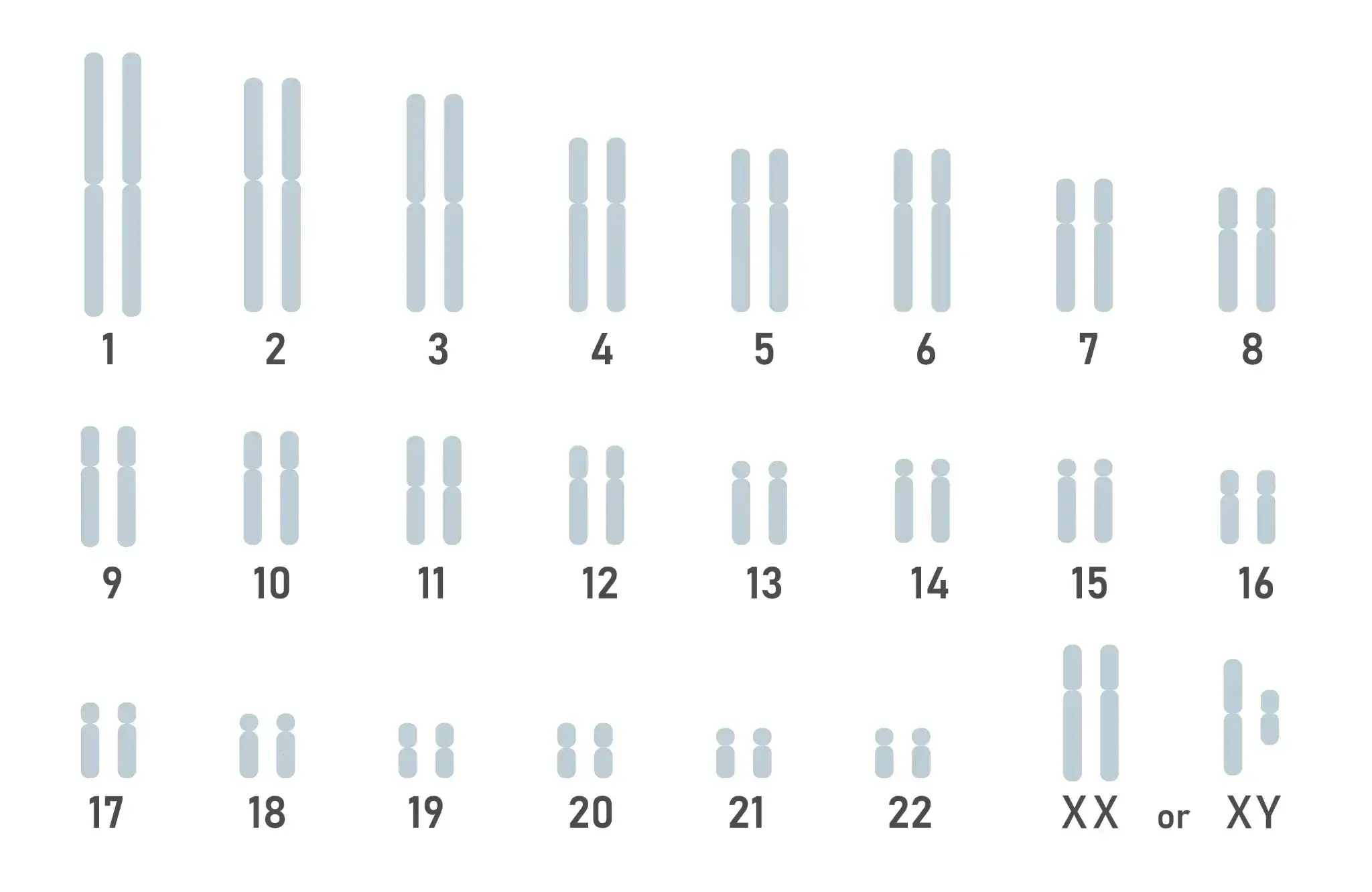
Schematic diagram of DNA map present in cells
- ■
- ■
- ■
- ■
- ■
- ■
- ■
- ■
- ■
Related genes
| Related genes | ACAN |
|---|---|
| Related genes | DLEU7 |
| Related genes | LIN28B-AS1 |
Frequently asked questions (FAQ)
Q1. What is BMI-adjusted hip circumference?
BMI-adjusted hip circumference is a body image evaluation index that corrects the hip circumference with BMI (body mass index).Even if the hip size is the same, fat distribution and health risks will change if the BMI differs, so by adjusting for the BMI, it is possible to accurately evaluate the relative size of the hip size to the individual's body shape.
Q2. Why is BMI-adjusted hip circumference important?
A simple measurement of hip circumference does not take into account physical differences. By using BMI adjusted hip circumference,Cardiovascular disease, type 2 diabetes, metabolic syndromeYou can more accurately assess health risks such as Studies have reported that people with larger hip circumference after adjusting for BMI tend to have lower cardiovascular risk (2).
Q3. Can I find out trends in BMI-adjusted hip circumference through genetic testing?
By examining the genotype of the DNA region rs16942341,Understand trends in BMI-adjusted hip circumferenceYou can. Studies have shown that people with the C genotype tend to have a larger BMI-adjusted hip circumference (1).
Q4. What is the difference between BMI-adjusted hip circumference and waist-hip ratio (WHR)?
Waist-hip ratio (WHR) is the ratio of your waist to your hips.Evaluate abdominal obesityI will. On the other hand, BMI-adjusted hip circumference evaluates the hip size itself corrected by BMI,Analysis of fat distribution excluding body differencessuitable for Both indicators are used complementary.