
 bloom syndrome

- Bloom syndrome is a DNA repair disorder caused by an abnormality in the BLM gene.It is an autosomal recessive genetic disease caused by short stature, sun sensitivity, immunodeficiency, and early-onset cancer.
- T-type mutation in DNA region rs28384991People with this type have a change in the amino acids of the BLM protein, and about 19% of Japanese people have a genotype that includes the T type.
- BLM gene (chromosome 15)The helicase produced by is essential for DNA repair, and identifying polymorphisms through genetic testing is expected to help assess cancer risk.
Overview Our DNA is routinely damaged by the effects of ultraviolet rays and active oxygen. This damage is constantly repaired by enzymes in cells throughout the body, but if it is not repaired properly, it can lead to mutations, cell death, and even cancer. Various enzymes are involved in DNA repair, and an enzyme called helicase is one of the important ones. For example, it is known that if there is an abnormality in the BLM gene, which produces one of the helicases, DNA damage cannot be properly repaired and gradually accumulates, leading to the development of Bloom syndrome, a genetic disease that causes sun sensitivity, immunodeficiency, and approximately 30% of people develop cancer by the age of 20. (Reference link 1) In this way, the BLM gene plays an extremely important role in protecting our cells, and investigating the genotype of the BLM gene through genetic testing is expected to lead to knowing the risk of developing diseases such as Bloom syndrome and cancer. 2. Rationale The DNA region "rs28384991" contained in the BLM gene has three genotypes: "CC", "TC", and "TT". It is known that in people with the T-type genotype, which is a risk allele such as "TT" or "TC," some of the amino acids that make up BLM change from threonine to methionine (reference link 2). However, it is also known that changes in the genotype of the DNA region "rs28384991" do not necessarily result in Bloom syndrome (reference link 3). However, while more than 99% of Japanese people have the CC type worldwide, 81.5% of Japanese people have the CC type, 17.5% of the TC type, and 0.94% of the TT type, meaning that there are slightly more people with the T genotype, and approximately one in five Japanese people has a polymorphism that frequently occurs in the BLM gene. DNA damage and repair are phenomena that occur on a daily basis throughout the body, and the function of the BLM gene is extremely important, so it may be possible in the future to discover the various effects seen in Bloom syndrome. 3. Mechanism of action The BLM gene is located on chromosome 15 of the 24 chromosomes common to humans. If a major abnormality occurs in the BLM gene and helicase activity decreases, this may lead to Bloom syndrome, in which DNA replication and repair are not performed normally. People with Bloom's syndrome experience a variety of abnormalities throughout their bodies, including problems with physical development and maturation, inability to cope with DNA damage caused by ultraviolet rays, resulting in sun sensitivity, immune function not working properly, and cancer developing at a young age. The DNA region ``rs28384991'' is said to be unlikely to significantly impair the function of the BLM gene involved in helicase activity, but it is one of the single nucleotide polymorphisms that is attracting attention because it changes some amino acids in the BLM gene and may be involved in the onset of cancer including Bloom syndrome.
What is Bloom syndrome?
Bloom syndrome is an autosomal recessive disease in which helicase activity is reduced due to an abnormality in the BLM gene, which prevents normal DNA replication and repair.It has been reported that approximately 30% of patients develop cancer by the age of 20 (Reference link 1).
Causes and mechanisms of Bloom syndrome
Our DNA is routinely damaged by the effects of ultraviolet rays and active oxygen. This damage is constantly repaired by the action of enzymes, but if the repair is insufficient, the following risks may occur.
- Accumulation of mutations:DNA sequence abnormalities are not repaired and genetic information changes
- Cell death:If the damage is severe, cells no longer function properly.
- Onset of cancer:Mutations accumulate and control of cell proliferation breaks down
An enzyme called helicase plays an important role in DNA repair.When there is an abnormality in the BLM gene, the activity of this helicase decreases.However, when DNA damage is not repaired properly and accumulates, Bloom syndrome develops.
Main symptoms of Bloom syndrome
in bloom syndromeVarious symptoms throughout the bodywill appear.
- Growth disorder:Poor physical development and maturation resulting in short stature
- Sun sensitivity:Unable to respond to DNA damage caused by ultraviolet rays, skin symptoms appear
- Immunodeficiency:Immune function doesn't work properly, making you susceptible to infections
- Juvenile cancer:Approximately 30% of patients develop cancer by age 20
Role and mechanism of action of BLM gene
BLM gene is located on chromosome 15It produces helicase and is responsible for DNA replication and repair.
| Item | Content |
|---|---|
| gene name | BLM(Bloom syndrome RecQ-like helicase) |
| chromosome location | chromosome 15 |
| produced protein | Helicase (DNA repair enzyme) |
| Main features | Normalization of DNA replication and repair |
| Effects of abnormality | DNA damage accumulation → Bloom syndrome onset |
Relationship between genes and Bloom syndrome
Relationship between DNA region rs28384991 and onset risk
The DNA region "rs28384991" in the BLM gene has three genotypes: "CC", "CT", and "TT".
- People with the T-type mutation (TT/CT) have some amino acids in the BLM protein.Change from threonine to methionineIt turned out to be (reference link 2)
- The rs28384991 mutation is not directly linked to Bloom syndrome (reference link 3)
- Although it is unlikely that helicase activity will be significantly impaired,Involvement in cancer development attracts attentionhas been
Genotype distribution in Japanese and the world (rs28384991)
| Genotype | Percentage of Japanese people | percentage of the world |
|---|---|---|
| CC type | 81.6% | 99.3% |
| CT type | 17.3% | 0.6% |
| TT type | 0.9% | 0.1%以下 |
While the CC type accounts for over 99% worldwide,Approximately 1 in 5 Japanese people(approximately 18.2%) have a genotype that includes the T type (CT type or TT type). This ratio is significantly higher than the world average.
Rationale for testing
Superficial DNA region: Bloom syndrome
The gene region that most strongly affects Bloom syndrome is rs28384991. The distribution of isomorphic genotypes in Japan is as follows.
- CC
81.6 % - CT
17.3 % - TT
0.9 %
Basis for inspection
By examining the genotype of the DNA region "rs28384991" in the BLM gene, it is possible to understand the status of polymorphisms that may affect helicase activity. People with the T-type mutation have a change in the amino acid sequence of the BLM protein, which is attracting attention as it may be involved in the development of Bloom syndrome and cancer (reference link 2).
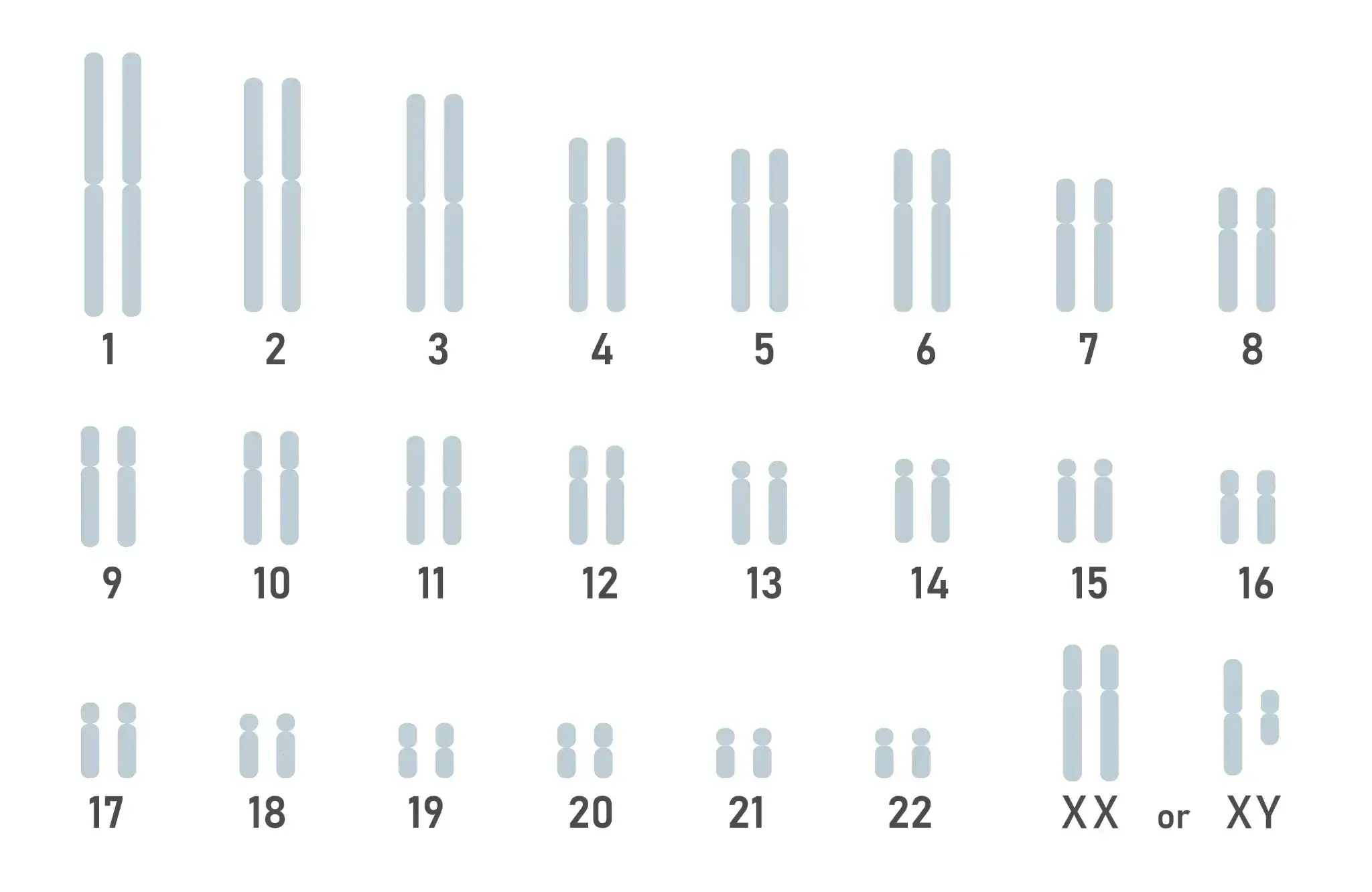
The DNA region investigated this time
Schematic diagram of DNA map present in cells
- ■
- ■
- ■
- ■
- ■
- ■
- ■
- ■
- ■
Frequently asked questions (FAQ)
Q1. What is Bloom syndrome?
Bloom syndrome is an autosomal recessive disease in which helicase activity is reduced due to an abnormality in the BLM gene, which prevents normal DNA replication and repair.Characteristics include short stature, sun sensitivity, immunodeficiency, and approximately 30% of people develop cancer by the age of 20 (Reference link 1).
Q2. What is the gene that causes Bloom syndrome?
BLM gene located on chromosome 15is the causative gene. The BLM gene produces a DNA repair enzyme called helicase, and when a major abnormality occurs in this gene, the ability to repair DNA damage decreases.
Q3. What is the relationship between DNA region rs28384991 and Bloom syndrome?
rs28384991 has three genotypes: CC, CT, and TT.In people with the T mutation, the amino acid in the BLM protein changes from threonine to methionine.I will. However, changes in rs28384991 are not directly linked to Bloom syndrome (reference link 3).
Q4. Can genetic testing determine the risk of Bloom syndrome?
By examining the genotype of the DNA region rs28384991,Understand the status of BLM gene polymorphismsYou can. Genotypes including type T are found in approximately 18.2% of Japanese people, and are attracting attention for their possible involvement in Bloom syndrome and cancer development (reference link 2).
References
- Reference link 1: Information on "Bloom syndrome" Intractable disease information center
- Reference link 2: Information on DNA region “rs28384991” NIH
- Reference link 3: Information on the gene “BLM” NIH