
 bipolar disorder

- Bipolar disorder is a mental illness that alternates between mania and depression., which has a significant impact on energy, judgment, and behavior.
- T-type mutation in DNA region rs1378559Research shows that people with the disease tend to be at higher risk of developing
- Drug therapy, psychological therapy, lifestyle improvementA combination of these can help manage symptoms and improve quality of life.
Overview Bipolar disorder, also known as bipolar affective disorder, is a complex mental health problem characterized by extreme mood swings. It includes highs (mania or hypomania) and lows (depression) of emotions. These mood swings can affect an individual's energy level, ability to think clearly, judgment, and behavior, and can lead to significant impairments in functioning. In a manic state, an individual may feel euphoric or have excess energy, have less sleep, have an increased sense of well-being and self-esteem, may speak faster, have more rapid thinking, and may exhibit increased goal-directed behavior and risk-taking behavior. Hypomania is milder than mania, but there are changes in mood and behavior, and there may not be extreme confusion or decreased functioning. A depressive episode, on the other hand, can lead to feelings of deep sadness and hopelessness, and can lead to a lack of energy and loss of interest in daily activities, changes in appetite and weight, trouble sleeping, a lack of worth and increased guilt, lack of attention, and, in some cases, thoughts of death or suicide. Bipolar disorder has a cyclical nature, usually including periods of eutheimia (normal mood) between manic and depressive episodes. Onset is usually seen in late adolescence or early adulthood, but it can occur at any age. Care for this disorder typically uses a combination of drug treatment, psychotherapy, and lifestyle changes. A study by Stahl and colleagues at the Icahn School of Medicine at Mount Sinai revealed that the risk of developing bipolar disorder is associated with a DNA region called rs1378559. There are three genotypes in this region: TT, TC, and CC, and it was found that people with the T genotype tend to have a higher risk of bipolar disorder.
What is bipolar disorder?
Bipolar disorder (bipolar affective disorder) is a mental illness characterized by extreme mood swings.Alternating periods of mania (or milder hypomania) and depression affect energy levels, thinking, judgment, and behavior.
Causes and mechanisms of bipolar disorder
The development of bipolar disorder involves a combination of genetic and environmental factors.
- Genetic factors:The T-type mutation in the DNA region rs1378559 is associated with the risk of developing the disease (study by Stahl et al.)
- Neurotransmitter abnormalities:Changes in the balance of serotonin, dopamine, and norepinephrine
- Environmental factors:Severe stress, lack of sleep, and drug use are triggers for the disease.
The onset islate adolescence to early adulthood, but can occur at any age.
Difference between mania and depression
| Comparison items | manic state | state of depression |
|---|---|---|
| mood | Abnormal feeling of elation/happiness | deep sadness/despair |
| energy | excess energy | Lack of energy/fatigue |
| sleep | Decreased sleep time | hypersomnia or insomnia |
| thinking | Rapid development of thought and talkativeness | Decreased concentration/difficulty making decisions |
| action | Impulsive behavior/risk taking | Loss of interest in daily activities |
| self-evaluation | Increased self-esteem | Feelings of worthlessness/guilt |
Hypomania is milder than mania, and there are changes in mood and behavior, but it does not involve extreme functional decline. Between mania and depression,Euthymia (normal mood)There is a period of
Main symptoms of bipolar disorder
Symptoms of mania:
- Increased sense of happiness/excess energy
- Decreased sleep needs
- Exaggerated self-evaluation
- Loquacious/fast talker
- Increase in goal-oriented behavior and risk-taking
Symptoms of depression:
- Deep sadness/feelings of hopelessness
- Lack of energy/loss of interest in daily activities
- Changes in appetite/weight
- sleep disorders
- decreased concentration
Treatment for bipolar disorder
Treatment of bipolar disorder uses a combination of the following approaches:
- Drug therapy:Use of mood stabilizers (such as lithium), antipsychotics, and antidepressants
- Psychotherapy:Preventing recurrence through cognitive behavioral therapy (CBT), interpersonal therapy, etc.
- Lifestyle improvement:Regular sleep, stress management, moderate exercise
The connection between genes and bipolar disorder
Relationship between DNA region rs1378559 and onset risk
A study by Stahl and colleagues at the Icahn School of Medicine at Mount Sinai found that the DNA region rs1378559 is associated with the risk of developing bipolar disorder.
- There are three genotypes of rs1378559: TT, TC, and CC.
- Genotype with T-type mutationpeople tend to be at higher risk for bipolar disorder
Genotype distribution in Japanese (rs1378559)
| Genotype | Percentage of Japanese people | percentage of the world |
|---|---|---|
| TT type | 44.1% | 75.1% |
| TC type | 44.5% | 23.1% |
| CC type | 11.2% | 1.7% |
Rationale for testing
Representative DNA region: Bipolar disorder
The gene region most strongly associated with bipolar disorder is rs1378559. The distribution of isomorphic genotypes in Japan is as follows.
- TT
44.1 % - TC
44.5 % - CC
11.2 %
Another gene region involved in bipolar disorder is rs2287921. The distribution of isomorphic genotypes in Japan is as follows
- TT
90.6 % - TC
9.1 % - CC
0.2 %
Basis for inspection
A study by Stahl and colleagues at the Icahn School of Medicine at Mount Sinai revealed that genetics are associated with the risk of developing bipolar disorder. There is a region called rs1378559 in the human genome, and there are two types of mutations, T and C, in the gene in this region. It turns out that people with the T-type mutation tend to have a higher risk of bipolar disorder.
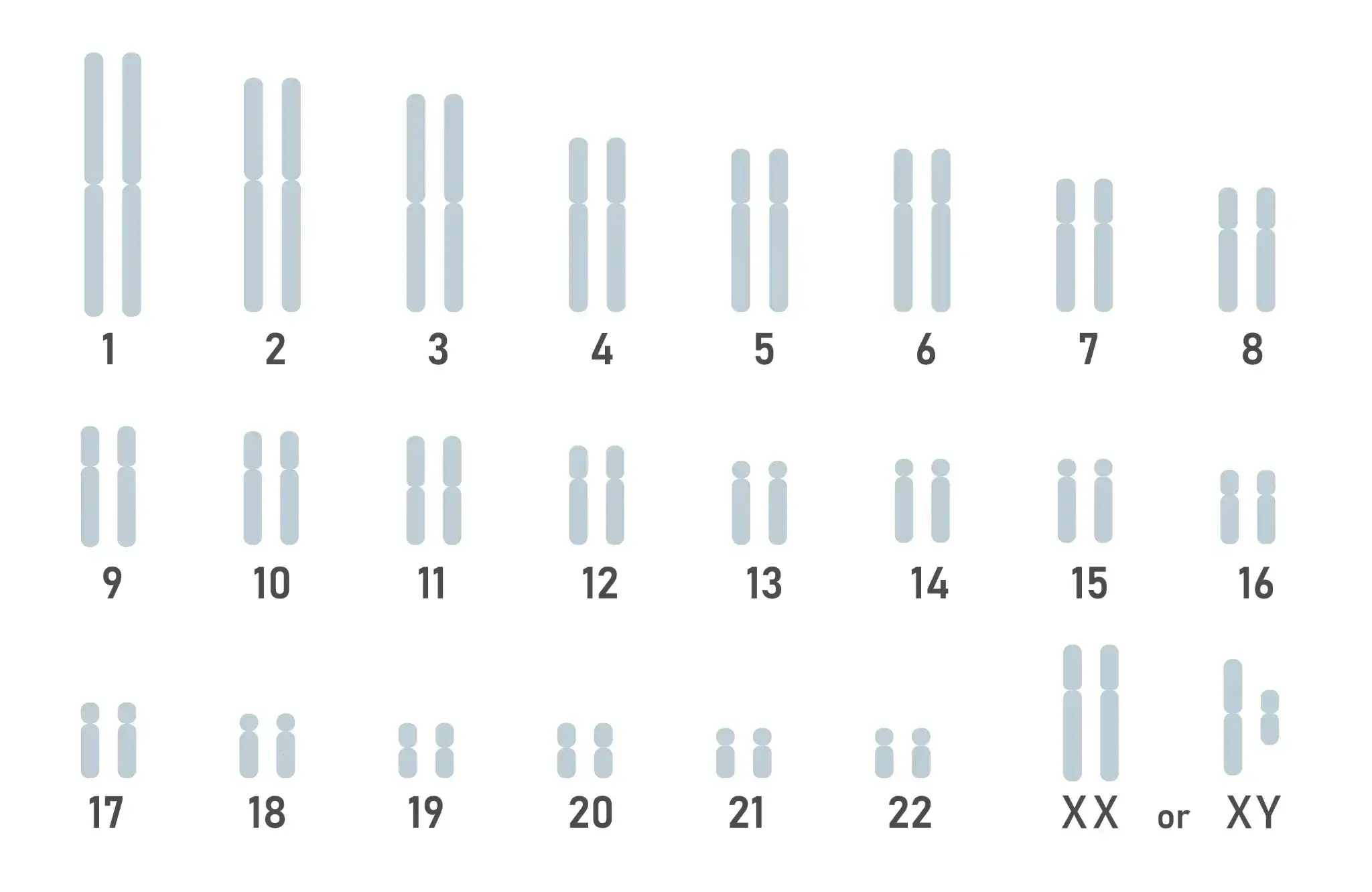
The DNA region investigated this time
Schematic diagram of DNA map present in cells
- ■
- ■
- ■
- ■
- ■
- ■
- ■
- ■
- ■
Related genes
| Related genes | RNU6-133P |
|---|---|
| Related genes | RASIP1 |
Frequently asked questions (FAQ)
Q1. What is bipolar disorder?
Bipolar disorder (bipolar affective disorder) is a mental illness characterized by periodic cycles of mania and depression.It can affect energy levels, thinking ability, judgment, and behavior, leading to impairments in daily functioning. Onset is concentrated in late adolescence and early adulthood.
Q2. What is the cause of bipolar disorder?
The main cause isA combination of genetic and environmental factorsIt is. Carriers of the T mutation in the DNA region rs1378559 tend to be at higher risk. Stress, lack of sleep, and drug use are also triggers.
Q3. What is the difference between mania and depression?
in a manic stateAbnormal euphoria, excessive energy, impulsive behaviorcan be seen. in a depressed stateDeep sadness, lack of energy, loss of interestwill appear. Hypomania is milder than mania and has limited impact on daily functioning.
Q4. Can genetic testing determine the risk of bipolar disorder?
By examining the genotype of DNA regions rs1378559 and rs2287921,Understanding risk trends for bipolar disorderYou can. Studies have found that people with the T mutation genotype tend to be at higher risk.
References
- Reference link 1: 2019 May., Eli A Stahl, Nat Genet
- Reference link 2: 2011 Sep., Psychiatric GWAS Consortium Bipolar Disorder Working Group, Nat Genet