
 benign prostatic hyperplasia

- Benign prostatic hyperplasia (BPH) is a benign enlargement of the prostate that commonly occurs in men over 50.This causes lower urinary tract symptoms (LUTS) such as frequent urination, nocturia, and difficulty urinating.
- G-type mutation in DNA region rs6561599A study by Gudmundsson et al. found that people with the disease tend to have a higher risk of developing the disease.
- Lifestyle improvement/drug therapy/surgical treatmentSymptoms can be managed and treated in three stages:
Overview Lower urinary tract symptoms (LUTS) associated with benign prostatic hyperplasia (BPH) are a common condition in men over the age of 50. BPH refers to enlargement of the prostate gland that surrounds the urethra near the bladder outlet. This enlargement compresses the urethra and affects urinary function. Symptoms of BPH/LUTS include frequent urination, nocturia (frequent urge to urinate at night), a sudden need to urinate, a weak and choppy stream, and difficulty in starting urination. In addition, urinary retention, in which urine is not expelled even when there is an urge to urinate, may occur, and treatment is required. The severity of symptoms varies from person to person, and some people show no symptoms at all. If symptoms are present, they often worsen over time, significantly reducing quality of life and negatively impacting daily activities and sleep. Treatment options include lifestyle changes, medication, and surgery. A study by Amgen's Gudmundsson et al. revealed that the risk of developing benign prostatic hyperplasia is associated with a DNA region called rs6561599. There are three genotypes in this DNA region: CC, CG, and GG, and it was found that people with the G genotype tend to have a higher risk of benign prostatic hyperplasia.
What is benign prostatic hyperplasia (BPH)?
Benign Prostatic Hyperplasia (BPH) is a benign enlargement of the prostate gland that surrounds the urethra near the bladder outlet.The enlarged prostate presses on the urethra, affecting the ability to urinate. It occurs more frequently in men over 50 years of age, and the prevalence increases with age.
Causes and risk factors of benign prostatic hyperplasia
The following factors are involved in the development of BPH:
- Aging:After age 50, prostate tissue grows with age.
- Hormonal changes:Changes in the ratio of testosterone and estrogen promote prostate cell proliferation
- Genetic factors:G-type mutation in DNA region rs6561599 is associated with risk of developing disease
- Family history:Men with a family history of BPH have an increased risk of developing it
Main symptoms of enlarged prostate (LUTS)
associated with BPHLower urinary tract symptoms (LUTS)is as follows.
- Frequent urination:Increased frequency of urination during the day
- Nocturia:Interrupted sleep due to urinating more than once during the night
- Urinary urgency:sudden strong urge to urinate
- Difficulty urinating:The urine stream is weak and choppy
- Delayed onset of urination:It takes a long time to start urinating
- Urinary retention:Inability to pass urine (needs emergency treatment)
The severity of symptoms varies from person to person, and there may be no symptoms at all. If you have symptomsTendency to gradually worsenand the quality of life (QOL) decreases.
Difference between benign prostatic hyperplasia and prostate cancer
| Comparison items | Benign prostatic hyperplasia (BPH) | prostate cancer |
|---|---|---|
| nature | benign swelling | malignant tumor |
| Main symptoms | Urinary disorder (frequent urination/nocturia) | Asymptomatic at first, difficulty urinating and hematuria as it progresses |
| Metastasis risk | None | Metastasis to bones/lymph nodes |
| Age of onset | Over 50 years old | Over 65 years old |
| treatment | Drug therapy/surgery | Surgery/radiation/hormone therapy |
Treatment for benign prostatic hyperplasia
Treatment depends on the severity of symptoms3 stagesis selected.
- Lifestyle improvement (mild):Limit caffeine/alcohol, limit fluid intake before bedtime, bladder training
- Drug therapy (moderate):α-blockers (tamsulosin, etc.), 5α-reductase inhibitors (finasteride, etc.)
- Surgical treatment (severe):Transurethral resection of the prostate (TURP), laser treatment
The relationship between genes and benign prostatic hyperplasia
Relationship between DNA region rs6561599 and onset risk
A study by Amgen's Gudmundsson et al. found that the DNA region rs6561599 is associated with the risk of developing benign prostatic hyperplasia.
- There are three genotypes of rs6561599: CC, CG, and GG.
- Genotype with type G mutation(CG type/GG type) people tend to have a higher risk of benign prostatic hyperplasia.
Genotype distribution in Japanese (rs6561599)
| Genotype | Percentage of Japanese people | percentage of the world |
|---|---|---|
| CC type | 27.4% | 14.7% |
| CG type | 49.8% | 47.3% |
| GG type | 22.6% | 37.9% |
Rationale for testing
Superficial DNA region: Benign prostatic hyperplasia
The gene region that most strongly affects benign prostatic hyperplasia is rs6561599. The distribution of isomorphic genotypes in Japan is as follows.
- CC
27.4 % - CG
49.8 % - GG
22.6 %
Basis for inspection
A study by Amgen's Gudmundsson et al. revealed that the risk of developing benign prostatic hyperplasia is linked to genes. There is a region called rs6561599 in the human genome, and there are two types of mutations, C and G, in the gene in that region. It has been found that people with the G mutation tend to have a higher risk of benign prostatic hyperplasia.
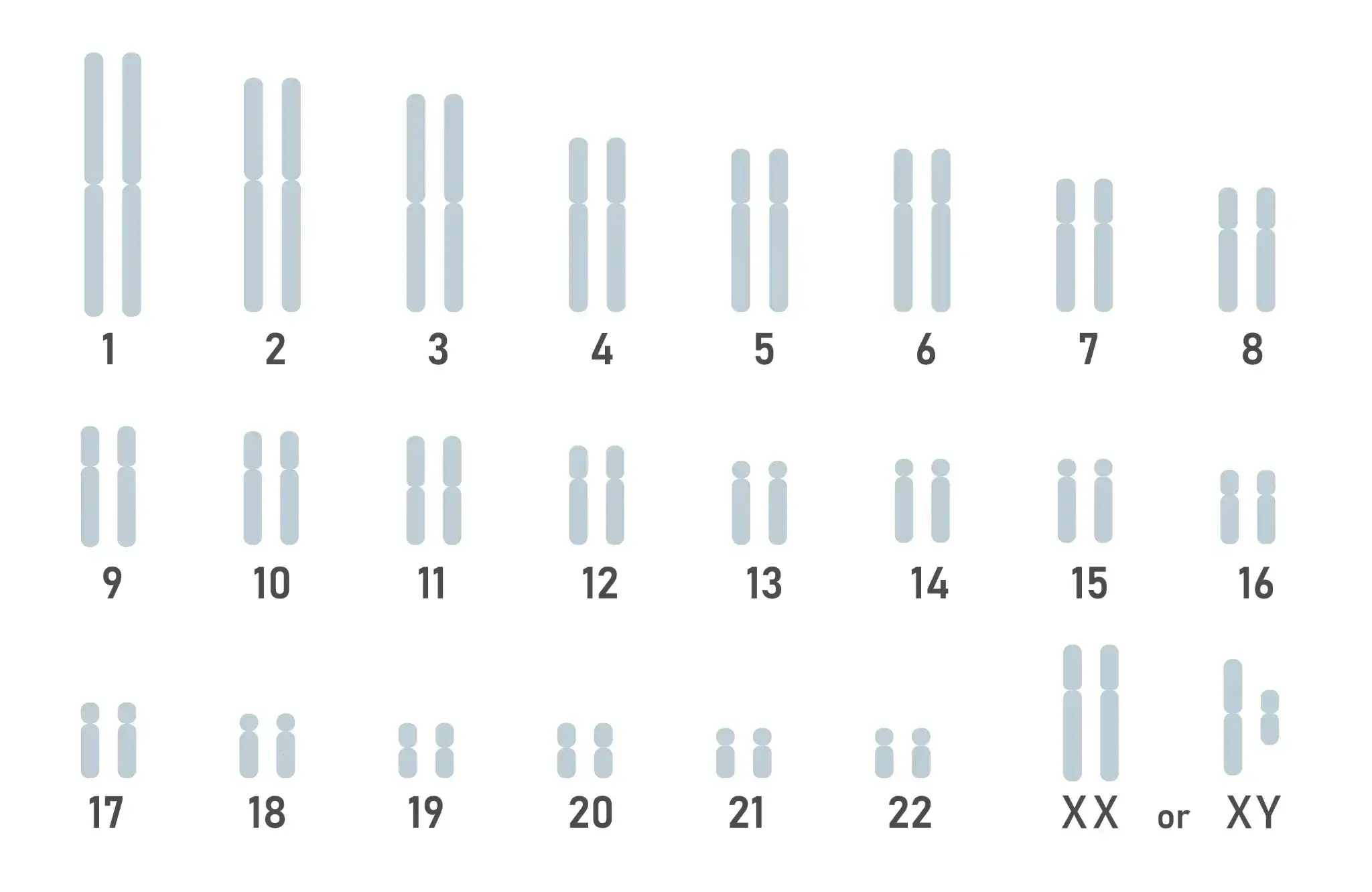
The DNA region investigated this time
Schematic diagram of DNA map present in cells
- ■
- ■
- ■
- ■
- ■
- ■
- ■
- ■
- ■
Related genes
| Related genes | RNASEH2B-AS1 |
|---|
Frequently asked questions (FAQ)
Q1. What is benign prostatic hyperplasia (BPH)?
Benign prostatic hyperplasia (BPH) is a benign enlargement of the prostate gland that surrounds the urethra near the bladder outlet.It commonly occurs in men over the age of 50, and the enlarged prostate presses on the urethra, causing lower urinary tract symptoms (LUTS) such as frequent urination, nocturia, and difficulty urinating.
Q2. What is the cause of benign prostatic hyperplasia?
The main cause isChanges in hormonal balance associated with agingIt is. Fluctuations in the ratio of testosterone and estrogen promote prostate cell proliferation. Genetic factors are also involved, and people with the G mutation in the rs6561599 DNA region tend to be at higher risk.
Q3. What is the difference between benign prostatic hyperplasia and prostate cancer?
BPH isBenign prostate enlargementAnd it's not cancer. The main symptom of BPH is urinary dysfunction due to urethral compression, and prostate cancermalignant tumorThere is a risk of metastasis. BPH does not directly progress to cancer.
Q4. Can genetic testing determine the risk of benign prostatic hyperplasia?
By examining the genotype of the DNA region rs6561599,Understanding trends in the risk of developing benign prostatic hyperplasiaYou can. A study by Gudmundsson et al. reported that people with the G mutation genotype (CG type and GG type) tend to be at higher risk.
Q5. What treatments are available for benign prostatic hyperplasia?
Treatment depends on the severity of symptoms3 stagesIt is divided into For mild cases, lifestyle changes are selected; for moderate cases, drug therapy with α-blockers and 5α-reductase inhibitors is selected; for severe cases, surgical treatment such as transurethral resection of the prostate (TURP) is selected.
References
- Reference link 1: 2018 Nov., Julius Gudmundsson, Nat Commun