
 basal cell carcinoma

- Basal cell carcinoma (BCC) is the most frequently occurring skin cancer, accounting for approximately 70-80% of all skin cancers.The growth is slow and the risk of metastasis is low, so the prognosis is good with early treatment.
- Type A mutation in DNA region rs2776348QIMR Burghoffer Medical Research Institute study finds that people with cancer tend to have a higher risk of developing basal cell carcinoma
- The prevalence of type A mutation (AA+AC) in Japanese people is86.5%Therefore, early detection through UV protection and regular dermatological examinations is important.
Overview Basal cell carcinoma (BCC) is a type of skin cancer that begins in basal cells (small, round cells found at the bottom of the epidermis). This is the most common type of skin cancer, and it grows slowly, making it less likely to spread to other parts of the body. If detected and treated early, it is relatively less dangerous than other skin cancers. The characteristics of BCC vary, but it typically involves pearl-like bumps on the face, ears, and neck. Brown spots may also develop on the back and chest, which over time may sink in the center and bleed, ooze, or form a scab. As BCC progresses, it invades surrounding tissue and can cause more serious complications if it occurs near sensitive organs like the eyes or nose. In particular, exposure to UV rays from sunlight significantly increases the risk of developing BCC, so it is important to take measures against UV rays. A study by Liyanage et al. at QIMR Burgofer Medical Research Institute revealed that the risk of developing basal cell carcinoma is associated with a DNA region called rs2776348. There are three genotypes in this DNA region: AA, AC, and CC, and it has been found that people with the A genotype tend to have a higher risk of developing basal cell carcinoma.
What is basal cell carcinoma (BCC)?
Basal cell carcinoma (BCC) Carcinoma) is a type of skin cancer that begins in the basal cells in the lowest layer of the epidermis.It is the most frequently occurring cancer, accounting for approximately 70-80% of all skin cancers, but it is characterized by its slow growth and low risk of metastasis to other organs.
Main symptoms of basal cell carcinoma
Symptoms of basal cell carcinoma vary depending on the location and stage of progression. Typical symptoms are:
- Pearl-like bumps:Shiny, translucent bumps appear on the face, ears, and neck
- Brown spots:Pigmented spots appear on the back and chest
- Center depression:Over time, the center becomes depressed, causing bleeding, oozing, and scab formation.
- Infiltration into surrounding tissues:As it progresses, it can cause serious complications near sensory organs such as the eyes and nose.
Comparison of risk factors and prevention methods for developing basal cell carcinoma
| Comparison items | risk factors | Prevention method |
|---|---|---|
| ultraviolet light | UV exposure from sunlight significantly increases the risk of developing BCC | Use sunscreen with SPF 30 or higher, wear a hat and long sleeves |
| genetic predisposition | People with the rs2776348 type A mutation are at increased risk | Understand your own risk through genetic testing |
| skin type | People with fair skin and skin that gets sunburned easily are at higher risk. | Avoid direct sunlight between 10am and 2pm |
| early detection | If left untreated, it can invade surrounding tissues and cause complications. | Regular dermatological examination/self-check |
Relationship between genes and basal cell carcinoma
Relationship between DNA region rs2776348 and basal cell carcinoma
A study by Liyanage et al. from the QIMR Burgofer Medical Research Institute revealed that the risk of developing basal cell carcinoma is associated with the DNA region rs2776348.
- There are three genotypes of rs2776348: AA, AC, and CC.
- Genotype with type A mutation(AA type/AC type) people tend to have a higher risk of basal cell carcinoma
Comparison of genotype distribution in Japanese and the world (rs2776348)
| Genotype | Percentage of Japanese people | percentage of the world |
|---|---|---|
| AA type | 40.2% | 39.9% |
| AC type | 46.3% | 46.5% |
| CC type | 13.3% | 13.5% |
The prevalence of type A mutation in Japanese people (AA+AC) is86.5%, which is almost the same as the world average of 86.4%. The genotype distribution of rs2776348 is almost the same between Japan and the rest of the world, suggesting that there are small racial differences in genetic risk factors for basal cell carcinoma.
Relationship between DNA region rs2776353 and basal cell carcinoma
According to the study of Chahal et al.rs2776353have also been identified as genetic regions associated with basal cell carcinoma risk. There are three genotypes in this region: AA, AT, and TT.
| Genotype | Percentage of Japanese people | percentage of the world |
|---|---|---|
| AA type | 40.8% | 41.7% |
| AT type | 46.1% | 45.7% |
| TT type | 13.0% | 12.5% |
Rationale for testing
Superficial DNA region: basal cell carcinoma
The gene region that most strongly influences basal cell carcinoma is rs2776348. The distribution of isomorphic genotypes in Japan is as follows.
- AA
40.2 % - AC
46.3 % - CC
13.3 %
Another gene region involved in basal cell carcinoma is rs2776353. The distribution of isomorphic genotypes in Japan is as follows
- AA
40.8 % - AT
46.1 % - TT
13.0 %
Basis for inspection
A study by Liyanage et al. at QIMR Burgofer Medical Research Institute revealed that the risk of developing basal cell carcinoma is linked to genes. There is a region called rs2776348 in the human genome, and there are two types of mutations, A and C, in the gene in this region. It was found that people with type A mutations tend to have a higher risk of developing basal cell carcinoma.
The DNA region investigated this time
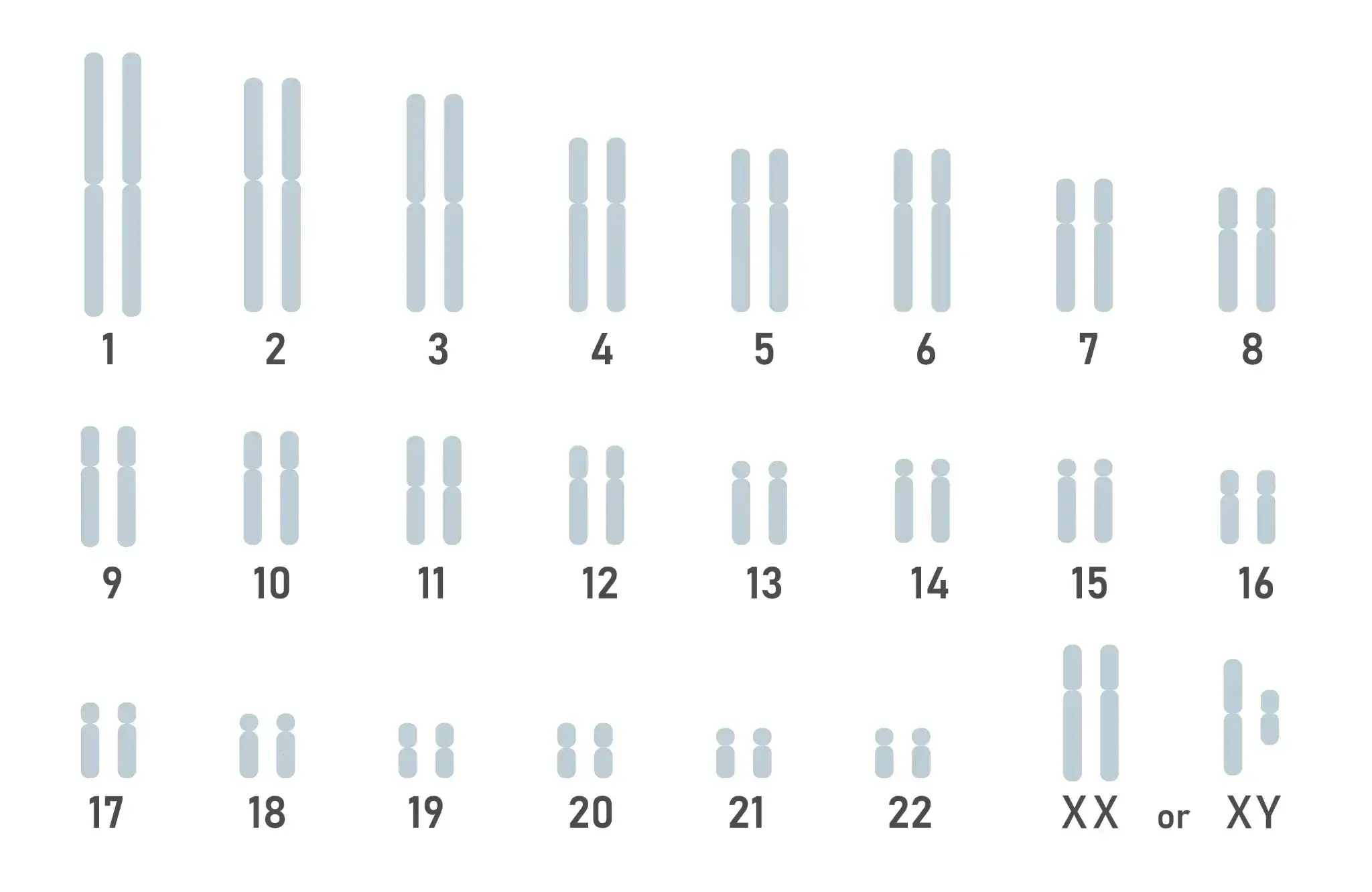
Schematic diagram of DNA map present in cells
- ■
- ■
- ■
- ■
- ■
- ■
- ■
- ■
- ■
Related genes
| Related genes | PCSEAT |
|---|---|
| Related genes | PCSEAT |
Frequently asked questions (FAQ)
Q1. What is basal cell carcinoma (BCC)?
Basal cell carcinoma (BCC) is a type of skin cancer that starts in the basal cells, the lowest layer of the epidermis.It is the most frequently occurring cancer, accounting for approximately 70-80% of all skin cancers, but as it grows slowly and has a low risk of metastasis, the prognosis is good if detected and treated early. It tends to occur in areas exposed to sunlight, such as the face, ears, and neck.
Q2. Is there a relationship between genes and the risk of developing basal cell carcinoma?
A study by Liyanage et al. from the QIMR Burgofer Medical Research Institute found that the DNA region rs2776348 is associated with the risk of developing basal cell carcinoma.There are three genotypes of rs2776348: AA, AC, and CC, and people with the type A mutation tend to be at higher risk.
Q3. What are the main symptoms of basal cell carcinoma?
Typical symptoms of basal cell carcinoma arePearl-like bumps that occur on the face, ears, and neckIt is. Brown spots appear on the back and chest, and over time the center becomes depressed, bleeding, oozing, and forming a scab. As it progresses, it can invade surrounding tissue and cause serious complications near the eyes and nose.
Q4. Is there a way to prevent basal cell carcinoma?
UV protection is the most important preventive measure.Specifically, it is recommended to use sunscreen with SPF 30 or higher, wear a hat and long sleeves, avoid direct sunlight between 10 a.m. and 2 p.m., and refrain from using tanning machines. Regular dermatological examinations and self-checks are also effective for early detection.
Q5. What is the distribution of basal cell carcinoma genotype (rs2776348) in Japanese people?
The genotype distribution of rs2776348 in Japanese people isAA type 40.2%, AC type 46.3%, CC type 13.3%It is. Worldwide, AA type accounts for 39.9%, AC type 46.5%, and CC type 13.5%, and the distribution in Japanese and the rest of the world is almost the same, indicating that the differences between races are small.
References
- Reference link 1: 2019 Sep., Upekha E Liyanage, Hum Mol Genet
- Reference link 2: 2016 Aug., Harvind S Chahal, Nat Commun