
 Attention Deficit Hyperactivity Disorder (ADHD)

- Attention-deficit/hyperactivity disorder (ADHD) is a neurodevelopmental disorder characterized by difficulty maintaining attention, hyperactivity, and impulsivity.Symptoms develop in childhood and persist into adulthood in approximately 60% of cases.
- G-type mutation in DNA region rs2823819A Massachusetts General Hospital study found that people with
- The treatment isDrug therapy (stimulants) and non-drug therapy (cognitive behavioral therapy/psychotherapy)Effective in combination with
Overview Attention-deficit hyperactivity disorder (ADHD) is a neurodevelopmental disorder characterized by difficulty maintaining attention, hyperactivity, and impulsive behavior. This disorder often appears in childhood and symptoms may persist into adulthood. The main symptoms of ADHD are inattention, hyperactivity, and impulsivity. Lack of attention manifests itself as having trouble staying focused, completing small tasks, forgetting things often, and having trouble following instructions. Hyperactivity manifests itself in behaviors such as being unable to sit still, restlessness, and moving around excessively. Impulsivity can be seen in the form of acting on a whim, interrupting others, or acting without considering the consequences. The cause of ADHD is not completely understood, but genetic factors are thought to be strongly involved. Treatment includes both pharmaceutical and non-drug therapies. Medications commonly include stimulants (methylphenidate and amphetamines), which may improve alertness. Additionally, non-drug treatments include cognitive behavioral therapy, psychotherapy, and educational support. These help regulate behavior, improve social skills, and manage stress. A study by Mick et al. at Massachusetts General Hospital revealed that the risk of developing attention-deficit hyperactivity disorder (ADHD) is associated with a DNA region called rs2823819. There are three genotypes in this DNA region: AA, AG, and GG, and it was found that people with the G genotype tend to have a higher risk of attention-deficit hyperactivity disorder (ADHD).
What is Attention Deficit Hyperactivity Disorder (ADHD)?
Attention-deficit hyperactivity disorder (ADHD) is a neurodevelopmental disorder characterized by difficulty maintaining attention, hyperactivity, and impulsive behavior.Symptoms begin in childhood and persist into adulthood in approximately 60% of patients.
Causes and mechanisms of ADHD
The cause of ADHD is not completely understood, butApproximately 70-80% due to genetic factorsis thought to account for. The following factors are involved in a complex manner:
- Neurotransmitter abnormalities:Dopamine and noradrenaline dysfunction
- Genetic factors:The heritability of ADHD is high at approximately 70-80%.
- Environmental factors:Prenatal smoking exposure, low birth weight, and preterm birth
Three main symptoms of ADHD
Symptoms of ADHD3 core symptomsIt consists of
- Carelessness:Difficulty concentrating, difficulty completing detailed tasks, frequent forgetfulness, and difficulty following instructions.
- Hyperactivity:Difficulty remaining seated, restlessness, excessive physical activity
- Impulsivity:Acting on a whim, interrupting others, acting without considering the consequences
Comparison of ADHD symptom types
| Comparison items | Inattentive dominant type | Hyperactive/impulsive type | mixed type |
|---|---|---|---|
| Main features | Lack of concentration/forgetting things | Restlessness/impulsive behavior | have both symptoms |
| discoverability | easily overlooked | easy to be discovered | easy to be discovered |
| gender trends | Relatively common in women | Relatively common in men | Same level for both men and women |
| Impact on daily life | Decrease in academic and work efficiency | Difficulties in interpersonal relationships | extensive life difficulties; |
Treatment for ADHD
For treatmentDrug therapy and non-drug therapyThere are two approaches.
- Drug therapy:Stimulants (methylphenidate and amphetamine) are the first choice and are effective in improving alertness.
- Cognitive behavioral therapy:Manage symptoms through behavioral pattern recognition and modification
- Psychotherapy:Promoting stress management and self-understanding
- Educational support:Reasonable accommodations and environmental adjustments at school and workplaces
The relationship between genes and ADHD
Relationship between DNA region rs2823819 and onset risk
A study by Mick et al. at Massachusetts General Hospital found that the DNA region rs2823819 is associated with the risk of developing ADHD.
- There are three genotypes of rs2823819: AA, AG, and GG.
- Genotype with type G mutationpeople tend to be at higher risk for ADHD
Genotype distribution in Japanese (rs2823819)
| Genotype | Percentage of Japanese people | percentage of the world |
|---|---|---|
| AA type | 89.7% | 66.7% |
| AG type | 10.0% | 29.9% |
| GG type | 0.2% | 3.3% |
Rationale for testing
Superficial DNA region: attention-deficit/hyperactivity disorder (ADHD)
The gene region that most strongly affects attention-deficit/hyperactivity disorder (ADHD) is rs2823819. The distribution of isomorphic genotypes in Japan is as follows.
- AA
89.7 % - AG
10.0 % - GG
0.2 %
Basis for inspection
A study by Mick et al. at Massachusetts General Hospital revealed that the risk of developing attention-deficit/hyperactivity disorder (ADHD) is linked to genes. There is a region called rs2823819 in the human genome, and there are two types of mutations, A and G, in the gene in this region. It has been found that people with the G mutation tend to have a higher risk of attention-deficit/hyperactivity disorder (ADHD).
The DNA region investigated this time
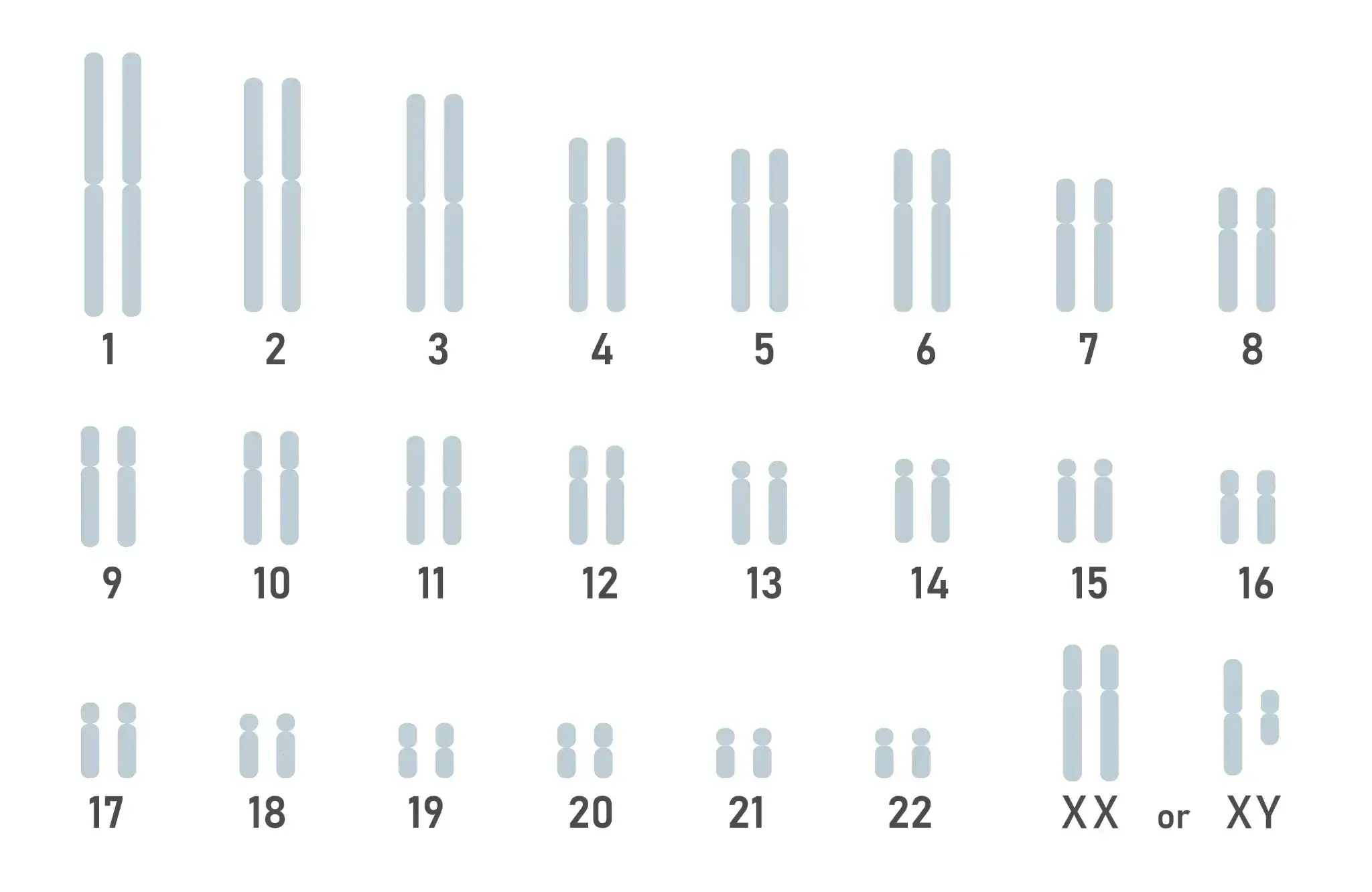
Schematic diagram of DNA map present in cells
- ■
- ■
- ■
- ■
- ■
- ■
- ■
- ■
- ■
Related genes
| Related genes | MIR99AHG |
|---|
Frequently asked questions (FAQ)
Q1. What is Attention Deficit Hyperactivity Disorder (ADHD)?
Attention-deficit hyperactivity disorder (ADHD) is a neurodevelopmental disorder characterized by difficulty maintaining attention, hyperactivity, and impulsive behavior.Symptoms begin in childhood and persist into adulthood in approximately 60% of patients.
Q2. What is the cause of ADHD?
The main cause isGenetic factors (heritability approximately 70-80%) and neurotransmitter dysfunctionIt is. Dysregulation of dopamine and noradrenaline is involved, and carriers of the G mutation in the rs2823819 DNA region tend to be at higher risk.
Q3. What are the differences between the three main symptoms of ADHD?
carelessness(difficulty maintaining concentration/forgetfulness),hyperactivity(restlessness/excessive movement),impulsivity(acting on a whim, interrupting others). There are individual differences in how symptoms appear.
Q4. Can genetic testing determine the risk of ADHD?
By examining the genotype of the DNA region rs2823819,Understanding trends in the risk of developing ADHDYou can. A study by Mick et al. found that people with the G mutation genotype tend to be at higher risk.
References
- Reference link 1: 2010 Sep., Eric Mick, J Am Acad Child Adolesc Psychiatry