
 atrial fibrillation

- Atrial fibrillation is an arrhythmia in which the atria contract irregularly at an abnormal rate of 300 to 600 times per minute.Approximately 1 million people are infected in Japan.
- G-type mutation in DNA region rs2540953A RIKEN study found that people with the disease tend to have a higher risk of developing the disease.
- Atrial fibrillation isIncreases stroke risk approximately 5 timesEarly detection and appropriate treatment are important to prevent
Overview Atrial fibrillation is a type of arrhythmia in which the atria in the upper part of the heart contract abnormally fast and irregularly, and is classified based on its duration: paralytic, persistent, or longstanding. In this disease, the atria are unable to pump blood efficiently to the ventricles, resulting in disrupted blood flow. Possible causes include high blood pressure, coronary artery disease, heart valve disease, hyperthyroidism, lung disease, and excessive alcohol consumption. Symptoms of atrial fibrillation include palpitations, shortness of breath, chest pain, fatigue, and dizziness. Atrial fibrillation is mainly diagnosed using an electrocardiogram (ECG) to check for irregular activity in the atria. Treatment includes drugs to control the heart rate (beta-blockers, calcium channel blockers, digoxin), antiarrhythmic drugs, and electrical cardioversion to restore a normal rhythm. Atrial fibrillation also increases the risk of blood clots, so anticoagulants (warfarin, DOACs) are also used to prevent stroke. Research by Siew-Kee Low and colleagues at the RIKEN Center for Integrative Medical Science revealed that the risk of developing atrial fibrillation is associated with a DNA region called rs2540953. There are three genotypes in this DNA region: GG, GA, and AA, and it was found that people with the G genotype tend to have a higher risk of atrial fibrillation.
What is atrial fibrillation?
Atrial Fibrillation (AFib) is a type of arrhythmia in which the atria in the upper part of the heart contract abnormally fast and irregularly.It is the most common arrhythmia among all arrhythmias, affecting approximately 1 million people in Japan.
Classification of atrial fibrillation
Atrial fibrillation is classified into three types based on duration:
| classification | duration | Features |
|---|---|---|
| paroxysmal (paroxysmal) | Spontaneous shutdown within 7 days | return to normal rhythm naturally |
| Persistent | Lasts more than 7 days | Stopped by drugs/electrical defibrillation |
| Permanence (long standing) | Lasts over 1 year | Difficulty returning to normal rhythm |
Causes and risk factors of atrial fibrillation
Atrial fibrillation occurs when the atria are unable to pump blood efficiently to the ventricles, disrupting blood flow. The main causes and risk factors are:
- high blood pressure(Most frequent risk factor)
- coronary artery disease(decreased blood flow to the heart)
- heart valve disease(Valve structure/function abnormality)
- hyperthyroidism(Excess secretion of thyroid hormone)
- lung disease(Chronic obstructive pulmonary disease, etc.)
- excessive alcohol intake
- genetic predisposition(G-type mutation in DNA region rs2540953)
Main symptoms of atrial fibrillation
Symptoms of atrial fibrillation vary greatly from person to person, and some cases may be asymptomatic. Typical symptoms are as follows.
- palpitations(Feeling like my heart is pounding)
- shortness of breath(Difficulty breathing even with light exercise)
- Chest pain/chest discomfort
- feeling of fatigue(chronic malaise)
- Dizziness/light-headedness
Difference between atrial fibrillation and other arrhythmias
| Comparison items | atrial fibrillation | atrial flutter | ventricular fibrillation |
|---|---|---|---|
| Occurrence site | atrium | atrium | ventricle |
| contraction pattern | disorderly/irregular | regular but fast | disorderly/deadly |
| heart rate | 300-600 times/min | 250-350 times/min | unmeasurable |
| stroke risk | Approximately 5 times increase | There is a rise | no direct risk |
| urgency | medium | medium | best (lethal) |
Diagnostic method
The diagnosis of atrial fibrillation is mainlyElectrocardiogram (ECG)is done to check for irregular electrical activity in the atria.
- 12-lead electrocardiogram (standard test)
- Holter electrocardiogram (24 hour continuous recording)
- Event monitor (recording when symptoms occur)
Treatment of atrial fibrillation
Treatment is based on three pillars:
- Heart rate control:Keep heart rate within proper range with beta blockers, calcium channel blockers, and digoxin
- Rhythm control:Return to normal rhythm with antiarrhythmic drugs or electrical defibrillation (cardioversion)
- Stroke prevention:Suppressing blood clot formation with anticoagulants (warfarin/DOAC)
Catheter ablation (a treatment that cauterizes abnormal electrical circuits in the heart) is also an effective option.
Relationship between genes and atrial fibrillation
Relationship between DNA region rs2540953 and onset risk
Research by Siew-Kee Low and colleagues at the RIKEN Center for Integrative Medical Science revealed that the DNA region rs2540953 is associated with the risk of developing atrial fibrillation.
- There are three genotypes of rs2540953: GG, GA, and AA.
- Genotype with type G mutationpeople tend to be at higher risk of atrial fibrillation
Genotype distribution in Japanese (rs2540953)
| Genotype | Percentage of Japanese people | percentage of the world |
|---|---|---|
| GG type | 40.8% | 21.6% |
| GA type | 46.1% | 49.7% |
| AA type | 13.0% | 28.5% |
Rationale for testing
Surface DNA region: atrial fibrillation
The gene region that most strongly influences atrial fibrillation is rs2540953. The distribution of isomorphic genotypes in Japan is as follows.
- GG
40.8 % - GA
46.1 % - AA
13.0 %
Another gene region involved in atrial fibrillation is rs75190942. The distribution of isomorphic genotypes in Japan is as follows
- CC
88.7 % - CA
10.8 % - AA
0.3 %
Another gene region involved in atrial fibrillation is rs9953366. The distribution of isomorphic genotypes in Japan is as follows
- TT
32.1 % - TC
49.0 % - CC
18.7 %
Another gene region involved in atrial fibrillation is rs2200733. The distribution of isomorphic genotypes in Japan is as follows
- CC
27.9 % - CT
49.8 % - TT
22.1 %
Another gene region involved in atrial fibrillation is rs6882776. The distribution of isomorphic genotypes in Japan is as follows
- GG
10.6 % - GA
44.0 % - AA
45.3 %
Another gene region involved in atrial fibrillation is rs365990. The distribution of isomorphic genotypes in Japan is as follows
- AA
76.5 % - AG
21.8 % - GG
1.5 %
Basis for inspection
Research by Siew-Kee Low and colleagues at the RIKEN Center for Integrative Medical Science has revealed that the risk of developing atrial fibrillation is linked to genes. There is a region called rs2540953 in the human genome, and there are two types of mutations, G and A, in the gene in this region. It was found that people with the G mutation tend to have a higher risk of atrial fibrillation.
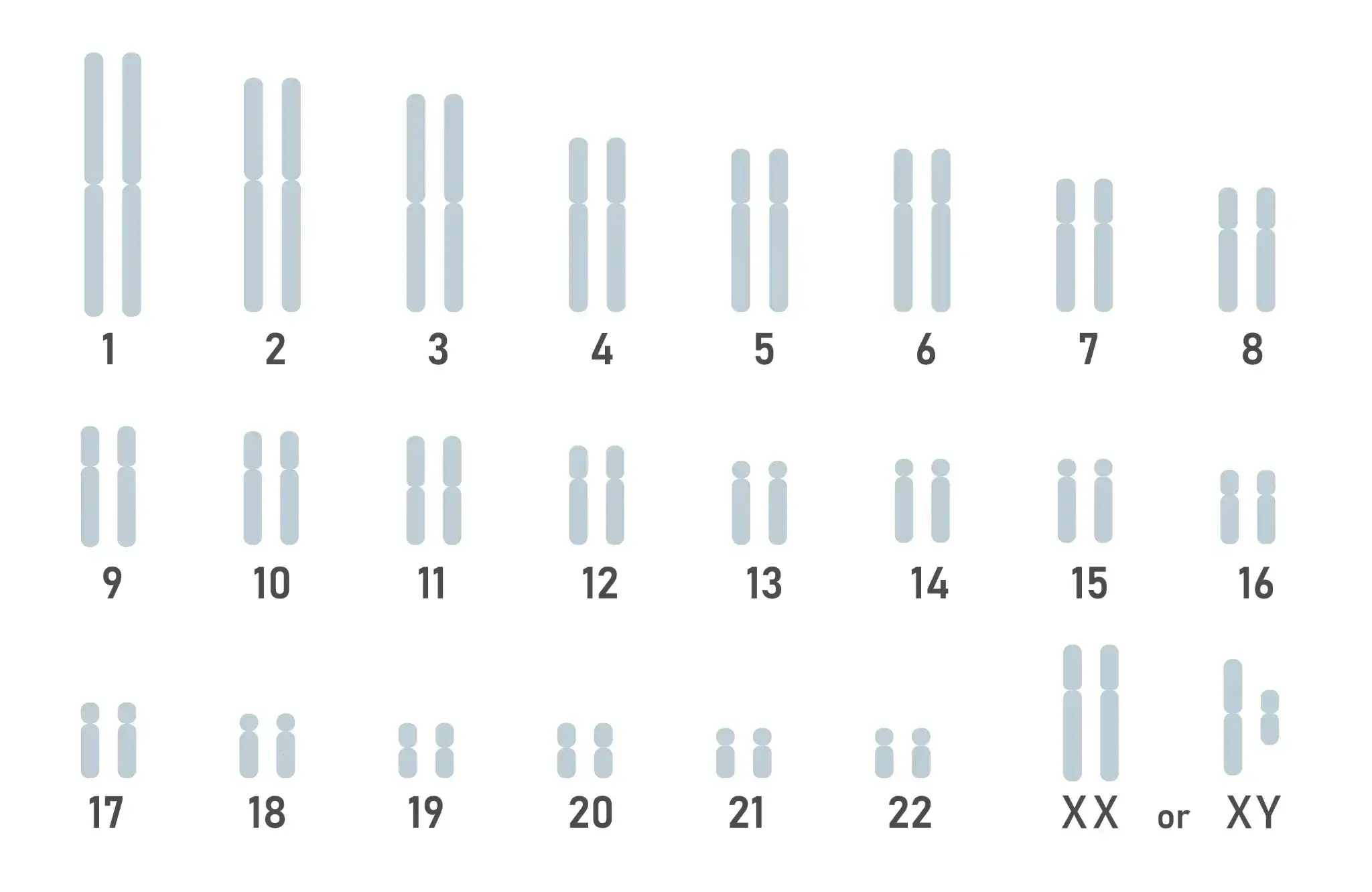
The DNA region investigated this time
Schematic diagram of DNA map present in cells
- ■
- ■
- ■
- ■
- ■
- ■
- ■
- ■
- ■
Related genes
| Related genes | LINC02576 |
|---|---|
| Related genes | KCNJ5 |
| Related genes | SMAD7 |
| Related genes | PITX2 |
| Related genes | NKX2-5 |
| Related genes | MYH6 |
Frequently asked questions (FAQ)
Q1. What is atrial fibrillation?
Atrial fibrillation (AFib) is a type of arrhythmia in which the atria in the upper part of the heart contract irregularly at an abnormal rate of 300 to 600 beats per minute.It is the most common arrhythmia among all arrhythmias, affecting approximately 1 million people in Japan. Importantly, the risk of stroke increases approximately five times.
Q2. What is the cause of atrial fibrillation?
The main cause isHypertension, coronary artery disease, heart valve disease, hyperthyroidismIt is. In addition, people with the G-type mutation in the rs2540953 DNA region tend to have a higher risk of developing the disease.
Q3. What is the difference between atrial fibrillation and other arrhythmias?
Atrial fibrillation isArrhythmia in which the atria contract irregularly, and is different from atrial flutter (regular but rapid contractions) and ventricular fibrillation (fatal). Atrial fibrillation is the most common and is characterized by an increased risk of stroke.
Q4. Can a genetic test determine the risk of atrial fibrillation?
By examining the genotype of DNA region rs2540953,Understanding trends in the risk of developing atrial fibrillationYou can. A RIKEN study has found that people with the G-type mutation tend to be at higher risk.
Q5. What treatments are available for atrial fibrillation?
The treatment isHeart rate control (beta blockers, etc.), rhythm control (antiarrhythmic drugs, electrical cardioversion), stroke prevention (anticoagulants)It is carried out on three pillars. Catheter ablation treatment is also an effective option.
References
- Reference link 1: 2017 Jun., Siew-Kee Low, Nat Genet
- Reference link 2: 2017 Jun., Ingrid E Christophersen, Nat Genet
- Reference link 3: 2018 Jun., Carolina Roselli, Nat Genet
- Reference link 4: 2009 Aug., Daniel F Gudbjartsson, Nat Genet
- Reference link 5: 2007 Jul., Daniel F Gudbjartsson, Nature
- Reference link 6: 2021 Oct., Saori Sakaue, Nat Genet