
 asthma

- Asthma is a respiratory disease in which wheezing, shortness of breath, and coughing occur repeatedly due to chronic inflammation of the airways.Approximately 300 million people worldwide are affected by the disease.
- C-type mutation in DNA region rs917115Study finds that people with this condition tend to be at higher risk of developing asthma
- appropriateDrug therapy/trigger avoidance/regular monitoringIt is possible to control symptoms and prevent attacks.
Overview Asthma is a chronic disease in which the respiratory tract repeatedly becomes inflamed and constricted, making it difficult to breathe. Symptoms include narrowing of the airways, restricting airflow, and a high-pitched wheezing sound, especially when exhaling. Shortness of breath is also an important symptom, making it difficult for the lungs to take in enough air. This causes a feeling of tightness or pressure in the chest, making it more difficult to breathe. Coughing is also a common symptom of asthma, especially at night or early in the morning. This can disrupt sleep and worsen fatigue. Asthma attacks or worsening can be caused by a variety of factors, including allergens (such as pollen and dust mites), irritants (smoke and chemicals), cold air, and stress. Under these circumstances, the airways narrow rapidly, worsening asthma symptoms, and treatment is required. The severity of asthma can fluctuate and can have a significant impact on your life, so it's important to treat your condition accordingly. A study by Pividori et al. at the University of Chicago revealed that the risk of developing asthma is associated with a DNA region called rs917115. There are three genotypes in this DNA region: TT, TC, and CC, and it was found that people with the C genotype tend to have a higher risk of asthma.
What is asthma?
Asthma is a respiratory disease that causes breathing difficulties due to repeated chronic inflammation and constriction of the airways.The World Health Organization (WHO) estimates that approximately 300 million people worldwide suffer from asthma.
Causes and mechanisms of asthma
Asthma develops through a combination of genetic predisposition and environmental factors. When airway inflammation occurs, the mucous membranes swell, bronchial smooth muscle contracts, and the airways narrow.
- Airway inflammation:Chronic inflammation of the airway mucosa occurs due to overreaction of immune cells.
- Bronchoconstriction:Rapid narrowing of the airway due to smooth muscle spasm
- Mucus hypersecretion:Inflammation increases mucus secretion, further narrowing the airways.
The main triggers are:
- Allergen (Pollen, dust mites, pet hairetc.)
- Irritant (smoke, air pollution, chemicals)
- Cold air/sudden temperature changes
- stress/intense exercise
- Respiratory infections (colds/flu)
Main symptoms of asthma
Symptoms of asthmaSeizure worsensHowever, it tends to get worse especially at night and early in the morning.
- Wheezing:A whistling sound when breathing
- Shortness of breath:Breathing becomes difficult because the lungs cannot take in enough air
- Chest tightness:feeling of tightness in the chest
- Cough:It is especially worse at night and early in the morning and interferes with sleep.
Asthma severity classification
| severity | Frequency of symptoms | night symptoms | Impact on daily life |
|---|---|---|---|
| Mild intermittent type | Less than twice a week | Less than twice a month | no limit |
| Mild persistent type | More than twice a week (not every day) | 3-4 times a month | mild limitations |
| Moderate persistent type | every day | At least once a week | medium restriction |
| Severe persistent type | Lasts all day | frequently | significant limitations |
Asthma treatment
Treatment of asthmaLong-term management drugs and emergency drugs for attacksIt is carried out on two pillars.
- Long-term control drugs:Inhaled corticosteroids (ICS), long-acting beta2-agonists (LABA)
- Emergency medication for seizures:Short-acting beta2 agonist (SABA)
- Severe cases:Biological products (anti-IgE antibodies, anti-IL-5 antibodies, etc.)
- Non-drug therapy:Trigger avoidance, pulmonary rehabilitation
The relationship between genes and asthma
Relationship between DNA region rs917115 and onset risk
A study by Pividori et al. at the University of Chicago found that the DNA region rs917115 is associated with the risk of developing asthma.
- There are three genotypes of rs917115: TT, TC, and CC.
- Genotype with type C mutationpeople tend to be at higher risk of asthma
Genotype distribution in Japanese (rs917115)
| Genotype | Percentage of Japanese people | percentage of the world |
|---|---|---|
| TT type | 0.1%以下 | 49.6% |
| TC type | 2.8% | 41.6% |
| CC type | 97.1% | 8.7% |
Rationale for testing
External DNA region: Asthma
The gene region that most strongly affects asthma is rs917115. The distribution of isomorphic genotypes in Japan is as follows.
- TT
0.1%以下 - TC
2.8 % - CC
97.1 %
Another genetic region involved in asthma is rs7047575. The distribution of isomorphic genotypes in Japan is as follows
- GG
47.2 % - GA
42.9 % - AA
9.7 %
Another genetic region involved in asthma is rs34290285. The distribution of isomorphic genotypes in Japan is as follows
- GG
72.4 % - GA
25.3 % - AA
2.2 %
Another genetic region involved in asthma is rs9603616. The distribution of isomorphic genotypes in Japan is as follows
- CC
57.7 % - CT
36.5 % - TT
5.7 %
Basis for inspection
A study by Pividori et al. at the University of Chicago revealed that the risk of developing asthma is linked to genes. There is a region called rs917115 in the human genome, and there are two types of mutations, T and C, in the gene in this region. It turns out that people with the T-type mutation tend to have a higher risk of developing asthma.
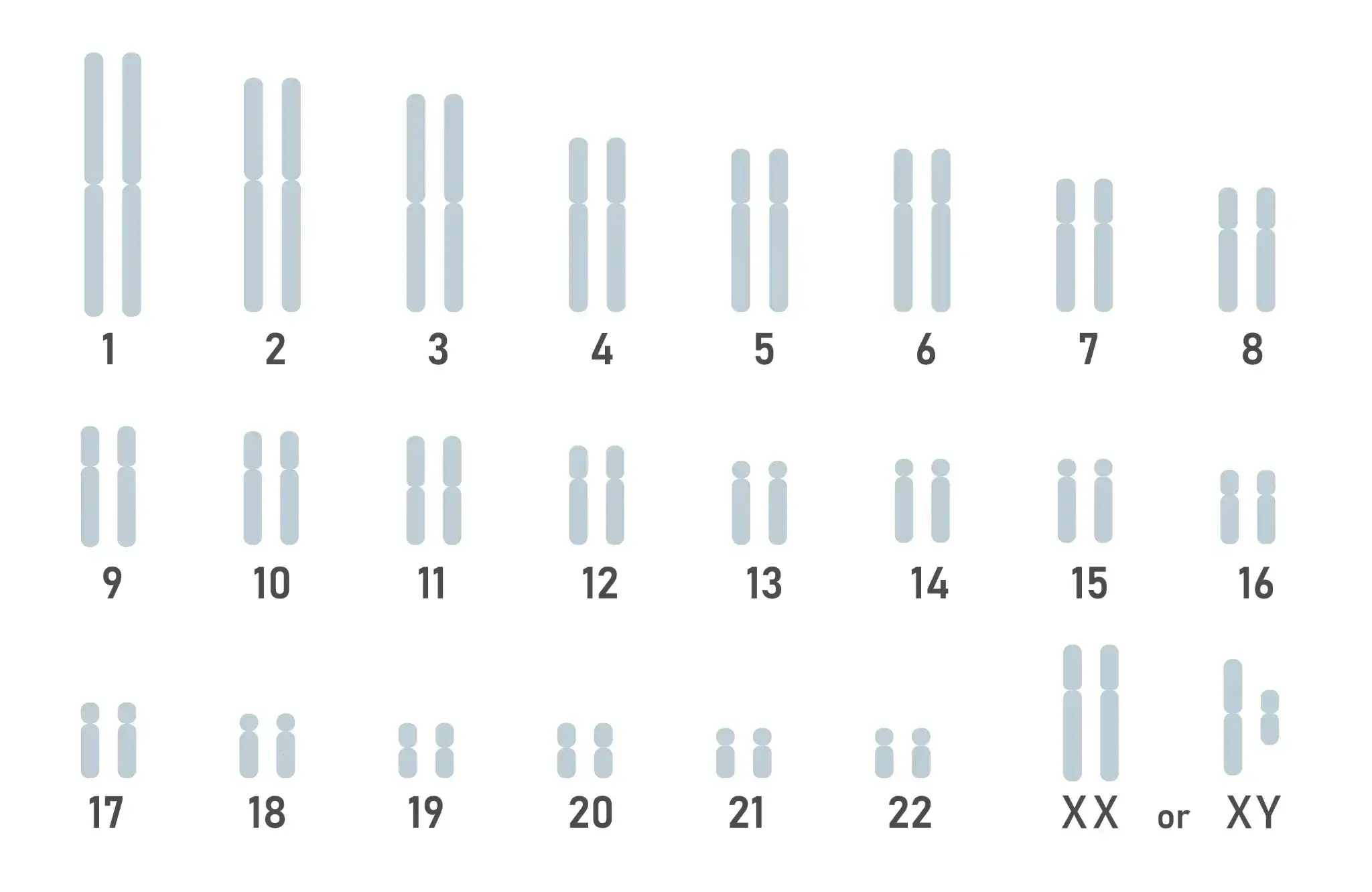
The DNA region investigated this time
Schematic diagram of DNA map present in cells
- ■
- ■
- ■
- ■
- ■
- ■
- ■
- ■
- ■
Related genes
| Related genes | JAZF1 |
|---|---|
| Related genes | ERMP1 |
| Related genes | D2HGDH |
| Related genes | COG6 |
Frequently asked questions (FAQ)
Q1. What is asthma?
Asthma is a respiratory disease that causes repeated episodes of wheezing, shortness of breath, chest tightness, and coughing due to chronic inflammation and constriction of the airways.It affects approximately 300 million people worldwide, and attacks are triggered by allergens and irritants.
Q2. What is the cause of asthma?
What causes asthma?A combination of genetic predisposition and environmental factorsIt is. The main triggers are allergens (pollen, dust mites), irritants (smoke, chemicals), cold air, and stress. Carriers of the type C mutation in the rs917115 DNA region tend to be at higher risk.
Q3. Can genetic testing determine the risk of asthma?
By examining the genotype of the DNA region rs917115,Understand trends in the risk of developing asthmaYou can. A study by Pividori et al. at the University of Chicago found that people with the genotype C mutation tend to be at higher risk.
Q4. What treatments are available for asthma?
Treatment of asthmaLong-term control drugs (inhaled corticosteroids) and rescue drugs for attacks (short-acting beta2-agonists)It is basic to use them together. Biological agents are also used in severe cases. Trigger avoidance and regular monitoring are important.
References
- Reference link 1: 2019 Jun., Milton Pividori, Lancet Respir Med
- Reference link 2: 2020 Jan., Thorunn A Olafsdottir, Nat Commun
- Reference link 3: 2022 Nov., Gengjie Jia, Nat Commun
- Reference link 4: 2016 Jul., Joseph K Pickrell, Nat Genet
- Reference link 5: 2021 Oct., Saori Sakaue, Nat Genet