
 arrhythmia

- Arrhythmia is a disease in which heart rhythm is disrupted due to abnormalities in the electrical activity of the heart.Therefore, the prolongation of the Tpe interval is an important indicator of the risk of developing the disease.
- Type A mutation in DNA region rs6882776Study finds that people with CKD tend to have a higher risk of developing arrhythmia
- Early electrocardiogram andGenetic risk assessmentenables preventive therapeutic intervention.
Overview The Tpeak to Tend (Tpe) interval is a specific measurement seen on an electrocardiogram (ECG) that graphically characterizes the electrical activity of the heart. This interval indicates the time from the peak of the T wave indicating ventricular repolarization to the end of the T wave when the repolarization process is complete. The Tpe interval has been recognized to play an important role in predicting arrhythmias characterized by irregular heart rhythms. A prolongation of the Tpe interval indicates a dispersion in the repolarization phase of the cardiac cycle, which indicates a tendency toward an increased risk of developing ventricular arrhythmias. This dispersion means that different regions within the ventricle take different times to reactivate, creating a favorable environment for the formation of reentry circuits. These circuits can disrupt the normal order of myocardial contractions and cause arrhythmias such as torsade de pointes and other ventricular tachycardias. In clinical practice, detailed analysis of Tpe intervals provides important information about a patient's arrhythmia risk. By identifying people with prolonged Tpe intervals, health care providers can take preventive measures, such as adjusting drug therapy or using devices such as defibrillators for high-risk individuals. Therefore, the Tpe interval serves as an important diagnostic and predictive tool in risk care and understanding of arrhythmia in various patient populations. A study by Ramírez et al. from Queen Mary, University of London revealed that the risk of developing arrhythmia is associated with a DNA region called rs6882776. There are three genotypes in this DNA region: GG, GA, and AA, and it was found that people with the A genotype tend to have a higher risk of arrhythmia.
What is arrhythmia?
Arrhythmia is a general term for diseases in which heart rhythm is disrupted due to abnormalities in the electrical activity of the heart.Approximately 800,000 people are diagnosed with arrhythmia each year in Japan, and the incidence increases with age.
Causes and mechanisms of arrhythmia
Arrhythmia is caused by an abnormality in the heart's impulse conduction system. The main causes are as follows.
- Organic diseases of the heart:Structural changes in the myocardium due to myocardial infarction, cardiomyopathy, and valvular heart disease
- Electrolyte abnormality:Fluctuations in blood concentrations of potassium, magnesium, and calcium
- Autonomic nerve abnormalities:Disturbance of the balance between sympathetic and parasympathetic nerves
- Genetic predisposition:Genetic mutations such as DNA region rs6882776
- External factors:Excessive caffeine intake/drinking alcohol/stress/lack of sleep
What is Tpe interval? Relationship with arrhythmia risk
The Tpe interval (Tpeak to Tend interval) is a diagnostic index that indicates the time from the peak to the end of the T wave on the electrocardiogram.
- Tpe interval reflects variance in ventricular repolarization process
- Extending Tpe spacingshows that different regions within the ventricle require different reactivation times.
- This variance isre-entry circuitcreate an environment suitable for the formation of
- The re-entry circuit istorsade de pointescause arrhythmia such as ventricular tachycardia
In clinical practice, identifying patients with a prolonged Tpe interval allows for preventive measures such as adjusting drug therapy or using a defibrillator.
Main symptoms of arrhythmia
Symptoms vary depending on the type and severity of the arrhythmia.
- Palpitations (feeling like your heart is pounding)
- Dizziness/light-headedness
- Shortness of breath/difficulty breathing
- Fainting/loss of consciousness
- Chest discomfort/pressure
- Feeling of fatigue/easiness to get tired
Types and characteristics of arrhythmia
| type | heart rate | Features | Typical diseases |
|---|---|---|---|
| tachyarrhythmia | 100 beats/min or more | heartbeat becomes abnormally fast | Atrial fibrillation/ventricular tachycardia |
| Bradyarrhythmia | Less than 60 beats/min | heartbeat becomes abnormally slow | Sick sinus syndrome/atrioventricular block |
| extrasystole | irregular | Beats at unexpected times | Atrial premature contraction/ventricular premature contraction |
Risk of arrhythmia complications
Without proper treatment, there is a risk of developing the following complications:
- Stroke:Caused by blood clot formation due to atrial fibrillation (risk increases approximately 5 times)
- Heart failure:Decline in cardiac function due to chronic arrhythmia
- Sudden death:Cardiac arrest due to ventricular fibrillation or ventricular tachycardia
- Cardiomyopathy:Myocardial degeneration due to sustained tachycardia
Diagnostic method
It is diagnosed by the following tests.
- Standard 12-lead electrocardiogram (resting ECG)
- Holter electrocardiogram (24 hour continuous recording)
- Cardiac ultrasound examination (echocardiography)
- Electrophysiological testing (EPS)
Prevention and countermeasures for arrhythmia
The following lifestyle changes are effective in preventing arrhythmia.
- Moderate aerobic exercise:Walking or light jogging for at least 150 minutes a week
- Caffeine and alcohol restrictions:Overdose can cause arrhythmia
- Stress management:It is important to maintain the balance of the autonomic nervous system
- Adequate sleep:7-8 hours of quality sleep a day
- Regular health checkup:Early detection through electrocardiography
Relationship between genes and arrhythmia
Relationship between DNA region rs6882776 and onset risk
A study by Ramírez et al. (1) from Queen Mary, University of London found that the DNA region rs6882776 is associated with the risk of arrhythmia.
- There are three genotypes of rs6882776: GG, GA, and AA.
- Genotype with type A mutationpeople tend to be at higher risk of arrhythmia
Genotype distribution in Japanese (rs6882776)
| Genotype | Percentage of Japanese people | percentage of the world |
|---|---|---|
| GG type | 10.6% | 48.7% |
| GA type | 44.0% | 42.1% |
| AA type | 45.3% | 9.1% |
Among Japanese people, type AA has the highest proportion at 45.3%, which is approximately 5 times higher than the world average (9.1%). This genetic characteristic has important implications for assessing arrhythmia risk in Japanese people.
Rationale for testing
Superficial DNA region: arrhythmia
The gene region that most strongly influences arrhythmia is rs6882776. The distribution of isomorphic genotypes in Japan is as follows.
- GG
10.6 % - GA
44.0 % - AA
45.3 %
Basis for inspection
A study by Ramírez et al., from Queen Mary, University of London, revealed that the risk of developing arrhythmia is linked to genes. There is a region called rs6882776 in the human genome, and there are two types of mutations, G and A, in the gene in this region. It has been found that people with type A mutations tend to have a higher risk of arrhythmia (1).
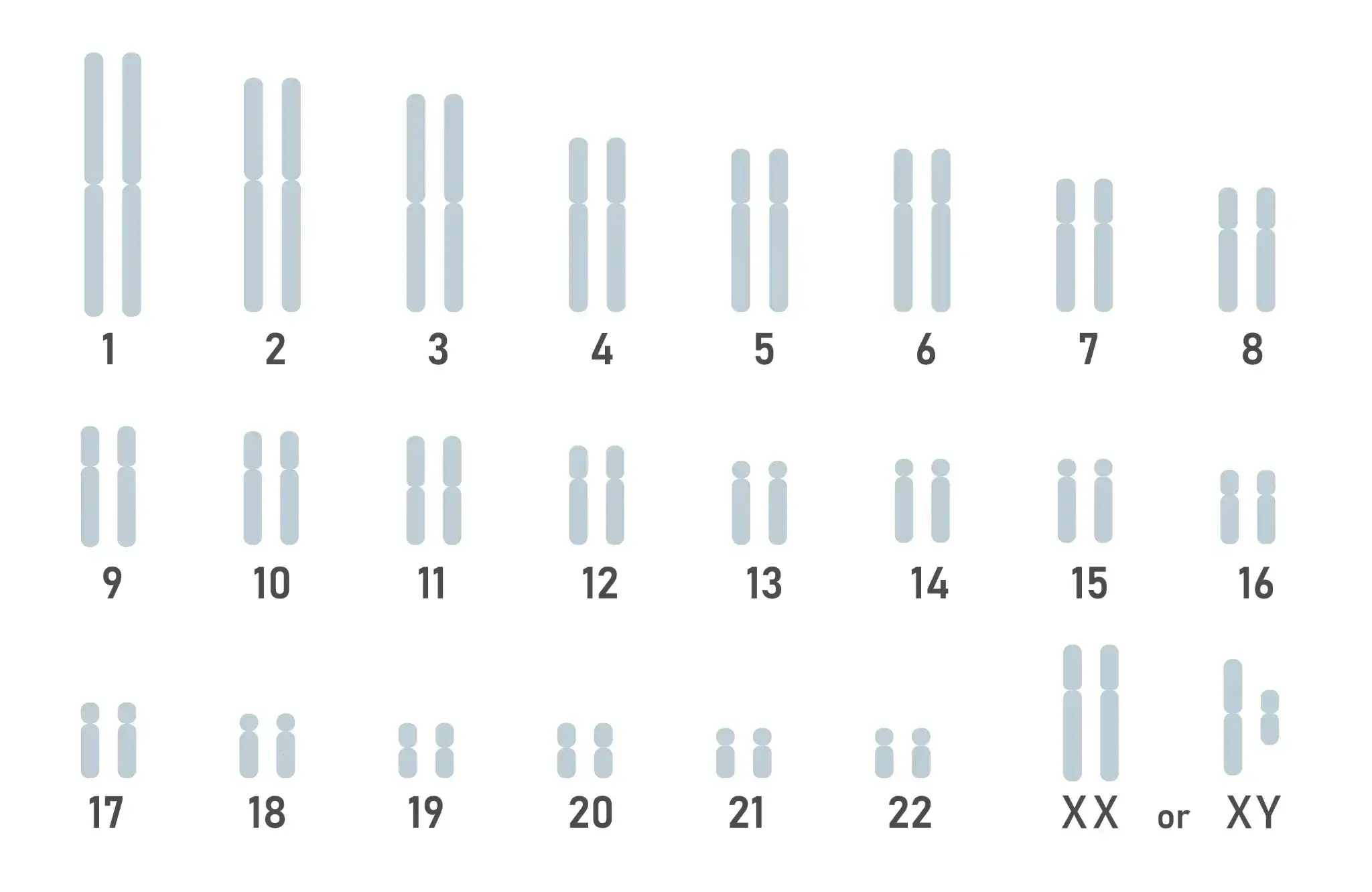
The DNA region investigated this time
Schematic diagram of DNA map present in cells
- ■
- ■
- ■
- ■
- ■
- ■
- ■
- ■
- ■
Related genes
| Related genes | NKX2-5 |
|---|
Frequently asked questions (FAQ)
Q1. What is arrhythmia?
Arrhythmia is a general term for diseases in which heart rhythm is disrupted due to abnormalities in the electrical activity of the heart.It is broadly classified into three types: tachyarrhythmia, bradyarrhythmia, and premature contractions, and prolongation of the Tpe interval is an important predictor of the risk of onset (1).
Q2. What is Tpe interval? How does it relate to arrhythmia?
Tpe interval (Tpeak to Tend interval) is a diagnostic index that indicates the time from the peak to the end of the T wave on the electrocardiogram.Prolonging this interval increases the variance of ventricular repolarization, increasing the risk of developing ventricular arrhythmias such as torsade de pointes.
Q3. Can genetic testing determine the risk of arrhythmia?
By examining the genotype of the DNA region rs6882776,Understand trends in the risk of developing arrhythmiaYou can. A study at Queen Mary, University of London found that people with the A mutation genotype tend to be at higher risk (1).
Q4. What are the main symptoms of arrhythmia?
The main symptoms arePalpitations, dizziness, shortness of breath, fainting, chest discomfortIt is. In some cases, there are no symptoms, and it may be detected during a medical checkup using an electrocardiogram. In severe cases, there is a risk of sudden cardiac arrest.
References
- Reference link 1: 2020 Jun., Julia Ramírez, Am J Hum Genet