
 muscle mass
- Muscle mass (lean body mass) is the weight of muscles, bones, and internal organs, which is obtained by subtracting body fat from body weight.It is an important index directly connected to health management, diet effects, and bone density prediction.
- DNA region rs3736228 of gene LRP5is related to lean body mass, and TT and CT types tend to have lower lean body mass than CC types.
- The total prevalence of TT type and CT type among Japanese people is45.1%, approximately 1.7 times higher than the world average of 25.9%.
Overview Body weight consists of "lean body mass", which is the weight of things other than fat, and "body fat mass", which is the amount of fat. Lean body mass includes the amount of muscle, bone, and internal organs. You can see changes in your body not only by changes in weight, but also by looking at the balance and amount of change in body fat and lean body mass. For example, even if your weight does not change during a diet, if your body fat mass decreases and your muscle mass increases, then it is considered to be effective. Lean body mass also helps predict bone density. (Reference link 1) Understanding body fat mass and lean body mass is effective for health management. Several genes related to lean body mass have been reported, one of which is the gene "LRP5." It has been shown that the DNA region of the gene ``rs3736228'' may be associated with lean body mass. Determining the genotype through genetic testing may be useful for early measures. Rationale According to the underlying theory, the DNA region "rs3736228" is located in the protein "LRP5" gene, and there are three genotypes: "CC type," "CT type," and "TT type." Approximately 51.7% of Japanese people have the CC type, 40.4% of the CT type, and 7.9% of the TT type. (Reference link 2) Worldwide, approximately 81.18% are "CC type," approximately 17.84% are "CT type," and approximately 0.98% are "TT type." In addition, ``TT type'' and ``CT type'' are thought to have an effect on the reduction of ``lean body mass,'' and it has been shown that these types may have less ``lean body mass'' than ``CC type.'' Mechanism of action DNA has four types of bases (A: adenine, T: thymine, C: cytosine, G: guanine), and diverse base sequences create information for various genes. Proteins are made up of multiple amino acids, and the base sequence specifies how these amino acids are arranged (amino acid sequence). The gene "LRP5" is a protein that penetrates cell membranes, and when Wnt protein from outside the cell binds to the gene "LRP5," the signal is transmitted into the cell and has the function of regulating sugar, lipid, and bone metabolism. (Reference link 3) Wnt proteins are also involved in muscle growth and repair. (Reference link 4) When the base of site "rs3736228" in "LRP5" changes from "C" to "T", one of the amino acids in "LRP5" changes from "alanine" to "valine" (Ala1330Val). It is known that this single amino acid polymorphism changes the structure and activity of the entire protein, and that LRP5 (rs3736228T type), which has the amino acid valine, has reduced activity. Furthermore, there is a report that "CT type" and "TT type" in the DNA region "rs3736228" tend to have lower bone density than "CC type". Therefore, the weakening of LRP5 affects bone metabolism and may be one of the causes of decreased bone density and osteoporosis. (Reference links 5, 6) Muscles and bones are known to interact, and a relationship between limb lean body mass (ALM) and bone density has been shown. It is also known that the risk of sarcopenia increases as bone density decreases, and that limb lean body mass (ALM) increases in proportion to bone density. (Reference link 7) Additional research is still needed to understand the mechanism by which "rs3736228" and "limb lean body mass (ALM)" are related. However, the cause may be a decrease in limb lean body mass (ALM) due to a decrease in LRP5 bone density, or a decrease in LRP5 activity, which weakens Wnt protein signals and prevents muscle growth.
What is muscle mass (lean body mass)?
Muscle mass (lean body mass) is the weight obtained by subtracting body fat mass from body weight, and is a health index that includes the weight of muscles, bones, internal organs, etc.Since changes in body weight alone cannot accurately grasp the actual state of the body, monitoring the balance between body fat mass and lean body mass is essential for health management.
Why do you need to know your lean body mass?
The reason for measuring and monitoring lean body mass is that it allows us to accurately assess changes in body composition. The specific benefits are listed below.
- Evaluation of diet effect:Even if your weight does not change, if your body fat mass decreases and your muscle mass increases, you can judge that your diet is progressing effectively.
- Prediction of bone density:Lean body mass can be used as a predictor of bone density (Reference link 1)
- Early detection of sarcopenia:Decrease in limb lean body mass (ALM) is a risk indicator for age-related sarcopenia (loss of muscle mass)
- Comprehensive health management:By understanding both body fat mass and lean body mass, more precise physical condition management is possible.
Comparison of weight components
| component | What's included | Significance in health management |
|---|---|---|
| lean body mass | Muscles, bones, internal organs, water | Maintenance of basal metabolism, prediction of bone density, evaluation of sarcopenia |
| body fat amount | Subcutaneous fat/visceral fat | Determination of obesity risk, prevention of lifestyle-related diseases |
Relationship between genes and muscle mass
Relationship between DNA region rs3736228 and muscle mass
The DNA region rs3736228 is located within the gene LRP5 and is associated with lean body mass (muscle mass).There are three genotypes of rs3736228: CC type, CT type, and TT type, and TT type and CT type have been shown to have a tendency to decrease lean body mass compared to CC type.
Comparison of genotype distribution in Japanese and the world (rs3736228)
| Genotype | Percentage of Japanese people | percentage of the world |
|---|---|---|
| CC type | 54.8% | 74.0% |
| CT type | 38.4% | 24.0% |
| TT type | 6.7% | 1.9% |
The T mutation prevalence rate (CT+TT) in Japanese people is45.1%This is approximately 1.7 times higher than the world average of 25.9%. This characteristic means that the genetic background that influences lean body mass in the Japanese population is different from the world average. (Reference link 2)
What is the mechanism of action of LRP5 gene?
LRP5 is a cell membrane-penetrating receptor protein that regulates glucose, lipid, and bone metabolism through the Wnt signaling pathway.(Reference link 3)
- Normal function:Wnt protein binds to LRP5 → Signal transmission within cells → Promotes bone formation, muscle growth and repair (Reference link 4)
- Effects of T-type mutation:Base of rs3736228 changes from C to T → Amino acid in LRP5 changes from alanine to valine (Ala1330Val) → LRP5 activity decreases
- Effect on bone density:CT and TT types tend to have lower bone density than CC types (reference links 5 and 6)
- Effect on muscle mass:As bone density decreases, the risk of sarcopenia increases and limb lean body mass (ALM) decreases (Reference link 7)
Other genetic regions involved in muscle mass
| DNA region | Main types of Japanese people | Major types in the world |
|---|---|---|
| rs16942341 | CC type 99.9% | CC type 93.1% |
| rs1171614 | CC type 99.9% | CC type 60.8% |
| rs6449353 | TT type 87.8% | TT type 68.0% |
| rs10784502 | TT type 76.5% | CT type 49.7% |
| rs2871865 | CC type 85.2% | CC type 71.5% |
Rationale for testing
Body surface DNA region: muscle mass
The gene region that most strongly influences muscle mass is rs3736228. The distribution of isomorphic genotypes in Japan is as follows.
- CC
54.8 % - CT
38.4 % - TT
6.7 %
Another gene region related to muscle mass is rs16942341. The distribution of isomorphic genotypes in Japan is as follows
- CC
99.9 % - CT
0.1%以下 - TT
0.1%以下
Another gene region related to muscle mass is rs1171614. The distribution of isomorphic genotypes in Japan is as follows
- TT
0.1%以下 - TC
0.1%以下 - CC
99.9 %
Another gene region related to muscle mass is rs6449353. The distribution of isomorphic genotypes in Japan is as follows
- TT
87.8 % - TC
11.7 % - CC
0.3 %
Another gene region related to muscle mass is rs10784502. The distribution of isomorphic genotypes in Japan is as follows
- CC
1.5 % - CT
21.8 % - TT
76.5 %
Another gene region related to muscle mass is rs2871865. The distribution of isomorphic genotypes in Japan is as follows
- CC
85.2 % - CG
14.2 % - GG
0.5 %
Basis for inspection
Research by Pei et al. at Soochow University revealed that increases and decreases in muscle mass are related to genes. There is a region called rs1171614 in the human genome, and there are two types of mutations, T and C, in the gene in this region. It was found that people with the T-type mutation tend to have increased muscle mass.
The DNA region investigated this time
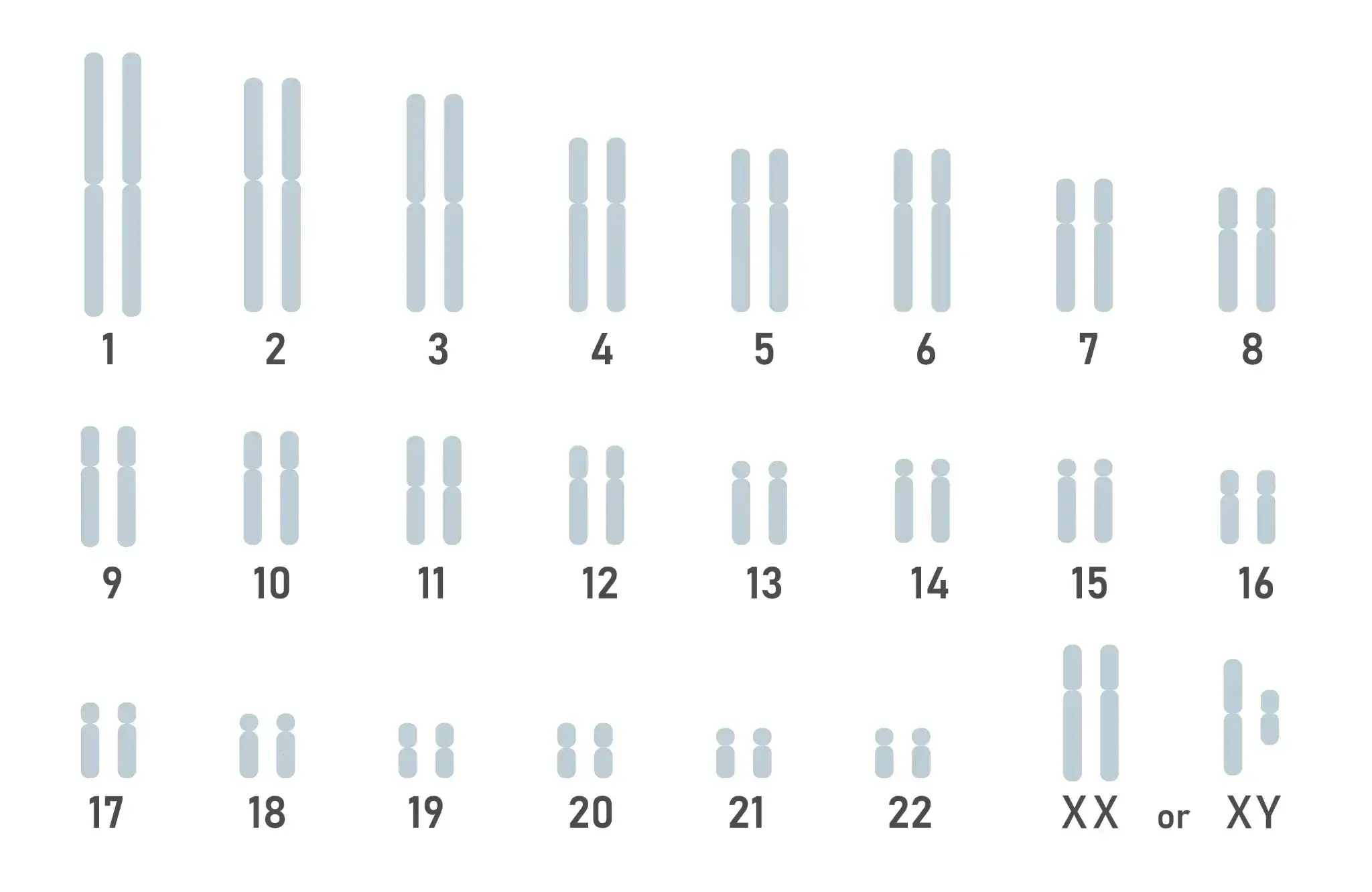
Schematic diagram of DNA map present in cells
- ■
- ■
- ■
- ■
- ■
- ■
- ■
- ■
- ■
Related genes
| Related genes | LRP5 |
|---|---|
| Related genes | ACAN |
| Related genes | SLC16A9 |
| Related genes | LCORL |
| Related genes | HMGA2 |
| Related genes | IGF1R |
Frequently asked questions (FAQ)
Q1. What is muscle mass (lean body mass)?
Muscle mass (lean body mass) is the weight obtained by subtracting body fat mass from body weight, and includes the weight of muscles, bones, internal organs, etc.By understanding the balance between lean body mass and body fat mass, accurate health management becomes possible, such as measuring the effects of dieting and predicting bone density.
Q2. Is muscle mass related to genes?
Yes.Research by Pei et al. of Soochow University (2020, Communications Biology) has revealed that multiple gene regions, including the DNA region rs3736228, are associated with muscle mass (extremity lean body mass).At rs3736228 of the LRP5 gene, TT and CT types tend to have lower lean body mass than CC types.
Q3. What is the distribution of genotype rs3736228 in Japanese people?
The genotype distribution of rs3736228 in Japanese people isCC type 54.8%, CT type 38.4%, TT type 6.7%It is. Worldwide, 74.0% are CC type, 24.0% CT type, and 1.9% TT type, and Japanese people have a total of 45.1% TT type and CT type, which is about 1.7 times higher than the world average of 25.9%.
Q4. What is the function of the gene LRP5?
LRP5 is a cell membrane-penetrating receptor protein that regulates glucose, lipid, and bone metabolism through the Wnt signaling pathway.The T-type mutation of rs3736228 changes the amino acid from alanine to valine (Ala1330Val), reducing LRP5 activity. This can lead to decreased bone density and muscle mass.
Q5. How can I maintain and increase muscle mass?
To maintain and increase muscle mass,Perform resistance training (strength training) and consume sufficient protein (1.2 to 2.0 g/day per 1 kg of body weight), adequate intake of vitamin D, and regular bone density tests are effective. It is recommended to understand your genotype through genetic testing and take measures from an early stage.
References
- Reference link 1: 2018 Oct., Ilesanmi-Oyele, BioResearch open access.
- Reference link 2: DNA Information on area “rs3736228” TogoVar
- Reference link 3: 2014.,Shu Takeda, Journal of the Japanese Kidney Society.
- Reference link 4: 2008 Sep., Anthony Ott, Journal of cell science.
- Reference link 5: 2009 Jun., Tomohiko URANO, Endocrine journal.
- Reference link 6: 2013 Dec., Jiayong Yi, Plos one
- Reference link 7: 2013 Jul., Seon Won Go, Korean Journal of Family Medicine
- Reference link 8: 2019 Dec., Ana I Hernandez Cordero, Am J Hum Genet
- Reference link 9: 2019 Sep., Christopher Hübel, Am J Med Genet B Neuropsychiatr Genet
- Reference link 10: 2020 Oct., Yu-Fang Pei, Commun Biol