
 Aortic valve stenosis

- Aortic stenosis is a disease in which the heart's aortic valve narrows, obstructing blood flow.It occurs in approximately 2-4% of people aged 65 and over.
- G-type mutation in DNA region rs10455872Decode Genetics study finds that people with this condition tend to be at higher risk of aortic valve stenosis
- The prevalence of type G mutation (AG+GG) in Japanese people isLess than 0.1%This is a low percentage compared to the global average of 11.8%.
Overview Aortic stenosis is a disease in which the aorta, which pumps blood from the heart to the rest of the body, narrows. In this disease, the aortic valve does not open and close normally, which puts strain on the heart, causing the left ventricle to enlarge and increasing the risk of heart failure. Symptoms of this disease include shortness of breath during exercise, chest pain, dizziness, fainting, palpitations, and fatigue. In severe cases, heart failure progresses and symptoms such as shortness of breath, difficulty breathing at night, and swelling of the legs worsen. Diagnosis is performed using cardiac ultrasound (echo examination), electrocardiogram, chest X-ray, CT scan, MRI, catheterization, etc. The echo test will check the shape and function of the aortic valve, the degree of stenosis, and the condition of the left ventricle in detail. Treatment includes the administration of blood pressure-lowering drugs and diuretics, and in severe cases, surgery to replace the aortic valve if necessary. Early diagnosis and treatment of aortic stenosis can improve quality of life and prognosis. A study by Helgadottir et al. of Decode Genetics revealed that the risk of developing aortic valve stenosis is associated with a DNA region called rs10455872. There are three genotypes in this DNA region: AA, AG, and GG, and it was found that people with the G genotype tend to have a higher risk of aortic valve stenosis.
What is aortic stenosis?
Aortic valve stenosis is a disease in which the aortic valve, which pumps blood from the heart to the rest of the body, becomes narrow and does not open and close normally.Excessive strain on the left ventricle causes the heart muscle to enlarge, increasing the risk of heart failure.
Main causes of aortic stenosis
The following three causes are involved in the development of aortic stenosis.
- Age-related calcification (degenerative):In people over 65 years of age, lime (calcium) is deposited on the valves and hardens. Most common cause
- Congenital bicuspid valve:The patient is congenital with only two valves instead of the usual three, and symptoms appear in people in their 40s and 50s. Present in approximately 1-2% of the population
- Rheumatic:As a sequela of rheumatic fever, the valves degenerate and fuse. Decreasing trend in developed countries
Symptoms and severity of aortic stenosis
Symptoms of aortic stenosis progress in stages depending on severity.
| severity | Main symptoms | Life expectancy (without treatment) |
|---|---|---|
| Mild | Asymptomatic (heart murmur detected during health check) | normal life possible |
| moderate | Shortness of breath, fatigue, and dizziness when exercising | Follow-up required |
| severe | Chest pain, syncope, heart failure symptoms (shortness of breath at rest, swelling of legs) | Approximately 2-5 years |
How to diagnose aortic valve stenosis
The following tests are used to diagnose aortic stenosis:
- Cardiac ultrasound examination (echo examination):The most important test to check in detail the shape and function of the valve, degree of stenosis, and condition of the left ventricle.
- Electrocardiogram:Check for left ventricular hypertrophy and arrhythmia
- Chest X-ray:Detects heart enlargement and valve calcification
- CT scan/MRI:Evaluate the degree of valve calcification and detailed structure of the aorta
- Cardiac catheterization:Accurately measure valve area and pressure gradient
Comparison of treatments for aortic stenosis
| treatment method | Target | Features |
|---|---|---|
| drug therapy | Mild to moderate cases, not suitable for surgery | Manage symptoms with antihypertensive drugs and diuretics. Not a fundamental treatment |
| Surgical valve replacement (SAVR) | Severe, low-risk patients under 75 years of age | The valve was replaced with an artificial valve through open-heart surgery. 5-year survival rate approximately 85% |
| Transcatheter aortic valve replacement (TAVR) | Severe, elderly and high-risk patients | A valve is placed with a catheter. Minimally invasive and quick recovery |
Aortic valve stenosis isEarly diagnosis and appropriate therapeutic intervention can improve quality of life and prognosis.It is.
Relationship between genes and aortic stenosis
Relationship between DNA region rs10455872 and aortic valve stenosis
A 2018 study by Helgadottir et al. from Decode Genetics revealed that the risk of developing aortic stenosis is associated with the DNA region rs10455872.
- There are three genotypes of rs10455872: AA, AG, and GG.
- Genotype with type G mutation(AG type/GG type) people tend to have a higher risk of aortic valve stenosis
- This gene region is associated with lipoprotein(a) (LPA gene) and may promote valve calcification
Comparison of genotype distribution in Japanese and the world (rs10455872)
| Genotype | Percentage of Japanese people | percentage of the world |
|---|---|---|
| AA type | 99.9% | 88.0% |
| AG type | 0.1%以下 | 11.5% |
| GG type | 0.1%以下 | 0.3% |
The G mutation prevalence rate (AG+GG) in Japanese people isLess than 0.1%, which is lower than the global average of 11.8%. This indicates that the rs10455872 risk variant associated with aortic stenosis is distributed at an extremely low frequency in the Japanese population.
Rationale for testing
Superficial DNA region: aortic valve stenosis
The gene region that most strongly influences aortic stenosis is rs10455872. The distribution of isomorphic genotypes in Japan is as follows.
- AA
99.9 % - AG
0.1%以下 - GG
0.1%以下
Basis for inspection
A study by Helgadottir et al. of Decode Genetics revealed that the risk of developing aortic valve stenosis is related to genes. There is a region called rs10455872 in the human genome, and there are two types of mutations, A and G, in the gene in this region. It was found that people with type A mutations tend to have a higher risk of aortic stenosis.
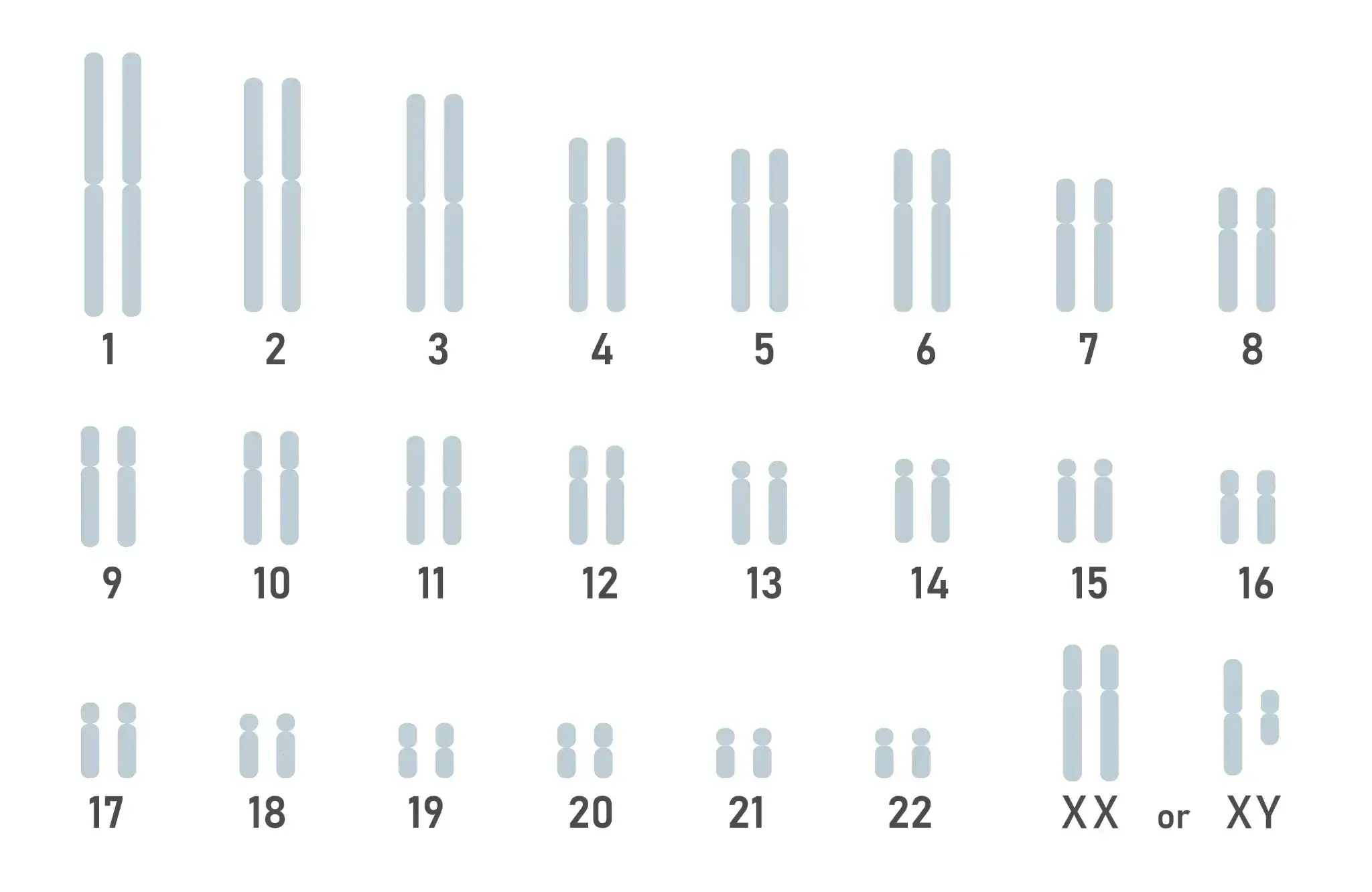
The DNA region investigated this time
Schematic diagram of DNA map present in cells
- ■
- ■
- ■
- ■
- ■
- ■
- ■
- ■
- ■
Related genes
| Related genes | LPA |
|---|
Frequently asked questions (FAQ)
Q1. What is aortic valve stenosis?
Aortic valve stenosis is a disease in which the aortic valve, which pumps blood from the heart to the rest of the body, becomes narrow and does not open and close normally.It affects approximately 2-4% of people over the age of 65, and age-related calcification of the valves is the most common cause. Excessive strain is placed on the left ventricle, which increases the risk of heart muscle enlargement and heart failure.
Q2. What are the main symptoms of aortic stenosis?
The main symptoms areShortness of breath, chest pain, dizziness, fainting, palpitations, and fatigue when exercisingIt is. When the condition becomes severe, heart failure progresses and symptoms include shortness of breath at rest, difficulty breathing at night, and swelling of the legs. If untreated after symptoms appear, the average life expectancy is approximately 2 to 5 years.
Q3. Is aortic stenosis related to genes?
Yes.A 2018 study by Helgadottir et al. from Decode Genetics found that the DNA region rs10455872 is associated with the risk of developing aortic valve stenosis.There are three genotypes of rs10455872: AA, AG, and GG, and people with the G-type mutation tend to be at higher risk.
Q4. What is the distribution of the aortic stenosis genotype (rs10455872) in Japanese people?
The genotype distribution of rs10455872 in Japanese people isAA type 99.9%, AG type 0.1%以下, GG type 0.1%以下It is. Worldwide, 88.0% are AA, 11.5% are AG, and 0.3% are GG, and Japanese people have a lower prevalence of the G mutation than the world average.
Q5. What treatments are available for aortic valve stenosis?
Treatment methods are broadly divided into three categories: drug therapy, surgical valve replacement (SAVR), and transcatheter aortic valve replacement (TAVR).Mild to moderate cases are managed with antihypertensive drugs and diuretics, while valve replacement surgery is considered in severe cases. TAVR has become popular as a minimally invasive option for elderly patients and patients at high surgical risk.
References
- Reference link 1: 2018 Mar., Anna Helgadottir, Nat Commun