
 ankylosing spondylitis

- Ankylosing spondylitis is a designated intractable disease that causes chronic inflammation in the spine and sacroiliac joints.The estimated number of patients in Japan is approximately 4,500.
- G-type mutation in DNA region rs378108 (Risk Allele)International joint research reveals that people with the disease tend to have a higher risk of developing the disease.
- Early genetic testing and inflammation controlcan be expected to suppress the progression of joint ankylosis and maintain quality of life (QOL).
Overview Ankylosing spondylitis is a relatively rare disease with an estimated 4,500 patients in Japan. The main cause of this disease is chronic progressive inflammation of the spine, pelvis, and large joints. It often occurs in young people and is designated as a nationally incurable disease. (Reference link 1) Inflammation spreads over a wide area, causing joint movement restrictions and disorders. The loss of movement of the neck, spine, and joints can greatly hinder daily life. The cause is unknown, but a strong relationship with the gene "HLAB27" has been pointed out, and associations with other genetic abnormalities have also been reported. Comprehensive genetic testing of patients by a joint research team from the United States, United Kingdom, Australia, and Canada has reported multiple genetic abnormalities on chromosome 21. Therefore, you can check your risk of ankylosing spondylitis by conducting your own genetic test. 2. Rationale A joint research team from the United States, United Kingdom, Australia, and Canada conducted a comprehensive genetic comparison and analysis of 2,053 patients with ankylosing spondylitis and 5,140 healthy individuals with similar genetic roots. As a result, in addition to the previously known genes associated with ankylosing spondylitis, ERAP1 and IL23R, multiple genetic abnormalities were confirmed on chromosomes 2 and 21. In particular, one of the multiple genetic abnormalities on chromosome 21 was rs378108. (Reference link 2) This DNA region "rs378108" was also detected as a risk factor in a comparison of 1,787 British and Australian ankylosing spondylitis patients and 4,800 healthy controls. (Reference link 3) There are three genotypes in the DNA region "rs378108": "AA type", "AG type", and "GG type", and it was found that in Japanese people, the AG type is the most common genotype at 54.9%, the AA type is the most common at 31.9%, and the GG type is the least common at 13.3%. (Reference link 4) Genetic analysis revealed that if the DNA region "rs378108" contains the risk allele G, the risk of ankylosing spondylitis may be slightly higher. (Reference link 3) The cause of ankylosing spondylitis is not completely understood, and the symptoms appear slowly, so accurate diagnosis may be delayed. Treatment is primarily symptomatic, and new types of anti-inflammatory drugs such as biological agents are also being tested. For such intractable diseases, knowing the risks in advance through genetic testing may lead to early detection, and suppressing inflammation from an early stage may slow down the progression of the disease. 3. Mechanism of action The detailed mechanism of the genetic relationship between the rs378108 DNA region and ankylosing spondylitis has not yet been elucidated. However, a relationship with ``inflammatory bowel disease'' is suspected, and a gene called ``PSMG1'' located on chromosome 21 has been reported to be associated with ``inflammatory bowel disease'' as well as ``ankylosing spondylitis.'' In addition, ileitis, which occurs in nearly 70% of patients with ankylosing spondylitis, and ileitis of Crohn's disease are very similar, and nearly 10% of patients with Crohn's disease may also have ankylosing spondylitis, leading to a link between ankylosing spondylitis and inflammatory bowel disease. However, the exact mechanism at the genetic level of the PSMG1 gene and ankylosing spondylitis has not yet been elucidated. It is also believed that the DNA region ``rs378108'' may be involved in protein production. Based on the above, the DNA region "rs378108" is attracting attention as one of the single nucleotide polymorphisms associated with the risk of ankylosing spondylitis.
What is ankylosing spondylitis?
Ankylosing spondylitis (AS) is an autoimmune disease that causes chronic progressive inflammation in the spine, sacroiliac joints, and large joints.It is estimated that there are approximately 4,500 patients in Japan, and it has been designated as an incurable disease by the government.
Causes and risk factors for ankylosing spondylitis
Although the cause is not completely understood, the following risk factors have been identified:
- Gene HLA-B27:Major risk genes carried by over 90% of patients
- G-type mutation in DNA region rs378108:Risk factors located on chromosome 21
- ERAP1/IL23R gene:Genes that have been previously associated with
- Family history:Risk increases if first degree relative has the disease
Main symptoms of ankylosing spondylitis
The symptoms areProgressing slowlyAs a result, accurate diagnosis may be delayed.
- Chronic pain and stiffness in the lower back and buttocks (especially worse in the morning)
- Restriction of spinal range of motion/fixation of forward bending posture
- Swelling and pain in peripheral joints (hip joints, knee joints, shoulder joints)
- Enthesitis (inflammation of the Achilles tendon and plantar fascia)
- Complications of uveitis (eye inflammation)
Differences between ankylosing spondylitis and other spondyloarthritis
| Comparison items | ankylosing spondylitis | rheumatoid arthritis |
|---|---|---|
| Main affected area | Spine/sacroiliac joint | Small joints of fingers and wrists |
| Age of onset | Young people in their 10s to 30s | Middle-aged people in their 30s to 50s |
| gender difference | 2-3 times more common in men | 3 times more common in women |
| Related genes | HLA-B27 | HLA-DR4 |
| Disease classification | Spondyloarthritis (SpA) | autoimmune arthritis |
| Designated intractable disease | Certified | No certification |
Relationship between ankylosing spondylitis and inflammatory bowel disease
Approximately 70% of patients with ankylosing spondylitis develop ileitis.It has also been reported that approximately 10% of Crohn's disease patients have ankylosing spondylitis.
- of chromosome 21PSMG1 geneis commonly involved in both diseases.
- Ileitis caused by ankylosing spondylitis and Crohn's disease are pathologically similar.
- Treatment of inflammatory bowel disease may contribute to improving symptoms of spondyloarthritis
treatment method
Treatment is basically symptomatic therapy. In recent years, new treatment options using biological agents have been increasing.
- NSAIDs:First-line anti-inflammatory drug
- Biological products:TNF inhibitor/IL-17 inhibitor
- Physical therapy:Rehabilitation to maintain joint range of motion
- Early intervention:Understand risks through genetic testing and suppress progression through early inflammation control
Relationship between genes and ankylosing spondylitis
Relationship between DNA region rs378108 and onset risk
An international joint research team from the United States, United Kingdom, Australia, and Canada conducted a comprehensive genetic analysis of 2,053 ankylosing spondylitis patients and 5,140 healthy individuals and confirmed that the DNA region rs378108 is associated with the risk of developing the disease.
- rs378108 hasAA・AG・GGThere are three genotypes of
- G type (Risk Allele)People with this condition tend to have a slightly higher risk of developing ankylosing spondylitis.
- Similar results were confirmed in follow-up tests in the UK and Australia (1,787 patients and 4,800 healthy controls).
Genotype distribution in Japanese (rs378108)
| Genotype | Percentage of Japanese people | percentage of the world |
|---|---|---|
| AA type | 35.5% | 27.9% |
| AG type | 48.1% | 49.8% |
| GG type | 16.3% | 22.2% |
Relationship between DNA region rs2836883 and onset risk
In addition to rs378108, chromosome 21DNA region rs2836883has also been reported to be associated with the risk of ankylosing spondylitis.
Genotype distribution in Japanese (rs2836883)
| Genotype | Percentage of Japanese people | percentage of the world |
|---|---|---|
| GG type | 69.9% | 55.6% |
| GA type | 27.3% | 37.9% |
| AA type | 2.6% | 6.4% |
Mechanism of action
Although the detailed mechanism of DNA region rs378108 and ankylosing spondylitis is unknown, the following findings have been reported.
- of chromosome 21PSMG1 geneis involved in ankylosing spondylitis along with inflammatory bowel disease
- rs378108protein productionIt is suggested that it may be related to
- rs378108 is associated with risk of ankylosing spondylitisSingle nucleotide polymorphism (SNP)Attention as one of the
Rationale for testing
Superficial DNA region: ankylosing spondylitis
The gene region most strongly associated with ankylosing spondylitis is rs378108. The distribution of isomorphic genotypes in Japan is as follows.
- AA
35.5 % - AG
48.1 % - GG
16.3 %
Another gene region involved in ankylosing spondylitis is rs2836883. The distribution of isomorphic genotypes in Japan is as follows
- GG
69.9 % - GA
27.3 % - AA
2.6 %
Basis for inspection
Comprehensive genetic analysis of 2,053 patients and 5,140 healthy individuals conducted by an international joint research team from the United States, United Kingdom, Australia, and Canada revealed that the DNA region rs378108 is associated with the risk of ankylosing spondylitis. There are two types of mutations in rs378108, A and G, and people with type G (Risk Allele) tend to have a slightly higher risk.
The DNA region investigated this time
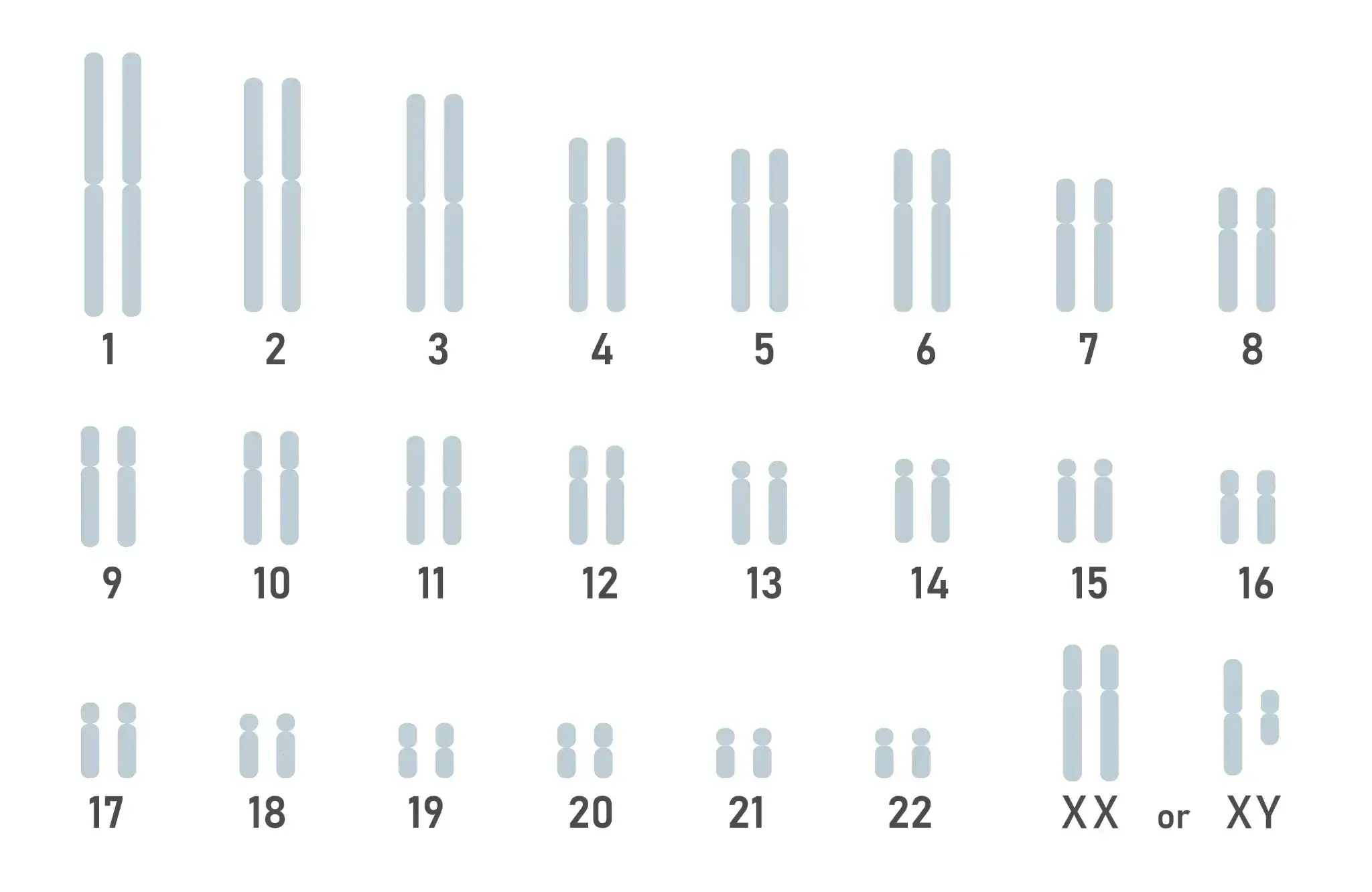
Schematic diagram of DNA map present in cells
- ■
- ■
- ■
- ■
- ■
- ■
- ■
- ■
- ■
Related genes
| Related genes | LINC02940 |
|---|---|
| Related genes | LINC02940 |
Frequently asked questions (FAQ)
Q1. What is ankylosing spondylitis?
Ankylosing spondylitis (AS) is an autoimmune disease that causes chronic progressive inflammation of the spine, sacroiliac joints, and large joints.It is estimated that there are approximately 4,500 patients in Japan, and it has been designated as an incurable disease by the government. It often occurs in young men, and the stiffness of the joints interferes with daily life.
Q2. What is the cause of ankylosing spondylitis?
The cause is not completely understood, butStrong association with gene HLA-B27has been confirmed. Furthermore, an international joint study has revealed that people with the G mutation in the rs378108 DNA region tend to be at higher risk.
Q3. What is the relationship between ankylosing spondylitis and inflammatory bowel disease?
Ankylosing spondylitis patientsApproximately 70% develop ileitisApproximately 10% of Crohn's disease patients also have ankylosing spondylitis. The PSMG1 gene on chromosome 21 is commonly involved in both diseases.
Q4. Can genetic testing determine the risk of ankylosing spondylitis?
By examining the genotype of the DNA region rs378108,Understanding the risk trends of ankylosing spondylitisYou can. International research has pointed out that if you have type G (Risk Allele), your risk may be slightly higher.
Q5. What treatments are available for ankylosing spondylitis?
Treatment is based on symptomatic treatment,NSAIDs (nonsteroidal anti-inflammatory drugs)The first choice is to control pain and inflammation. In recent yearsBiological products (TNF inhibitors/IL-17 inhibitors)is also used, and early treatment can suppress the progression of joint destruction.
References
- Reference link 1: Information on “Ankylosing Spondylitis” Intractable Disease Information Center
- Reference link 2: 2010 Jan., John D Reveille, Nature Genetics.
- Reference link 3: 2011 Jul., Australo-Anglo-American Spondyloarthritis Consortium (TASC), Nature genetics.
- Reference link 4: Information on DNA region “rs378108” SNPedia
- Reference link 5: 2011 Jul., David M Evans, Nat Genet
- Reference link 6: 2013 Jul., International Genetics of Ankylosing Spondylitis Consortium (IGAS), Nat Genet