
 male pattern baldness
- Androgenetic alopecia (AGA) affects approximately 30% of Japanese men (estimated at approximately 12.6 million people)The most typical alopecia
- Type C mutation in DNA region rs10502861Approximately 97% of Japanese people have the CC or CT type.
- In addition to genetic factors,Malnutrition, stress, lack of sleepEnvironmental factors such as
Overview AGA is the abbreviation for "Androgenetic Alopecia," and is a hair loss disease called "androgenetic alopecia" in Japanese.Androgenetic alopecia (AGA) is the most common type of hair loss that occurs in adult men, and is characterized by gradual thinning of the hair on the top of the head and around the hairline. Approximately 30% of Japanese men are thought to develop AGA, and approximately 12.6 million people are estimated to be patients. Thinning hair can make you look less clean, older, and can cause you to lose confidence. In addition, many people are likely to have negative impressions from those around them, and are worried about the possibility of their hair becoming thinner in the future. AGA is said to be a disease that is easily inherited, but genetics are not the only cause. According to recent research, it has been found that a certain part of the gene ``SETBP1'' is likely to influence the risk of developing AGA. Even young people can develop AGA from their teens, and if the initial symptoms are left unrecognized, the condition may progress to the point where only a few hairs remain. Finding out your own genetic type through genetic testing and knowing your risk of developing AGA may be helpful in preventing the onset and taking early measures. 2. Rationale Genetic research conducted at the Jewish General Hospital in Canada revealed that some people are more likely to develop AGA depending on the specific type of gene around the SETBP1 gene. This region is called ``rs10502861,'' and the DNA region has three genotypes: ``CC type,'' ``CT type,'' and ``TT type.'' The most common genotype among Japanese people is the CC type at 69.9%, followed by the CT type at 27.4% and the TT type at 2.7%. Surprisingly, more than 90% of Japanese people have a genetic type that makes them more likely to develop AGA, either CC type or CT type. However, this does not necessarily mean that people will develop AGA, and it is necessary to pay attention to environmental factors, including people with TT type who have a low risk tendency. For example, there is a lack of nutrients that make up hair, and hormonal imbalances due to stress and lack of sleep. Hair is made up of proteins, minerals, and vitamins, and zinc, a type of mineral, is especially susceptible to deficiency in the body. Zinc is necessary for the production of a protein called keratin, which is the main component of hair, so it is necessary to actively consume foods such as oysters and liver, or supplement it with supplements. An increase in stress hormones due to stress worsens the scalp environment due to excessive secretion of sebum, and a decrease in growth hormone secretion due to lack of sleep affects hair growth. Therefore, as a countermeasure against thinning hair, it is necessary to self-manage things such as nutrition, sleep time, and stress. By understanding your own risk of developing AGA through genetic testing at an early stage, you will be able to manage the risks in your lifestyle and environment to prevent the onset of AGA as much as possible. 3. Mechanism of action The onset mechanism of AGA is that a substance consisting of male hormone and an enzyme called 5α-reductase is taken into cells in the hair root, and a hair loss factor called TGFβ is produced. It is known that this hair loss factor disrupts the hair regrowth cycle and reduces the amount of hair. Environmental factors such as stress and nutritional deficiencies, as well as genetic factors, are involved, and the gene ``SETBP1'' has been found to be one of the genes involved. The gene ``SETBP1'' is located on chromosome 18 of the 24 chromosomes common to humans, and is expressed not only in the prostate and kidneys, but also in the hair and scalp. Although the direct mechanism by which the gene ``SETBP1'' is involved in AGA has not been elucidated, it is speculated that the ``rs10502861'' genotype controls the self-renewal ability of the hair and scalp, making hair unable to reproduce normally and making it easier to develop alopecia. Therefore, "rs10502861" is one of the DNA regions that is closely related to the onset of AGA and is attracting attention.
What is androgenetic alopecia (AGA)?
Androgenetic alopecia (AGA) Alopecia) is the most common type of hair loss that occurs in adult men, and is characterized by gradual thinning of hair on the crown and hairline.It is estimated that approximately 30% of Japanese men develop AGA, and the number of patients is approximately 12.6 million.
There are cases where AGA develops in teens, and if the initial symptoms are left unrecognized, the condition may progress to the point where only a small amount of hair remains. It is important to understand your risk through genetic testing at an early stage and take preventive measures.
Causes and mechanisms of AGA
The onset of AGA isThe combination of male hormone and the enzyme 5α-reductasewill be the trigger. The specific mechanism is as follows.
- Binding of male hormone + 5α-reductase:The binding substance is taken up by the cells of the hair root.
- Production of hair loss factor TGFβ:The absorbed substances produce TGFβ (hair loss factor)
- Disturbance of hair cycle:TGFβ disrupts the hair growth cycle and reduces hair volume.
- Genetic factors:Gene SETBP1 (chromosome 18) is involved in the self-renewal ability of hair and scalp
AGA risk factors
AGA is not only caused by genetic factors, but also by the following environmental factors.
| Factor category | Specific risks | influence |
|---|---|---|
| genetics | Type C mutation of rs10502861 | Decreased self-renewal ability of hair |
| malnutrition | Zinc/protein/vitamin deficiency | Inhibition of keratin production |
| stress | Increased stress hormones | Excessive secretion of sebum and deterioration of the scalp environment |
| lack of sleep | Decreased growth hormone secretion | Inhibition of hair growth and repair |
How to prevent and deal with AGA
The following lifestyle changes are effective for risk management.
- Zinc intake:Essential for the production of keratin, the main component of hair. Supplement with foods such as oysters and liver and supplements
- Adequate sleep:Promotes secretion of growth hormone and supports hair growth
- Stress management:Suppresses the increase in stress hormones and maintains the scalp environment
- Genetic testing:Understand risks early and work on preventive lifestyle improvements
Relationship between genes and AGA
Relationship between DNA region rs10502861 and onset risk
A study by Li et al. at the Jewish General Hospital (McGill University) in Canada revealed that the DNA region rs10502861 near the gene SETBP1 is associated with the risk of developing AGA.
- There are three genotypes of rs10502861: CC, CT, and TT.
- CC type/CT type with type C mutationare more likely to develop AGA
- TT type has a relatively low risk
- Approximately 97% of Japanese people have CC type (69.9%) or CT type (27.4%)
However, people with type CC or CT type do not necessarily develop AGA.A combination of environmental factors (malnutrition, stress, lack of sleep) increases the risk.
Genotype distribution in Japanese (rs10502861)
| Genotype | Percentage of Japanese people | percentage of the world | risk trends |
|---|---|---|---|
| CC type | 69.9% | 51.5% | high risk |
| CT type | 27.4% | 40.5% | Moderately high risk |
| TT type | 2.7% | 7.9% | low risk |
Mechanism of action: Relationship between the gene SETBP1 and AGA
The gene SETBP1 is one of the 24 human chromosomes.chromosome 18It is expressed not only in the prostate and kidneys, but also in the hair and scalp.
The mechanism of AGA development depending on the genotype of the DNA region rs10502861 is speculated as follows.
- Type C mutation of rs10502861 → Affects SETBP1 expression
- Abnormal regulation of self-renewal in hair and scalp
- Hair loss progresses due to hair not being able to reproduce properly
Due to this mechanism, rs10502861 is one of the interesting DNA regions deeply related to the development of AGA.
Rationale for testing
Surface DNA region: male pattern baldness
The gene region that most strongly influences male pattern baldness is rs10502861. The distribution of isomorphic genotypes in Japan is as follows.
- CC
68.3 % - CT
28.6 % - TT
2.9 %
Another gene region involved in male pattern baldness is rs12509636. The distribution of isomorphic genotypes in Japan is as follows
- CC
0.7 % - CT
15.8 % - TT
83.4 %
Another gene region involved in male pattern baldness is rs185597083. The distribution of isomorphic genotypes in Japan is as follows
- CC
99.9 % - CA
0.1%以下 - AA
0.1%以下
Another gene region involved in male pattern baldness is rs2965030. The distribution of isomorphic genotypes in Japan is as follows
- AA
0.1%以下 - AG
0.1%以下 - GG
99.9 %
Another gene region involved in male pattern baldness is rs35068491. The distribution of isomorphic genotypes in Japan is as follows
- TT
99.9 % - TC
0.1%以下 - CC
0.1%以下
Another gene region involved in male pattern baldness is rs9287638. The distribution of isomorphic genotypes in Japan is as follows
- CC
33.2 % - CA
48.8 % - AA
17.8 %
Basis for inspection
A study by Li and colleagues at McGill University revealed that the risk of developing androgenetic alopecia is linked to genes. There are two types of mutations in the rs10502861 region, C and T, and people with type C mutations tend to have a higher risk of developing AGA. Among Japanese people, 68.3% have type CC, 28.6% have type CT, and 2.9% have type TT, and they are characterized by a higher prevalence of type C than the world average.
The DNA region investigated this time
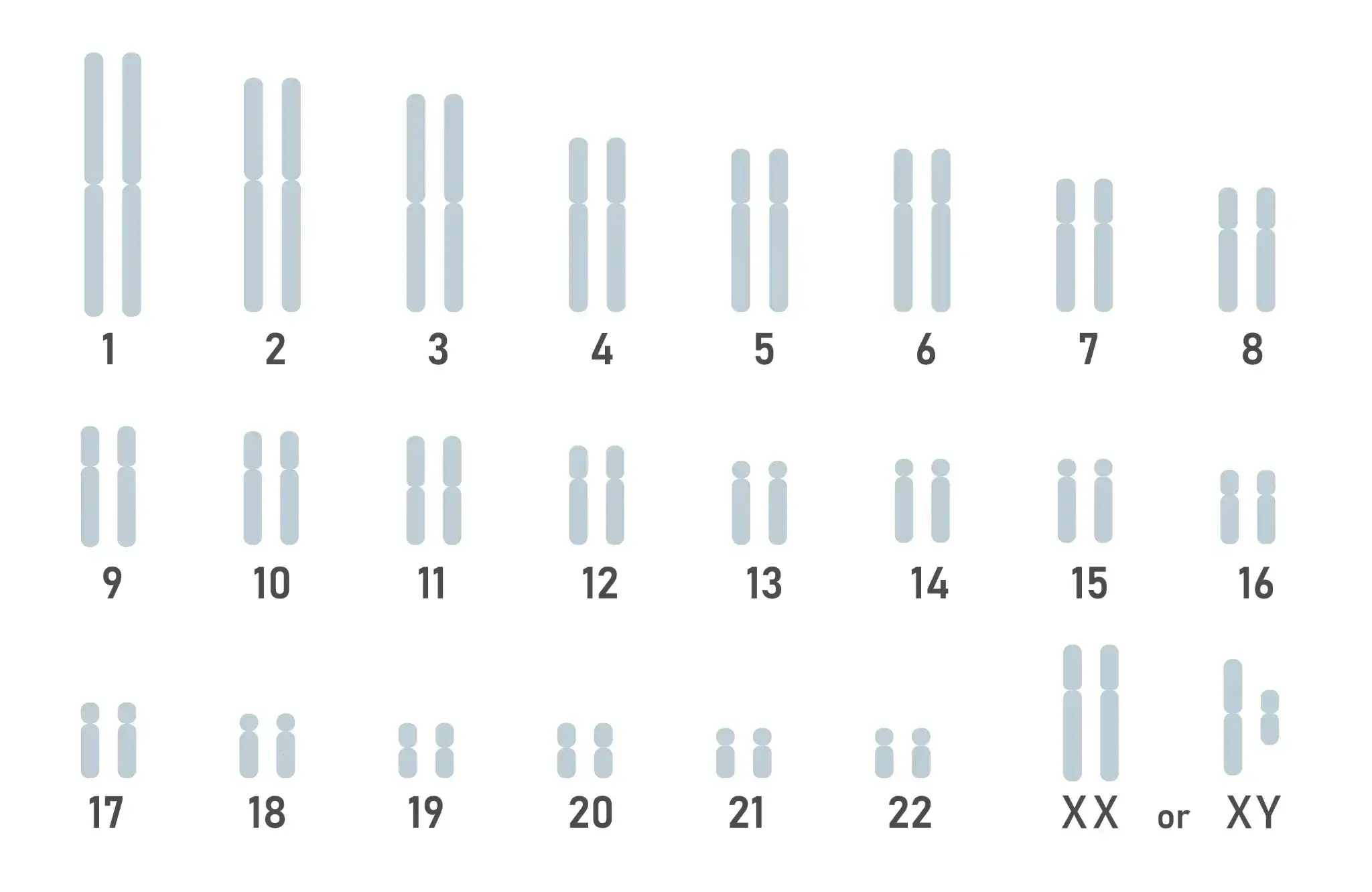
Schematic diagram of DNA map present in cells
- ■
- ■
- ■
- ■
- ■
- ■
- ■
- ■
- ■
Related genes
| Related genes | SLC14A2 |
|---|---|
| Related genes | RNU6-351P |
| Related genes | PAGE2 |
| Related genes | TWIST1 |
| Related genes | RUNX1 |
| Related genes | LINC01937 |
Frequently asked questions (FAQ)
Q1. What is androgenetic alopecia (AGA)?
Androgenetic alopecia (AGA) Alopecia) is the most common type of hair loss that occurs in adult men.It is characterized by gradual thinning of hair on the top of the head and hairline, and affects approximately 30% of Japanese men (estimated to be approximately 12.6 million people). The direct cause is the production of the hair loss factor TGFβ through the combination of male hormones and 5α-reductase.
Q2. What is the gene that causes AGA?
The main DNA regions involved in AGA arers10502861 (near gene SETBP1/chromosome 18)It is. There are three genotypes: CC, CT, and TT, and people with the C mutation tend to have a higher risk of developing the disease. Approximately 97% of Japanese people have the CC or CT type.
Q3. Is AGA hereditary?
AGA isGenetic factors are strongly involvedHowever, genetics are not the only cause. Environmental factors such as nutritional deficiencies (particularly zinc deficiency), stress, and lack of sleep also play a major role in the onset of the disease. People with low-risk TT type also need to be careful about environmental factors.
Q4. How to prevent/measure AGA?
To prevent AGAIntake of foods containing zinc (oysters, liver), ensuring sufficient sleep time, stress managementis valid. It is possible to delay the onset of the disease by understanding the risk through genetic testing early and making lifestyle changes.
Q5. What is the onset mechanism of AGA?
AGA isBinding substance of male hormone and 5α-reductaseis taken up by hair root cells and the hair loss factor TGFβ is produced. TGFβ disrupts the hair growth cycle and reduces hair volume. It is speculated that the rs10502861 region of the SETBP1 gene is involved in the self-renewal ability of hair and scalp.
References
- Reference link 1: 1979 Mar., I. Takashima, Hair Research.
- Reference link 2: 2012 May., Rui Li, PLoS Genet.
- Reference link 3: DNA Information on region “rs10502861” NIH
- Reference link 4: Gene SETBP1” information NIH
- Reference link 5: 2012 May., Rui Li, PLoS Genet
- Reference link 6: 2017 Feb., Saskia P Hagenaars, PLoS Genet
- Reference link 7: 2016 Jul., Joseph K Pickrell, Nat Genet
- Reference link 8: 2018 Dec., Chloe X Yap, Nat Commun