
 alzheimer syndrome

- Alzheimer's disease (AD) is a neurodegenerative disease in which nerve cells in the brain are damaged and memory and thinking ability progressively decline.and accounts for 60-80% of all dementia cases.
- G-type mutation in DNA region rs11083411A study by the National University of Singapore found that people with
- appropriateLifestyle improvement, cognitive training, early detectioncan be expected to reduce the risk of developing the disease and inhibit its progression.
Overview Alzheimer's disease (AD) is a disease in which functions such as memory, thinking ability, behavior and sensation gradually decline due to damage to nerve cells in the brain, and is one of the most common dementias. The onset of this disease is thought to be deeply related to ceramide, hippocampal atrophy, and amyloid plaque deposition. Ceramide is a lipid involved in apoptosis (programmed cell suicide) and inflammation. Studies have shown that ceramide levels are increased in the brains of AD patients, which can exacerbate neuronal (nerve cell) apoptosis and inflammation, promoting the onset and progression of AD. The hippocampal formation is an important part of the brain for learning and memory. In patients with AD, atrophy of the hippocampal formation is seen from an early stage, leading to cognitive dysfunction (decreased memory and learning ability). As the disease progresses, the hippocampal formation further atrophies. The degree of this atrophy is an important indicator of the severity of AD. Amyloid plaques are one of the characteristic lesions of AD. In the brains of AD patients, a substance called beta-amyloid accumulates to form plaques (abnormal lumps). This causes inflammation, which damages neurons and impairs the function of synapses (connections between nerve cells), leading to a decline in cognitive function. It has been found that the more amyloid plaques accumulate, the more severe AD becomes. Research by Chai et al. at the National University of Singapore revealed that the risk of developing Alzheimer's disease is associated with a DNA region called rs11083411. There are three genotypes in this DNA region: TT, TG, and GG, and it was found that people with the G genotype tend to have a higher risk of Alzheimer's syndrome.
What is Alzheimer's disease?
Alzheimer's disease (AD) is a neurodegenerative disease in which nerve cells in the brain are gradually damaged and lost, resulting in a progressive decline in memory, thinking, and judgment.It accounts for 60-80% of all dementia cases and is more common in people aged 65 and older (1).
Cause and mechanism of Alzheimer's disease
The following three pathological mechanisms are deeply involved in the onset of Alzheimer's disease.
- Accumulation of beta-amyloid plaques:Beta amyloid protein abnormally accumulates in the brain, forming plaques (senile plaques) and damaging nerve cells.
- Tau protein neurofibrillary tangles:Tau protein is abnormally phosphorylated and accumulates within nerve cells, causing cell death.
- Increase in ceramide:Levels of ceramides (lipids) are elevated in the brains of AD patients, exacerbating neuronal apoptosis (programmed cell death) and inflammation.
The main risk factors are:
- Aging (incidence rate increases rapidly in people over 65 years old)
- Family history/genetic predisposition(APOE ε4 allele, etc.)
- Lifestyle-related diseases such as hypertension, diabetes, and dyslipidemia
- History of head trauma
- History of social isolation/low education
Main symptoms of Alzheimer's disease
The symptoms areProgressing slowlyand goes through the following steps:
- Initial:Impaired short-term memory (forgetting recent events), confusion about date and time
- Middle period:Language impairment, poor judgment, disorientation, personality changes
- Late period:Requires full assistance with activities of daily living, difficulty swallowing, difficulty walking
Differences between Alzheimer's disease and other dementias
| Comparison items | alzheimer's disease | vascular dementia | Lewy body dementia |
|---|---|---|---|
| cause | β-amyloid accumulation/tau degeneration | Cerebrovascular disorder (cerebral infarction/cerebral hemorrhage) | Abnormal accumulation of Lewy bodies |
| Patient percentage | 60-80% of dementia cases | Approximately 20% of dementia cases | Approximately 10-15% of dementia cases |
| Initial symptoms | memory impairment | executive dysfunction | Visual hallucinations/Parkinsonian symptoms |
| Progress speed | Slow/progressive | stepwise (staircase) | variability |
| hippocampal atrophy | remarkable | Mild | Mild to moderate |
Alzheimer's disease complication risk
If not managed properly, the following complications can occur:
- dysphagiaaspiration pneumonia due to
- Behavioral/psychological symptoms(BPSD: wandering, aggression, anxiety, depression)
- Falls/fractures(Decrease in spatial recognition ability)
- Malnutrition/dehydration(Loss of ability to manage meals)
Diagnostic method
A comprehensive diagnosis is made using the following tests.
- Neuropsychological test (MMSE, Hasegawa Simple Intelligence Scale)
- MRI/CT examination (hippocampal atrophyevaluation)
- PET examination (amyloid PET, tau PET)
- Cerebrospinal fluid test (measurement of β-amyloid 42, phosphorylated tau)
Prevention and countermeasures
It has been reported that the following lifestyle habits contribute to reducing the risk of developing Alzheimer's disease.
- Aerobic exercise:Moderate exercise of 150 minutes or more per week improves cerebral blood flow
- Mediterranean diet:Reduce oxidative stress in the brain with a diet centered on fish, vegetables, and olive oil
- Cognitive training:Reading, puzzles, and social interaction strengthen cognitive reserve
- Ensuring sleep quality:7-8 hours of quality sleep promotes beta amyloid removal
- Management of hypertension and diabetes:Controlling vascular risk factors is effective in preventing dementia
The relationship between genes and Alzheimer's disease
Relationship between DNA region rs11083411 and onset risk
A study by Chai et al. at the National University of Singapore (1) revealed that the DNA region rs11083411 is associated with the risk of developing Alzheimer's disease.
- There are three genotypes of rs11083411: TT, TG, and GG.
- Genotype with type G mutationof people tend to be at higher risk of Alzheimer's disease
Genotype distribution in Japanese (rs11083411)
| Genotype | Percentage of Japanese people | percentage of the world |
|---|---|---|
| TT type | 34.9% | 39.8% |
| TG type | 48.3% | 46.5% |
| GG type | 16.6% | 13.5% |
Rationale for testing
External DNA region: Alzheimer's syndrome
The gene region most strongly associated with Alzheimer's syndrome is rs11083411. The distribution of isomorphic genotypes in Japan is as follows.
- TT
34.9 % - TG
48.3 % - GG
16.6 %
Another gene region involved in Alzheimer's syndrome is rs112724034. The distribution of isomorphic genotypes in Japan is as follows
- CC
99.9 % - CT
0.1%以下 - TT
0.1%以下
Another gene region involved in Alzheimer's syndrome is rs2838923. The distribution of isomorphic genotypes in Japan is as follows
- AA
18.3 % - AG
48.9 % - GG
32.7 %
Another gene region involved in Alzheimer's syndrome is rs79110742. The distribution of isomorphic genotypes in Japan is as follows
- TT
98.0 % - TA
1.9 % - AA
0.1%以下
Another gene region involved in Alzheimer's syndrome is rs912322. The distribution of isomorphic genotypes in Japan is as follows
- AA
33.8 % - AG
48.6 % - GG
17.4 %
Basis for inspection
Research by Chai et al. at the National University of Singapore revealed that the risk of developing Alzheimer's syndrome is linked to genes. There is a region called rs11083411 in the human genome, and there are two types of mutations, T and G, in the gene in this region. It has been found that people with the G mutation tend to have an increased risk of Alzheimer's syndrome (1).
The DNA region investigated this time
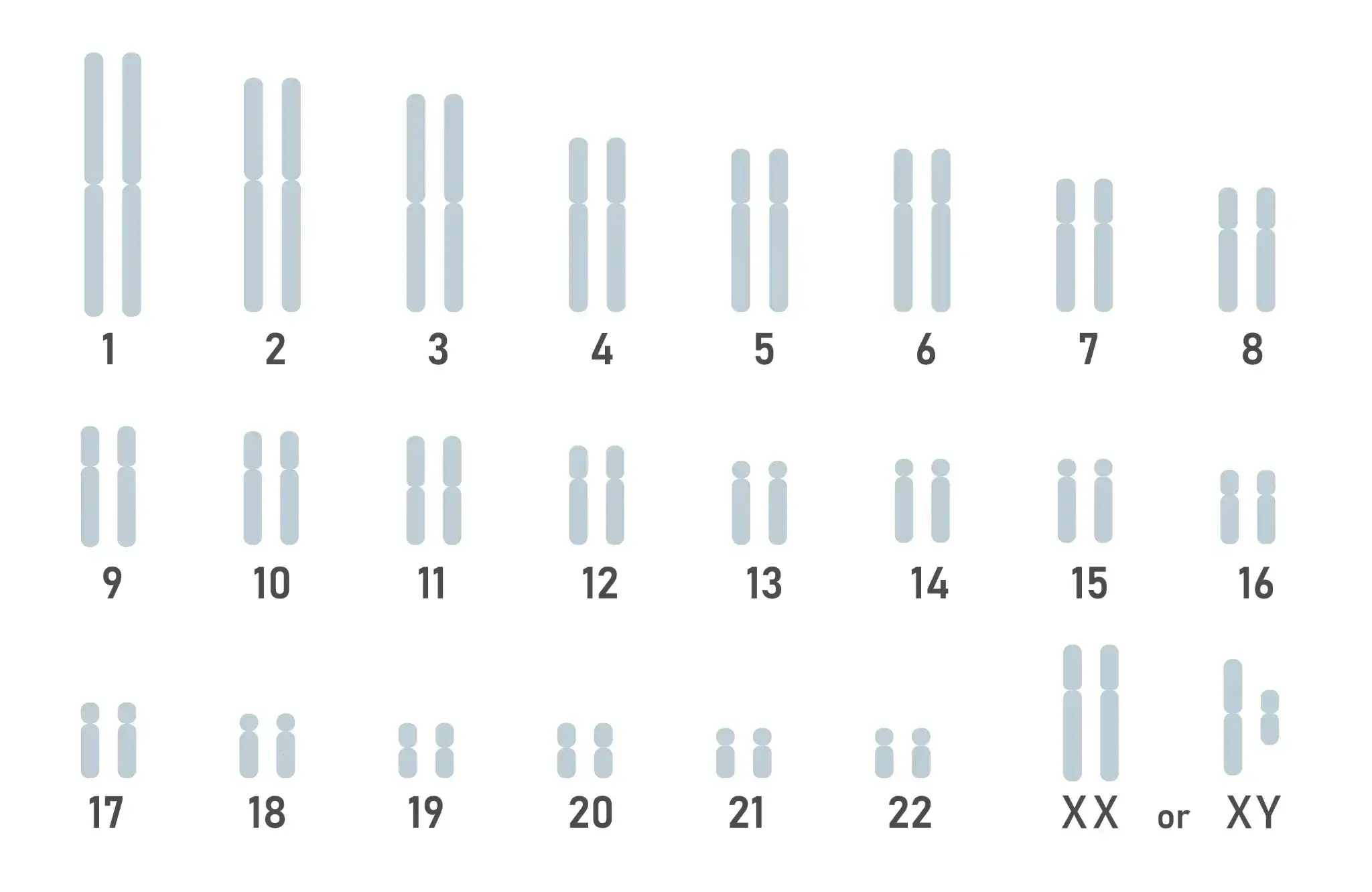
Schematic diagram of DNA map present in cells
- ■
- ■
- ■
- ■
- ■
- ■
- ■
- ■
- ■
Related genes
| Related genes | MIR302F |
|---|---|
| Related genes | PGAM5P1 |
| Related genes | COL18A1 |
| Related genes | LINC02301 |
| Related genes | MYO16 |
Frequently asked questions (FAQ)
Q1. What is Alzheimer's disease?
Alzheimer's disease (AD) is a neurodegenerative disease in which nerve cells in the brain are gradually damaged and lost, resulting in a progressive decline in memory, thinking, and judgment.It accounts for 60-80% of all dementia cases, and the main pathological findings are accumulation of β-amyloid and abnormalities in tau protein (1).
Q2. What is the cause of Alzheimer's disease?
The main cause isβ-amyloid plaque accumulation and tau protein neurofibrillary tanglesIt is. Elevated ceramide levels are also involved, and risk factors include aging, genetic predisposition, and lifestyle-related diseases. Carriers of the G mutation in the DNA region rs11083411 tend to be at higher risk (1).
Q3. What are the early symptoms of Alzheimer's disease?
The most obvious early symptoms areshort-term memory impairmentIt is. Symptoms include forgetting recent events, asking the same questions over and over again, and becoming confused about dates, times, and places. As the disease progresses, impaired judgment, language disorders, and personality changes occur.
Q4. Can genetic testing determine the risk of Alzheimer's disease?
By examining the genotype of the DNA region rs11083411,Understanding trends in the risk of developing Alzheimer's diseaseYou can. A study by the National University of Singapore found that people with the G mutation genotype tend to be at higher risk (1).
References
- Reference link 1: 2020 Jan., Jin-Fang Chai, Hum Mol Genet
- Reference link 2: 2014 Jan., Richard Sherva, Alzheimers Dement
- Reference link 3: 2012 Jul., Scott A Melville, Ann Neurol
- Reference link 4: 2015 Oct., Vijay K Ramanan, Brain
- Reference link 5: 2019 Jan., Alireza Nazarian, Alzheimers Res Ther