
 allergic diseases

- Allergic diseases are a group of diseases caused by an overreaction of the immune system.This includes hay fever, bronchial asthma, food allergies, and atopic dermatitis.
- Type A mutation in DNA region rs9573092 (Risk Allele)Research shows that people with the disease tend to be at higher risk of developing
- KLF5 geneis involved in the onset mechanism of allergic diseases through the inflammatory response pathway (Slug→CXCL12)
Overview The immune system has the ability to fight pathogens, but allergic reactions can cause the body to react to things that are not harmful. These include hay fever, bronchial asthma, and food allergies. These symptoms include sneezing, itchy eyes, itchy skin, runny nose, rash, and difficulty breathing. Recent research has shown that the "KLF5" gene is involved in asthma and inflammation (immune response) (reference link 1), and it has also been shown that the type of gene related to "KLF5" may be related to the susceptibility to allergic diseases such as asthma and hay fever. 2. Rationale A variety of genetic types are involved in allergic diseases such as asthma and hay fever, including the DNA region rs9583092. This region is located near the "KLF5" gene, and there are three main types: "AA type," "AG type," and "GG type." Among these, it is thought that the ``AA type'' mutated to give rise to the ``AG type'' and ``GG type.'' According to statistical analysis, ``AA type'' and ``AG type'' people with Risk Allele A tend to be more susceptible to allergic diseases than ``GG type'' people. (Reference link 2) Regarding the distribution of Japanese genotypes, "AA type" is the least common at about 16.08%, "AG type" is the most common at about 48.04%, and "GG type" is the most common at about 35.88%. On the other hand, regarding the global distribution of genotypes, "AA type" is the most common at about 46.24%, "AG type" is the most common at about 43.52%, and "GG type" is the least common at about 10.24%. This is very different from the Japanese tendency. (Reference link 3) 3. Mechanism of action The KLF5 gene is known to be involved in the expression of various genes, one of which is Slug. Slug is also a transcription factor that promotes the expression of a protein called CXCL12, which is involved in inflammatory (immune) responses and worsening of asthma. In one experiment, OVA (a protein that makes up egg white) was artificially injected into the trachea of rats, causing bronchial asthma. As a result, it was concluded that ``Slug,'' whose expression increased due to the influence of ``OVA,'' increased ``CXCL12,'' which intensified tracheal inflammation and caused bronchial asthma. Although the specific mechanism by which the DNA region ``rs9583092'' is involved in allergic diseases is not clear, this region influences the function of ``KLF5'', which may be involved in the susceptibility to allergic diseases. Based on the above, it is expected that by investigating one's own genetic type through genetic testing, it will be possible to know the genetic risk of developing allergic diseases, which will be useful for early detection and treatment.
What is an allergic disease?
Allergic diseases are a group of diseases that develop when the immune system overreacts to normally harmless substances (allergens).Typical diseases include hay fever, bronchial asthma, food allergies, and atopic dermatitis.
Causes and mechanisms of allergic diseases
The immune system has the ability to fight pathogens, but when an allergic reaction occurs, the immune system overreacts to substances that are harmless to the body. The main causes are as follows.
- Overproduction of IgE antibodies:Excessive production of immunoglobulin E (IgE) in response to the allergen
- Mast cell degranulation:IgE antibodies bind to mast cells, releasing chemicals such as histamine
- Genetic predisposition:Mutations in the KLF5 gene and DNA region rs9573092 are involved
- Environmental factors:Exposure to allergens such as pollen, house dust, dust mites, food, and animal hair
Main symptoms of allergic diseases
Symptoms of allergic diseaseDepends on the type of disease, covers a wide range of topics such as:
- Sneezing, runny nose, stuffy nose (hay fever, allergic rhinitis)
- Itchy/watery eyes (allergic conjunctivitis)
- Cough, shortness of breath, wheezing (bronchial asthma)
- Skin itching, rash, eczema (atopic dermatitis, urticaria)
- Abdominal pain, vomiting, diarrhea (food allergy)
Comparison of major allergic diseases
| Disease name | Main allergens | Main symptoms |
|---|---|---|
| Hay fever | Cedar/Hinoki pollen | Sneezing, runny nose, itchy eyes |
| bronchial asthma | mite house dust | Cough, shortness of breath, wheezing |
| food allergy | Eggs, milk, wheat | Urticaria, abdominal pain, anaphylaxis |
| atopic dermatitis | Dust mites, food, sweat | Dry skin, itching, eczema |
KLF5 gene and mechanism of action of allergic diseases
KLF5 geneis involved in the expression of various genes, one of which is transcription factors.SlugThere is. Slug is involved in inflammatory (immune) responses and worsening of asthmaCXCL12promotes the expression of a protein called
In an experiment, OVA (a protein that makes up egg white) was artificially administered to the trachea of rats to induce bronchial asthma, and it was concluded that the expression of Slug increased due to the influence of OVA, and as a result, CXCL12 increased, intensifying tracheal inflammation and causing bronchial asthma (1).
Although the specific mechanism by which the DNA region rs9573092 is involved in allergic diseases is still being elucidated, it has been shown that this region may affect the function of KLF5 and be involved in the susceptibility to allergic diseases.
Prevention and countermeasures for allergic diseases
- Avoiding allergens:Minimize exposure to causative agents
- Drug therapy:Use of antihistamines, inhaled steroids, etc.
- Immunotherapy (desensitization therapy):Acquisition of tolerance by administering the causative allergen in small doses
- Genetic testing:By examining your own genetic type, you can understand your genetic risk of developing the disease and utilize it for early detection and treatment.
Relationship between genes and allergic diseases
Relationship between DNA region rs9573092 and onset risk
A study by Hernandez-Pacheco et al. (2) revealed that the DNA region rs9573092 is associated with the risk of developing allergic diseases.
- There are three genotypes of rs9573092: AA, AG, and GG.
- AA type/AG type with Risk Allele APeople with blood type GG tend to be more susceptible to allergic diseases than people with blood type GG.
Genotype distribution in Japanese (rs9573092)
| Genotype | Percentage of Japanese people | percentage of the world |
|---|---|---|
| AA type | 22.6% | 45.3% |
| AG type | 49.8% | 43.9% |
| GG type | 27.4% | 10.6% |
Approximately 22.6% of Japanese people have type AA, which is lower than the world average of 45.3%, and 27.4% have type GG, which is significantly higher than the world average of 10.6%. There are significant differences in the genotype distribution between the Japanese and the rest of the world (3).
Rationale for testing
Surface DNA region: allergic diseases
The gene region that most strongly affects allergic diseases is rs9573092. The distribution of isomorphic genotypes in Japan is as follows.
- AA
22.6 % - AG
49.8 % - GG
27.4 %
Another gene region involved in allergic diseases is rs7240948. The distribution of isomorphic genotypes in Japan is as follows
- CC
6.7 % - CT
38.4 % - TT
54.8 %
Another gene region involved in allergic diseases is rs4076542. The distribution of isomorphic genotypes in Japan is as follows
- GG
33.2 % - GA
48.8 % - AA
17.8 %
Basis for inspection
A study by Hernandez-Pacheco et al. revealed that the risk of developing allergic diseases is related to genes. There are two types of mutations, A and G, in the rs9573092 region, which pose a risk People with blood type AA or AG who have the allele A tend to be more susceptible to allergic diseases than people with blood type GG (2).
The DNA region investigated this time
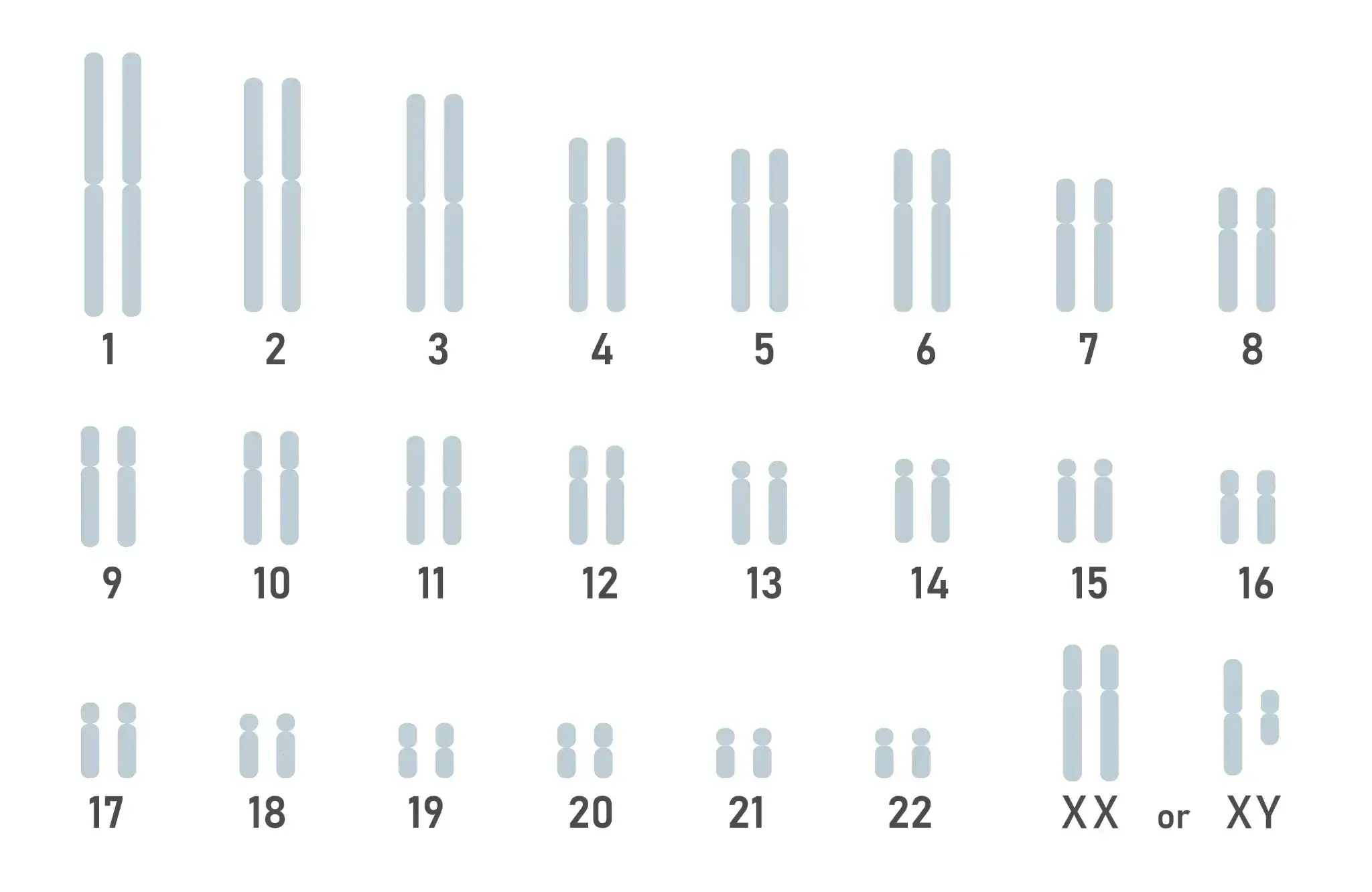
Schematic diagram of DNA map present in cells
- ■
- ■
- ■
- ■
- ■
- ■
- ■
- ■
- ■
Related genes
| Related genes | PSMD10P3 |
|---|---|
| Related genes | STARD6 |
| Related genes | MIR4686 |
Frequently asked questions (FAQ)
Q1. What is an allergic disease?
Allergic diseases are a group of diseases that develop when the immune system overreacts to normally harmless substances (pollen, food, dust mites, etc.).Typical symptoms include hay fever, bronchial asthma, food allergies, and atopic dermatitis.
Q2. What is the cause of allergic diseases?
The main cause isOverproduction of IgE antibodies by the immune systemIt is. Genetic predisposition (KLF5 gene, DNA region rs9573092, etc.) and environmental factors (pollen, house dust, food) are involved in a complex manner. Risk People with type AA or AG type who have the allele A tend to be more susceptible to allergic diseases than people with type GG type (2).
Q3. Can genetic testing determine the risk of allergic diseases?
By examining the genotype of the DNA region rs9573092,Understanding trends in the genetic risk of developing allergic diseasesYou can. Studies have shown that people with type AA and AG types are at higher risk compared to people with type GG type (2).
Q4. How is the KLF5 gene related to allergies?
KLF5 genecontrols the expression of the transcription factor Slug. Slug isCXCL12 proteinThe increase in CXCL12 increases tracheal inflammation and contributes to bronchial asthma (1).
Q5. How can I prevent allergic diseases?
Avoidance of allergens, antihistamines and inhaled steroidsdrug therapy, administering the causative allergen in small dosesImmunotherapy (desensitization therapy)is valid. It is also recommended that you understand your own risk through genetic testing and take early measures.
References
- Reference link 1: 2021 Jun., Wendi Wei, Journal of Translational Medicine.
- Reference link 2: 2019 Feb., Natalia Hernandez-Pacheco, Frontiers in pediatrics.
- Reference link 3: DNA Information on area "rs9573092" TogoVar
- Reference link 4: 2017 Dec., Manuel A Ferreira, Nat Genet
- Reference link 5: 2019 Dec., Åsa Johansson, Hum Mol Genet