
 aging rate

- Aging speed is determined by the effects of GDF11 and GDF8 proteins and the genotype of the DNA region rs1815739Individual differences occur depending on
- Genotype with type C mutationCambridge University research finds that people tend to age more slowly
- The prevalence of type CC among Japanese people is 26.4%., which is slightly lower than the world average of 32.3%.
Overview GDF11 and GDF8 are proteins deeply involved in the physical changes associated with aging, and each plays different roles. GDF8 (myostatin) has the function of suppressing muscle growth. As the effect of GDF8 increases with age, muscle mass and muscle strength may decrease. This is considered to be one of the causes of muscle weakness and muscle atrophy due to aging. Loss of muscle mass is a major health problem for the elderly, as it increases the risk of falls and fractures and reduces the quality of daily life. GDF11 has been shown to have rejuvenating effects on skeletal muscle, neural tissue, and the cardiovascular system in aged mice, suggesting that it may attenuate the deleterious effects of aging. Specifically, GDF11 may improve the ability to regenerate tissues weakened by aging, and this is expected to slow the progression of aging and improve age-related diseases and functional decline. GDF11 and GDF8 require further detailed study, but may have important effects on age-related physical changes. A study by Sun et al. at the University of Cambridge revealed that aging speed is associated with a DNA region called rs1815739. There are three genotypes in this DNA region: TT, TC, and CC, and it was found that people with the C type mutation tend to age more slowly.
What is aging rate?
Aging rate refers to the rate at which cells, tissues, and organs deteriorate over time, and is influenced by both genetic and environmental factors.A study by Sun et al. from the University of Cambridge (1) revealed that people with the C mutation in the rs1815739 DNA region tend to age more slowly.
What are GDF11 and GDF8? - Two proteins involved in aging
GDF11 and GDF8 are proteins deeply involved in physical changes associated with aging. Each has a different role.
| Comparison items | GDF8 (myostatin) | GDF11 |
|---|---|---|
| Main features | Suppresses muscle growth | Improves tissue regeneration ability |
| Relationship with aging | Effect increases with age → muscle mass decreases | Rejuvenating effect on skeletal muscles, nerves, and cardiovascular system |
| influence | Muscle weakness and increased risk of falls | Expected to slow the aging process |
| research stage | Mechanism elucidated | Confirmed effectiveness in animal experiments (applied research to humans currently underway) |
Effect of GDF8 (myostatin) on aging
GDF8 (myostatin) is a protein that suppresses muscle growthIt is. When the action of GDF8 becomes stronger with age, the following changes occur.
- Loss of muscle mass (sarcopenia)
- muscle weakness
- Increased risk of falls and fractures
- Decreased quality of activities of daily living (ADL)
Possibility of rejuvenating effect of GDF11
GDF11 is a protein that has been shown to have a rejuvenating effect on skeletal muscle, nervous tissue, and cardiovascular system in aged mice.It is. Specifically, the following possibilities are suggested.
- Improves the ability to regenerate tissues weakened by aging
- slows down the rate of aging
- Improve diseases and functional decline associated with aging
Further detailed research is underway for both GDF11 and GDF8.
Relationship between aging speed and genes
A study by Sun et al. (1) from the University of Cambridge revealed that aging speed is associated with the DNA region rs1815739.
- There are three genotypes of rs1815739: TT, TC, and CC.
- People with type C mutationtends to have a slower aging rate
- Related genes:ACTN3(gene encoding α-actinin-3)
Measures to slow down the aging process
In addition to genetic factors, the following lifestyle habits are believed to be effective in slowing down the aging process.
- Moderate exercise:Aerobic exercise at least 3 times a week is effective for maintaining muscle mass and rejuvenating cells.
- Intake of antioxidant foods:Vitamins C and E, polyphenols, and carotenoids reduce oxidative stress
- Adequate sleep:7-8 hours of quality sleep promotes cell repair
- Stress management:Chronic stress accelerates telomere shortening, so mindfulness is recommended.
- Calorie restriction:Moderate calorie restriction may activate sirtuin genes and contribute to suppressing aging
Relationship between genes and aging speed
Relationship between DNA region rs1815739 and aging rate
A study by Sun et al. from the University of Cambridge (1) revealed that the DNA region rs1815739 is associated with aging speed.
- There are three genotypes of rs1815739: TT, TC, and CC.
- Genotype with type C mutationpeople tend to age more slowly
Genotype distribution in Japanese and the world (rs1815739)
| Genotype | Percentage of Japanese people | percentage of the world |
|---|---|---|
| TT type | 23.5% | 18.5% |
| TC type | 49.9% | 49.0% |
| CC type | 26.4% | 32.3% |
Rationale for testing
Surface DNA region: aging rate
The gene region that most strongly influences the rate of aging is rs1815739. The distribution of isomorphic genotypes in Japan is as follows.
- TT
23.5 % - TC
49.9 % - CC
26.4 %
Basis for inspection
A study by Sun et al. at the University of Cambridge revealed that aging speed is linked to genes. There is a region called rs1815739 in the human genome, and there are two types of mutations, T and C, in the gene in this region. It has been found that people with type C mutation tend to age more slowly (1).
The DNA region investigated this time
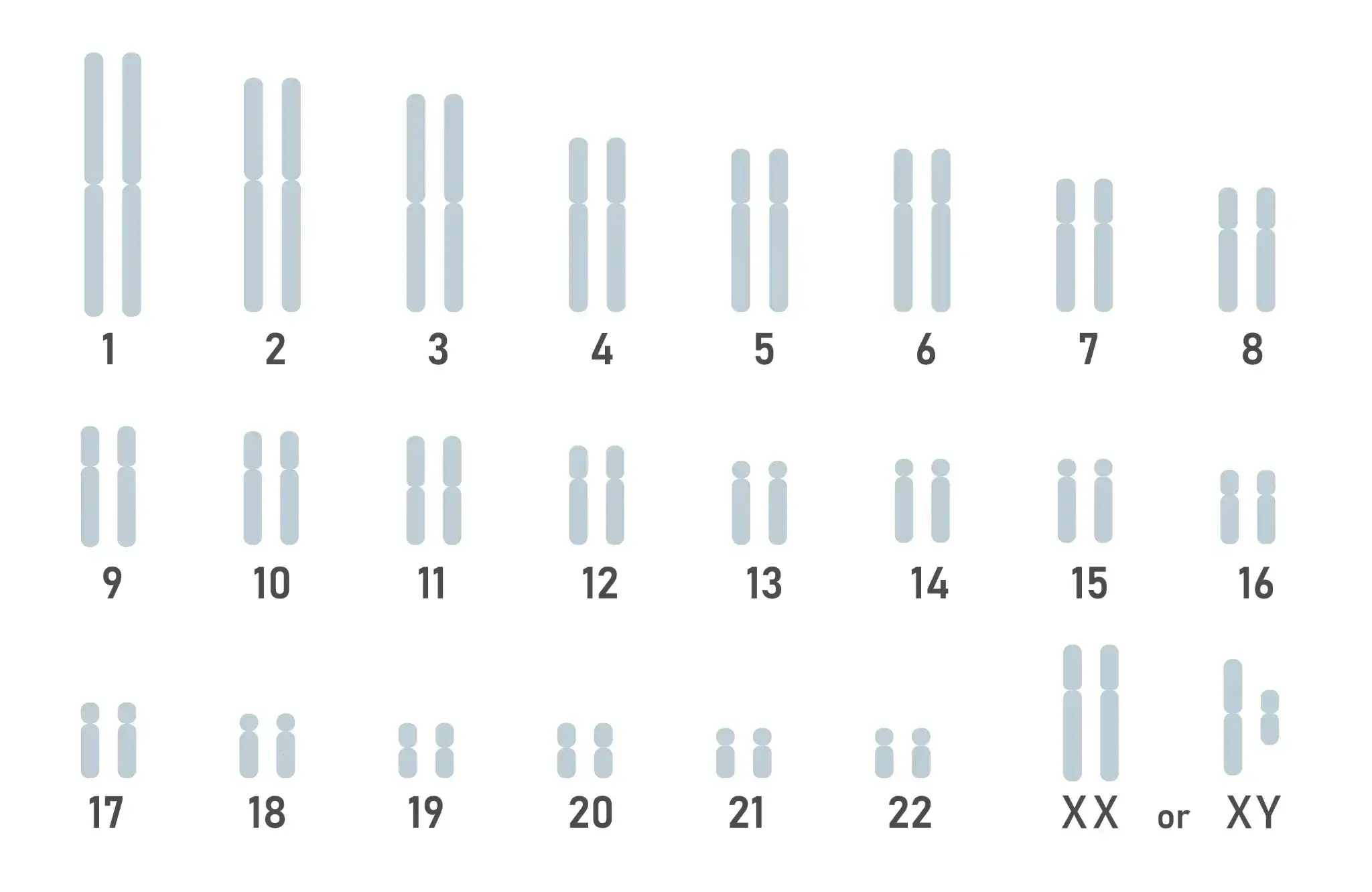
Schematic diagram of DNA map present in cells
- ■
- ■
- ■
- ■
- ■
- ■
- ■
- ■
- ■
Related genes
| Related genes | ACTN3 |
|---|
Frequently asked questions (FAQ)
Q1. What is aging rate?
Aging rate refers to the rate at which cells, tissues, and organs deteriorate over time.Both genetic factors (DNA region rs1815739) and environmental factors (lifestyle, diet, and exercise) influence the rate of aging. People with the type C mutation tend to age more slowly (1).
Q2. How are GDF11 and GDF8 related to aging?
GDF8 (myostatin) is a protein that suppresses muscle growthIts effects become stronger with age, leading to a decrease in muscle mass.GDF11 has a rejuvenating effect on skeletal muscle, nervous tissue, and cardiovascular systemhas been confirmed in animal studies, suggesting that it may alleviate the harmful effects of aging.
Q3. What genetic region is involved in aging speed?
According to a study by Sun et al. at the University of Cambridge (1),DNA region rs1815739 is associated with aging speedIt turns out that it is. There are three genotypes: TT, TC, and CC, and people with the C mutation tend to age more slowly. The related gene is ACTN3.
Q4. Is there a way to slow down the aging rate?
Moderate exercise (aerobic exercise at least 3 times a week), a diet containing antioxidants, sufficient sleep (7-8 hours), and stress managementis recommended as a way to slow the rate of aging. It is also effective to understand risk trends through genetic testing.
Q5. What is the distribution of aging-related genotypes in Japanese people?
The genotype distribution of Japanese people in the DNA region rs1815739 isTT type 23.5%, TC type 49.9%, CC type 26.4%It is. Compared to the world average (TT type: 18.5%, TC type: 49.0%, CC type: 32.3%), the proportion of Japanese people with the CC type (which tends to age slowly) is slightly lower.
References
- Reference link 1: 2018 Jun., Benjamin B Sun, Nature