
 acute myeloid leukemia

- Acute myeloid leukemia (AML) is a blood cancer in which bone marrow blasts proliferate abnormally.Approximately 4,000 people are diagnosed annually in Japan.
- T-type mutation (V722I) in DNA region rs3213409causes abnormal activation of the JAK3 gene and is involved in the risk of developing the disease.
- Because it progresses quicklyEarly diagnosis and prompt start of treatmentis the key to improving prognosis
Overview Acute myeloid leukemia is a disease in which leukemia cells increase abnormally due to abnormalities in bone marrow blasts, and approximately 4,000 people are diagnosed with this disease each year across Japan. This disease causes a decrease in red blood cells, platelets, and white blood cells, causing symptoms such as anemia, nosebleeds, bleeding, and fever. Acute myeloid leukemia progresses rapidly, so prompt diagnosis and treatment are required. It is an autosomal recessive disease caused by the recessive JAK3 gene located on chromosome 19, and affects the appendix and lymph nodes. By finding out your own genetic type, you can immediately consider seeking medical attention if early symptoms appear. 2. Rationale Tyrosine kinases play important roles in blood cell proliferation and differentiation and are aberrantly activated in many malignancies, including acute myeloid leukemia. JAK3 is a member of the Janus kinase (JAK) family of tyrosine kinases and transduces signals initiated by cytokine and growth factor receptors. (Reference link 1) The specific region of the "JAK3" gene is called "rs3213409," and there are three genotypes: "CC type," "CT type," and "TT type." In the world's population, 97.64% of the population is CC type, 2.27% is CT type, and 0.01% is TT type (reference link 2), and it is known that the risk of developing the disease is higher if you have the risk allele T. Genetic mutations change the amino acid sequence of proteins made based on the gene sequence, which can change the function of that protein. In a study of patients with acute megakaryoblastic leukemia (AMKL), a type of acute myeloid leukemia, an amino acid mutation called V722I was discovered in the TT type of the DNA region rs3213409. This is a mutation in which the 722nd amino acid of the JAK3 protein is substituted from valine to isoleucine. This mutation causes a functional change due to a structural change in the protein, resulting in abnormal activation of JAK3. As a result, uncontrolled proliferation is observed in cancer model cells, and it has been confirmed that it induces megakaryoblastic leukemia in mouse models. These findings demonstrate the importance of 'JAK3' mutations in leukemogenesis. Mutations in JAK3 are inherited through autosomal recessive inheritance. It has been shown that identifying these mutations through genetic testing may be able to predict the risk of developing acute myeloid leukemia. 3. Mechanism of action The "TT type" in the gene region "rs3213409" is a pathogenic mutation, and it has been suggested that the gene mutation causes lymphoblastic leukemia and acute megakaryoblastic leukemia. (Reference link 3) "JAK3" plays an important role in hematopoiesis and mediates signal transmission from cytokine receptors. When a cytokine binds to a receptor, "JAK3" is activated and the cytokine receptor is phosphorylated. Subsequently, activators of transcription (STATs) are phosphorylated, and STAT factors translocate to the nucleus and function as transcription factors for genes required for survival, proliferation, and differentiation of lymphoid cells. (Reference link 4) Recent studies have shown that abnormal activation of JAK3 due to activating mutations is also observed in human hematological malignancies such as acute megakaryoblastic leukemia (AMKL) and cutaneous T-cell lymphoma (CTCL).
What is acute myeloid leukemia (AML)?
Acute myeloid leukemia (AML) is a blood cancer in which abnormalities occur in bone marrow blasts and leukemia cells proliferate abnormally.Approximately 4,000 people are diagnosed annually in Japan. Mutations in the JAK3 gene located on chromosome 19 are involved in the onset mechanism, and symptoms such as anemia, bleeding, and fever appear due to a decrease in red blood cells, platelets, and white blood cells.
Causes and mechanisms of acute myeloid leukemia
Mutations in the JAK3 gene play an important role in the development of AML. JAK3 belongs to the Janus kinase (JAK) family of tyrosine kinases and induces leukemia through the following mechanism.
- Abnormal activation of JAK3:TT type of DNA region rs3213409 causes V722I amino acid mutation
- Signal transduction abnormalities:Phosphorylation of cytokine receptors → activation of STAT factors → uncontrolled proliferation of cancer cells
- Autosomal recessive inheritance:Inherited by a recessive gene
Main symptoms of acute myeloid leukemia
AML isProgress is fastAs a result, the following symptoms appear rapidly:
- Anemia symptoms (fatigue, shortness of breath, dizziness)
- Bleeding tendency (nose bleeding, gum bleeding, subcutaneous bleeding)
- Decreased resistance to infections (fever, repeated infections)
- enlarged lymph nodes
- bone and joint pain
Difference between acute myeloid leukemia and acute lymphocytic leukemia
| Comparison items | Acute myeloid leukemia (AML) | Acute lymphoblastic leukemia (ALL) |
|---|---|---|
| abnormal cells | Myeloid cells (myeloblasts) | lymphoid cells |
| Age of onset | Adults (more common in people over 65 years old) | Children (most common between 2 and 5 years old) |
| Related genes | JAK3(rs3213409) | multiple genetic abnormalities |
| treatment method | Chemotherapy + hematopoietic stem cell transplantation | Chemotherapy + molecular target drug |
| 5 year survival rate | Approximately 25-30% (adults) | Approximately 85-90% (pediatric) |
Details of the onset mechanism caused by JAK3 gene mutations
The JAK3 gene plays an important role in hematopoiesis and mediates signal transduction from cytokine receptors. The onset mechanism progresses in the following three stages.
- First stage:Cytokine binds to receptor and JAK3 is activated
- Second stage:Phosphorylation of cytokine receptors → phosphorylation of transcriptional activators (STATs)
- Third stage:STAT factors move to the nucleus and abnormally activate transcription of genes related to survival, proliferation, and differentiation of lymphoid cells.
In the TT type of rs3213409, JAK3 is constitutively activated due to the V722I mutation, and uncontrolled proliferation has been confirmed in cancer model cells (1, 3).
Relationship between genes and acute myeloid leukemia
What is the relationship between the DNA region rs3213409 and the risk of developing the disease?
A study has found that the DNA region rs3213409 is associated with the risk of developing acute myeloid leukemia.
- There are three genotypes of rs3213409: CC, CT, and TT.
- T-type mutation (Risk allele)People with
- Japanese99.9% are CC type(low risk), and the prevalence of the T mutation is extremely low.
Genotype distribution in Japanese (rs3213409)
| Genotype | Percentage of Japanese people | percentage of the world | risk trends |
|---|---|---|---|
| CC type | 99.9% | 97.6% | low risk |
| CT type | 0.1%以下 | 2.2% | medium risk |
| TT type | 0.1%以下 | 0.1%以下 | high risk |
Rationale for testing
Representative DNA region: acute myeloid leukemia
The gene region that most strongly affects acute myeloid leukemia is rs3213409. The distribution of isomorphic genotypes in Japan is as follows.
- CC
99.9 % - CT
0.1%以下 - TT
0.1%以下
Basis for inspection
The JAK3 gene, which belongs to the Janus kinase (JAK) family of tyrosine kinases, plays an important role in the proliferation and differentiation of blood cells. There are two types of mutations, C and T, in the DNA region rs3213409.People with type T mutation (V722I) tend to have a higher risk of acute myeloid leukemia due to abnormal activation of JAK3have been confirmed to exist (1, 3). Uncontrolled proliferation has been observed in cancer model cells, and induction of megakaryoblastic leukemia has been confirmed in mouse models.
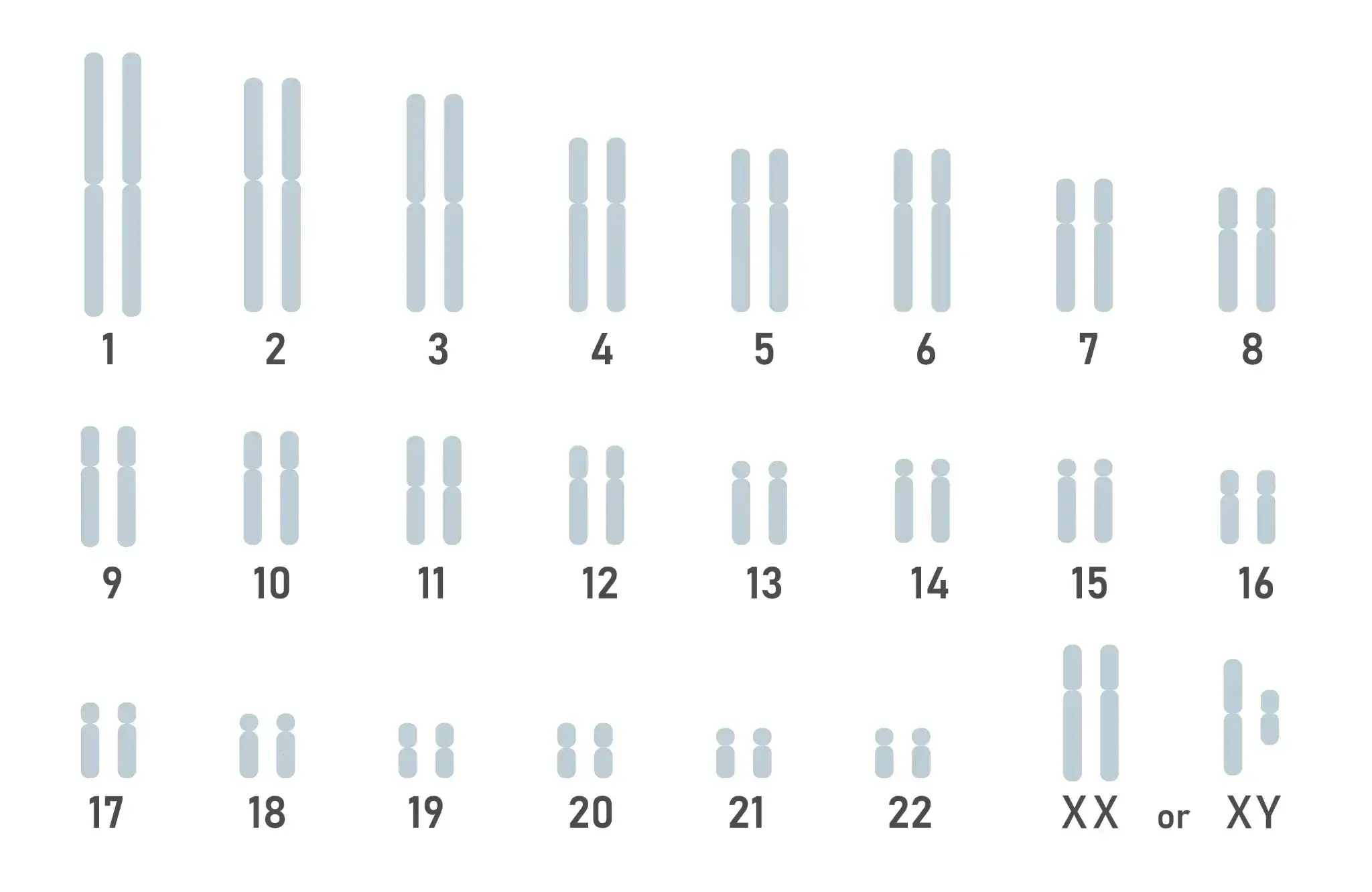
The DNA region investigated this time
Schematic diagram of DNA map present in cells
- ■
- ■
- ■
- ■
- ■
- ■
- ■
- ■
- ■
Frequently asked questions (FAQ)
Q1. What is acute myeloid leukemia (AML)?
Acute myeloid leukemia (AML) is a blood cancer in which abnormalities occur in bone marrow blasts and leukemia cells proliferate abnormally.Approximately 4,000 people are diagnosed annually in Japan. Symptoms such as anemia, bleeding, and fever rapidly appear due to a decrease in red blood cells, platelets, and white blood cells (1).
Q2. What is the cause of acute myeloid leukemia?
The main cause isMutations in the JAK3 gene (chromosome 19)It is. The TT type in the DNA region rs3213409 causes the V722I amino acid mutation, which causes uncontrolled proliferation of cancer cells due to abnormal activation of JAK3. It is inherited in an autosomal recessive manner (1, 3).
Q3. Can genetic testing determine the risk of acute myeloid leukemia?
By examining the genotype of DNA region rs3213409,Understand AML risk trendsYou can. People with the T mutation tend to be at higher risk. It has been confirmed that 99.9% of Japanese people have the CC type (low risk), and the prevalence of the T mutation is extremely low (2).
Q4. What is the difference between acute myeloid leukemia and acute lymphocytic leukemia?
AML isAbnormal proliferation of myeloid cells (myeloblasts)It occurs most frequently in adults. ALL isAbnormal proliferation of lymphoid cellsIt often occurs in children. The main treatment for AML is chemotherapy + hematopoietic stem cell transplantation, and the main treatment for ALL is chemotherapy + molecular targeted drugs.
References
- Reference link 1: Information on the gene “JAK3” NIH
- Reference link 2: Information on DNA region “rs3213409” NIH
- Reference link 3: 2006 Jul., Denise K Walters, Cancer Cell.
- Reference link 4: 2009 Dec., Melanie G Cornejo, Int J Biochem Cell Biol.