
 Tendency to have an active personality

- An active personality is an energetic and sociable personality trait.and is formed by the interaction of genetics and environment.
- T-type mutation in DNA region rs1805081A study by McMaster University found that people with a tendency to have an active personality
- The prevalence of type TT among Japanese people is54.8%This is a high percentage compared to the world average of 39.4%.
Overview An active personality refers to traits that are energetic, passionate, positive, and proactive. People with this trait tend to be active, sociable, adventurous, and enjoy new challenges and changes. They can think quickly, act immediately, and adapt smoothly to new environments and changes. When it comes to work or school, you are characterized by being proactive and willing to spare time and effort to achieve your goals. Genetic and environmental factors influence the development of an active personality. Genetically, variations in genes related to specific neurotransmitter systems (e.g., dopamine and serotonin) can influence an individual's activity level and emotional regulation, which can also influence personality traits. On the other hand, non-genetic factors may include environmental stimuli during the growth process and parenting style. Active support and encouragement from parents and family, a diverse growing environment, and positive social interaction experiences help develop individual vitality and positive character. In addition, increasing one's sense of accomplishment and self-efficacy are also factors that promote an active personality. In other words, active personality is a characteristic formed by the interaction of genetics and environment, and in addition to genetic factors, later environmental influences and individual autonomy play important roles in forming active personality. A study by Reddon et al. at McMaster University revealed that the tendency to have an active personality is associated with a DNA region called rs1805081. There are three genotypes in this DNA region: TT, TC, and CC, and it has been found that people with the T genotype tend to have an active personality.
What is the tendency to have an active personality?
Active personality refers to personality traits that are energetic, passionate, positive, and proactive.People with this trait tend to be outgoing, adventurous, and enjoy new challenges and changes.
The main characteristics of an active personality
People with an active personality exhibit the following characteristics:
- Quick thinking and action:Think fast and take action immediately
- High adaptability:Respond smoothly to new environments and changes
- Active attitude:Be proactive in your work or studies
- Goal orientation:Sparing time and effort to achieve goals
Why an active personality develops
For the development of an active personality,Two factors: genetic and environmentalhave multiple effects.
genetic factors
- such as dopamine and serotoninspecific neurotransmitter systemsGene variations related to
- Individual activity levels and emotional regulation are reflected in personality traits
environmental factors
- Environmental stimulation and parenting style during the growth process
- Active support and encouragement from parents and family
- Diverse growth environment and positive social interaction experience
- Improving one's sense of accomplishment and self-efficacy
Comparison of genetic and environmental influences
| influencing factors | Content | Specific example |
|---|---|---|
| genetic factors | Neurotransmitter related genes | Genetic mutations in the dopamine and serotonin system |
| environmental factors | Growth environment/social interaction | Active childcare and diverse experiences |
| personal factors | Self-efficacy/sense of accomplishment | Confidence gained through the accumulation of successful experiences |
The relationship between genes and active personality
Relationship between DNA region rs1805081 and active personality
A study by Reddon et al. at McMaster University (1) found that the DNA region rs1805081 is associated with a tendency to have an active personality.
- There are three genotypes of rs1805081: TT, TC, and CC.
- Genotype with T-type mutation(TT type/TC type) people tend to have an active personality.
Genotype distribution in Japanese (rs1805081)
| Genotype | Percentage of Japanese people | percentage of the world |
|---|---|---|
| TT type | 54.8% | 39.4% |
| TC type | 38.4% | 46.7% |
| CC type | 6.7% | 13.8% |
The prevalence of TT type among Japanese people is 54.8%, which is 15.4 points higher than the world average (39.4%). The CC type is 6.7%, which is about half the world average (13.8%).
Rationale for testing
External DNA region: Tendency to have an active personality
The gene region that most strongly influences the tendency to have an active personality is rs1805081. The distribution of isomorphic genotypes in Japan is as follows.
- TT
54.8 % - TC
38.4 % - CC
6.7 %
Basis for inspection
A study by Reddon et al. at McMaster University revealed that the tendency to have an active personality is linked to genes. There is a region called rs1805081 in the human genome, and there are two types of mutations, T and C, in the gene in this region. It has been found that people with the T mutation tend to have active personalities (1).
The DNA region investigated this time
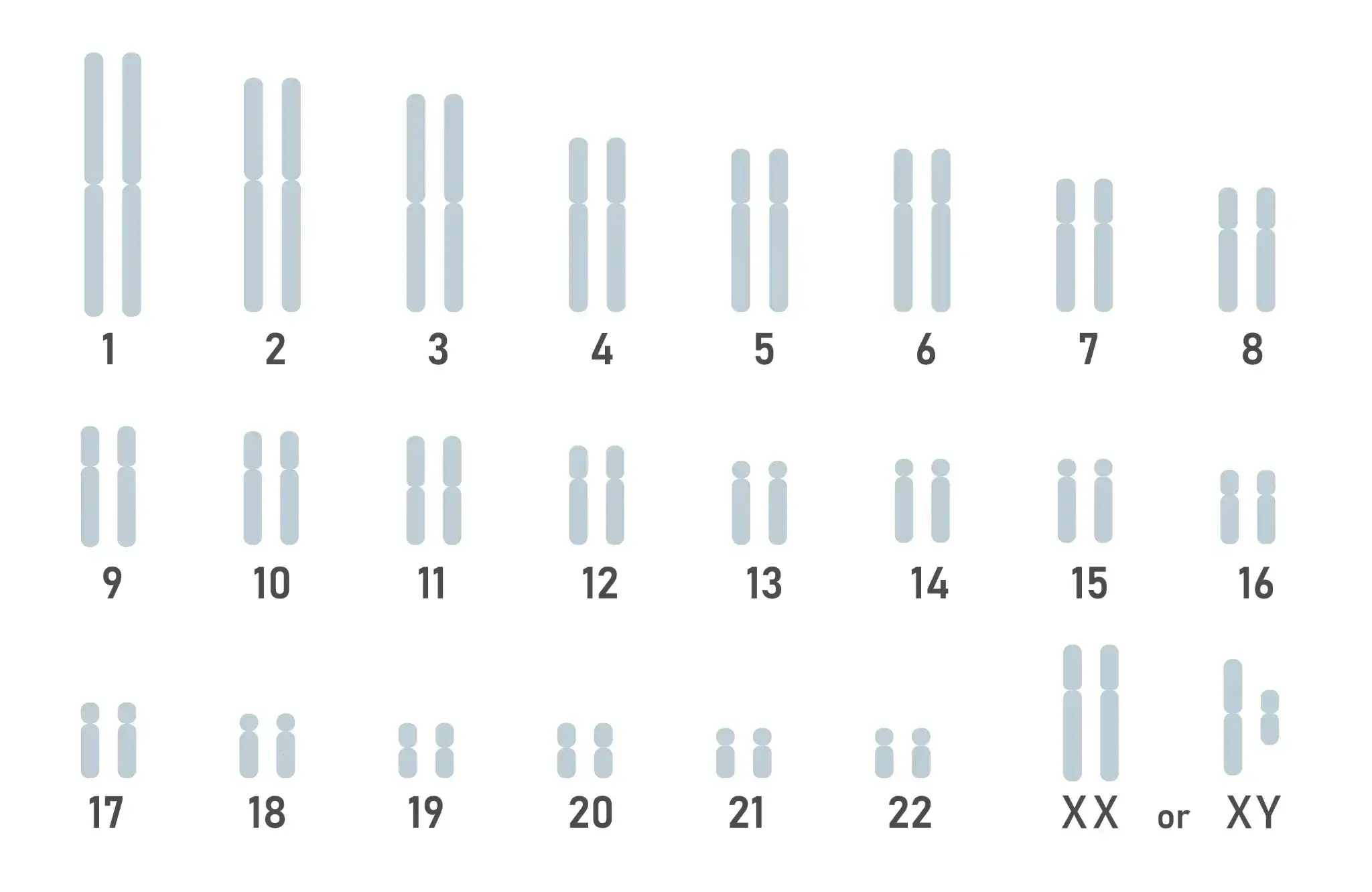
Schematic diagram of DNA map present in cells
- ■
- ■
- ■
- ■
- ■
- ■
- ■
- ■
- ■
Related genes
| Related genes | NPC1 |
|---|
Frequently asked questions (FAQ)
Q1. What is the tendency to have an active personality?
Active personality refers to personality traits that are energetic, passionate, positive, and proactive.People with this trait tend to be outgoing, adventurous, and enjoy new challenges and changes.
Q2. Is an active personality related to genes?
According to research by Reddon et al. at McMaster University,People with the T mutation in the rs1805081 DNA region tend to have an active personality.It turns out that. In Japanese, 54.8% are TT type, 38.4% are TC type, and 6.7% are CC type (1).
Q3. What are the factors that influence the development of an active personality?
For the development of an active personalityGenetic and environmental factorsboth are affected. Genetically, variations in genes related to dopamine and serotonin are involved, and environmentally, active support during the growth process and diverse social interaction experiences play an important role.
Q4. What is the gene NPC1 that is associated with an active personality?
NPC1 (Niemann-Pick disease type C1) is the gene where rs1805081 is located.It is. Variations in this gene can influence activity levels and personality traits through the regulation of neurotransmitters (1).
References
- Reference link 1: 2016 Jan., Hudson Reddon, Sci Rep