
2026.06.04
- ・What This Survey Reveals — The Numbers Behind the Reality of Being "Japanese"
- ・Where Did the Japanese People Come From? — The "Three-Layer Model" of Jomon, Yayoi, and Kofun
- ・What Does "Pure" Mean? — The New Picture of Japanese Identity That Genetics Reveals
- ・What It Means to Learn About Yourself Through DNA in an Age of Diversity
- ・Frequently Asked Questions (FAQ)
![[Expert Explains] Only 2% of Japanese Are "Purely" Japanese.](https://pub-5888cccdcc4043d8b04668dad55feb5f.r2.dev/en/assets/blog/images/seedna_japanese-dna_1.webp)
A large-scale study analyzing 700 DNA regions across 6,752 people delivers a scientific answer to the question, "What does it mean to be Japanese?" What are the three-layer structure of the Jomon, Yayoi, and Kofun periods, and the diverse trail of intermixing that continues into the present day?
According to the latest genetic analysis, only 2% or less of people in Japan carry a genetic pattern that is "90% or more Japanese-specific" in the strict genetic sense. Meanwhile, people whose Japanese-specific genetic ancestry accounts for 10% or less make up roughly 20% of the population. These figures represent a quiet but fundamental answer that science has given to the question of what it means to have a Japanese identity.
What This Survey Reveals — The Numbers Behind the Reality of Being "Japanese"
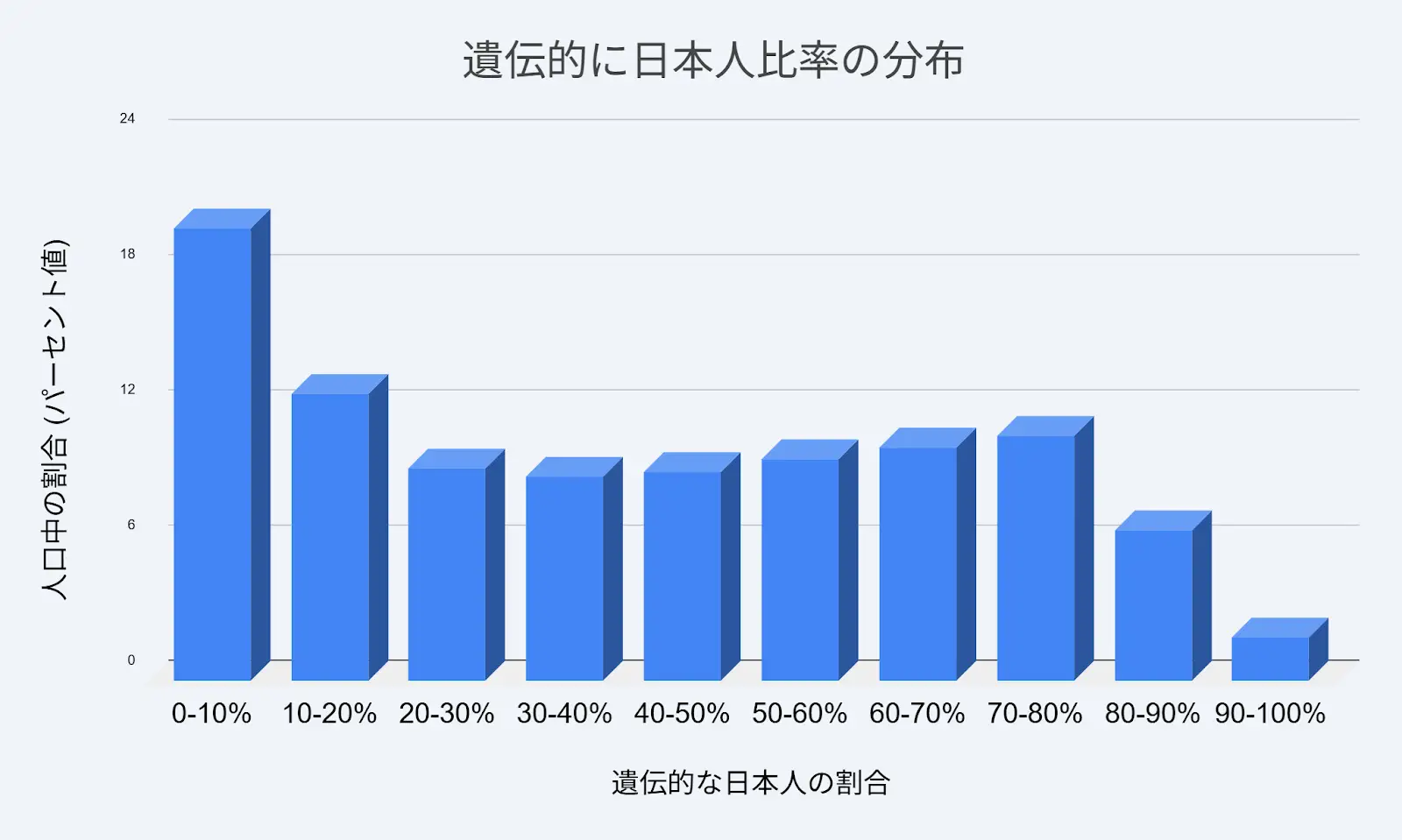
This study analyzed 700 DNA regions across 6,752 people using DNA collected from buccal epithelial samples (swabs from the inside of the cheek). The Japanese-specific DNA patterns defined by the international "1000 Genomes Project" were used as the comparison baseline.
[Research Data] Survey Overview (Fact Sheet)
・Number of people analyzed: 6,752 (buccal epithelial samples)
・DNA regions analyzed: 700 (SNVs: single nucleotide variants)
・Comparison baseline: Japanese-specific patterns from the 1000 Genomes Project
[Key Findings]
・People carrying a "90% or more Japanese-specific genetic pattern" → 2% or less of the total
・People with "10% or less Japanese-specific genetic ancestry" → roughly 20% of the total
What makes it possible to determine ethnic ancestry from DNA? The key lies in SNVs (Single Nucleotide Variants). Of the roughly 3 billion base pairs in human DNA, the "single-letter differences" that vary between individuals are SNVs, and the patterns in which they appear show statistical tendencies specific to each region and population. By comparing an individual's data against vast population datasets, it becomes possible to quantify ancestry — for example, stating that "X% of your DNA traces back to continental East Asia."
Where Did the Japanese People Come From? — The "Three-Layer Model" of Jomon, Yayoi, and Kofun
Modern genetics generally explains Japanese ancestry as a "three-layer structure" composed of three major waves — currently the most widely supported hypothesis, arrived at through the intersection of cultural anthropology, archaeology, and genetics.
| Layer | Era / Characteristics | Genetic Origin | Main Influence |
|---|---|---|---|
| Jomon lineage | From roughly 16,000 years ago Indigenous hunter-gatherers |
Island Southeast Asia, northern Siberia, and other regions | The first settlers of the Japanese archipelago. Bearers of Jomon culture. Forms the foundational genetic component of modern Japanese people. |
| Yayoi lineage | From roughly 3,000 years ago Rice farming, metal tools |
Continental China and the Korean Peninsula | Large-scale migration and intermixing with the Jomon lineage. Brought rice cultivation, metalworking, and weaving. |
| Kofun lineage | From roughly 1,700 years ago Migration during the Kofun period |
Continental East Asia (mainly Korea and China) | Further intermixing with the two preceding layers. Adds further complexity to the genetic diversity of modern Japanese people. |
Recent genome research (from institutions such as the National Museum of Nature and Science and the University of Tokyo) supports this three-layer model, while also showing that the proportion of each layer varies considerably by region (Tohoku, Kyushu, Okinawa, and so on). It is said that people in Okinawa tend to carry a higher proportion of Jomon ancestry, while people in the Kinki region tend to show a higher proportion of Yayoi and Kofun ancestry.
The "Fourth Layer" Added by Globalization
The three-layer structure only accounts for the pre-modern era. Recent globalization — through cross-border marriage, migration, and settlement — has further layered the genetic makeup of modern Japanese people. The "DNA of a person holding Japanese nationality" can no longer be described by a single pattern; it is a collection of diverse trajectories.
What Does "Pure" Mean? — The New Picture of Japanese Identity That Genetics Reveals
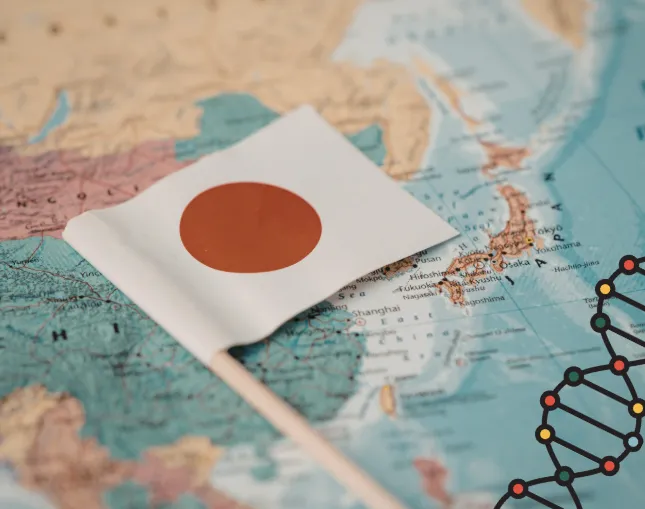
Generally speaking, "Japanese" is a social and cultural concept referring to a group that holds Japanese nationality, speaks Japanese, and shares a common culture and customs. Seen through the lens of genetics, however, that outline becomes far less clear.
For modern Japanese people, formed through tens of thousands of years of population movement and intermixing, defining a "genetically pure Japanese person" is scientifically almost meaningless. Rather, as this study shows, the reality is that people can share the same cultural identity of being "Japanese" while having extremely diverse genetic backgrounds.
What It Means to Learn About Yourself Through DNA in an Age of Diversity
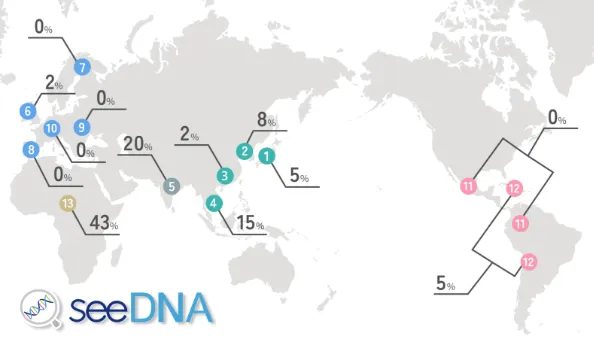
When the illusion of exclusive "purity" falls away, what emerges in its place is a deeper sense of connection as members of the same human species. Somewhere in your DNA may lie the memory of Jomon-era hunter-gatherers. Somewhere may be inscribed the wisdom of Yayoi-era farmers. Or perhaps the blood of someone who traveled across the Silk Road flows faintly within you.
What DNA ancestry analysis offers is not merely "numerical data," but a record of humanity's journey spanning tens of thousands of years. It is also a "door to knowledge" that helps you understand your own identity in a richer, more three-dimensional way.
\Discover your own roots through science/
With nothing more than a cheek swab,
uncover the tens-of-thousands-of-years-long story your DNA has to tell.
Why not meet the diverse roots within yourself through seeDNA's "DNA Roots" service?
 Apply / Purchase a Kit
Frequently Asked Questions (FAQ)
Q. What percentage of Japanese people are "purely" Japanese?
A. According to the latest genetic analysis (n=6,752), only 2% or less of people in Japan genetically carry a "90% or more Japanese-specific genetic pattern." Meanwhile, people whose Japanese-specific genetic ancestry is 10% or less make up roughly 20% of the total.
Q. Where did Japanese people come from?
A. According to the currently leading theory, the genetic roots of Japanese people consist of a "three-layer structure": the indigenous Jomon lineage, the Yayoi lineage that brought rice farming, and the East Asian lineage that arrived during the Kofun period. The proportion of each layer varies by region — for example, Okinawa tends to show a higher proportion of Jomon ancestry.
Q. Can DNA reveal ethnic ancestry?
A. Yes. By comparing SNVs (single nucleotide variants) — DNA variation points that differ between individuals — against large-scale global population datasets (such as the 1000 Genomes Project), it is possible to calculate what percentage of your ancestry traces back to which regions. Analysis can be performed using nothing more than a buccal epithelial swab.
Q. How can I find out about my own DNA ancestry?
A. With seeDNA's "DNA Roots" service, you can collect a buccal epithelial sample at home and mail it in for detailed analysis of your ancestral lineage. For details, please see the service page.
[References / Sources]
[1] 1000 Genomes Project Consortium (2015). A global reference for human genetic variation. Nature, 526, 68-74.[2] Gakuhari, T. et al. (2020). Ancient Jomon genome sequence analysis sheds light on migration patterns. Scientific Reports, 10, 17085.
[3] Cooke, N. P. et al. (2021). Ancient genomics reveals tripartite origins of Japanese populations. Science Advances, 7(38), eabh2419.
[4] seeDNA "DNA Roots" ancestral lineage analysis service (in-house survey, n=6,752, 2026)
*This article is based on information current as of March 2026. DNA testing technology is advancing rapidly, so we recommend checking with each testing institution directly for the latest information.
The Trusted Support of seeDNA Genetic Medical Research Institute
seeDNA Genetic Medical Research Institute is a trusted specialist DNA testing and genetic analysis institution that holds the international quality standard ISO 9001 and the Privacy Mark for personal information protection.
If you have concerns about family or parent-child biological relationships, or a partner's infidelity, our DNA testing specialists are here to provide the support you need with complete peace of mind — please feel free to contact us.
[Free Consultation with Specialist Staff]

If you have any questions,
please feel free to contact our toll-free line.
\Open every day, including weekends/
Business hours: Monday–Sunday 9:00 AM–6:00 PM
(except holidays)
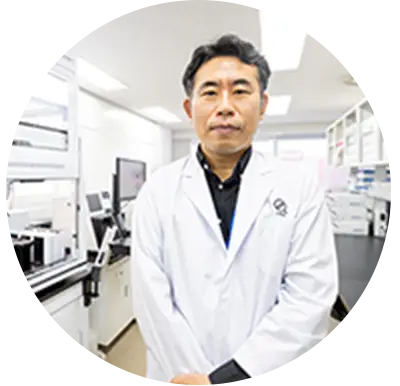 Author
M.D. Kihan Tomikane
Graduate of the University of Tsukuba, Master's/Doctoral program in Biosystem Studies / Molecular and Regenerative Medicine
In 2017, developed Japan's first prenatal DNA testing (Patent 7331325) using a trace-DNA analysis technology (Patent 7121440)