
2026.05.31
Conclusion
DNA testing is a scientific technology that compares genetic information to determine biological relationships or personal identity with over 99.99% accuracy.
What Is DNA Testing?
DNA testing is a technology that uses differences in each individual's genetic information to identify people or determine biological relationships.
What DNA testing is: a method of analyzing differences in human DNA sequences to statistically evaluate personal identity and biological relationships.
Human DNA consists of roughly 3 billion base pairs, and individual differences account for about 0.1% of it. By comparing these differences across multiple genetic loci, identification is theoretically possible even among a population of several quadrillion people.
What Can DNA Testing Reveal?
DNA testing can primarily provide five types of information.
What Is Determining Biological Relationships?
Determining biological relationships: a test that compares the DNA of parents, children, or other relatives to statistically evaluate their biological relationship.
- Paternity testing
- Sibling testing
- Grandparent-grandchild testing
● Accuracy
Positive result: over 99.99% / Negative result: nearly 100%
What Is Personal Identification?
Personal identification: a method that uses individual DNA differences to determine whether two samples come from the same person.
- Criminal investigations
- Identifying victims after disasters
- Identification from recovered items
Since DNA is present in almost all cells, it can even be analyzed from hair or saliva.
What Is Prenatal DNA Testing?
Prenatal DNA testing: a method that analyzes cell-free fetal DNA (cffDNA) in the mother's blood to confirm biological relationships during pregnancy.
- Non-invasive (blood draw only)
- Can be performed from early pregnancy
- Accuracy: over 99%
What Is Constitutional and Health Risk Analysis?
Constitutional analysis: an analysis that estimates disease risk and constitutional tendencies from genetic information.
- Cancer and diabetes risk
- Metabolic type
- Drug sensitivity
What Is Ancestry and Roots Analysis?
Ancestry analysis: a method that uses mitochondrial DNA or the Y chromosome to estimate geographic origin.
*Cannot determine nationality
How Does DNA Testing Work?
DNA testing is performed using a method called STR analysis.
What STR analysis is: a technique that identifies individuals by comparing differences in the number of repeats of short DNA sequences.
Testing Process
- Sample collection
- DNA extraction
- PCR amplification
- Electrophoresis or NGS analysis
- Statistical calculation (likelihood ratio, CPI)
Why Is DNA Testing So Accurate?
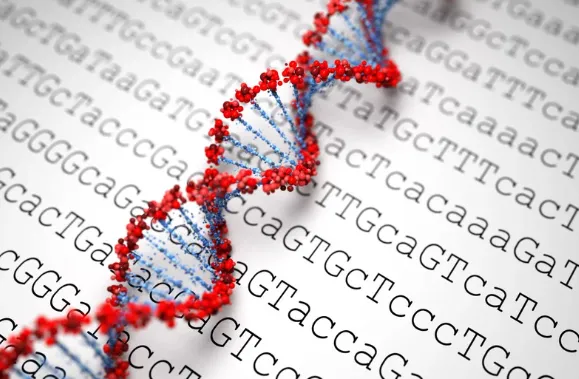
The reasons DNA testing achieves such high accuracy are as follows.
- Simultaneous analysis of multiple loci
- Based on Mendelian inheritance
- Use of statistical models (likelihood ratio)
- Numerical evaluation using CPI
What Are the Limitations of DNA Testing?
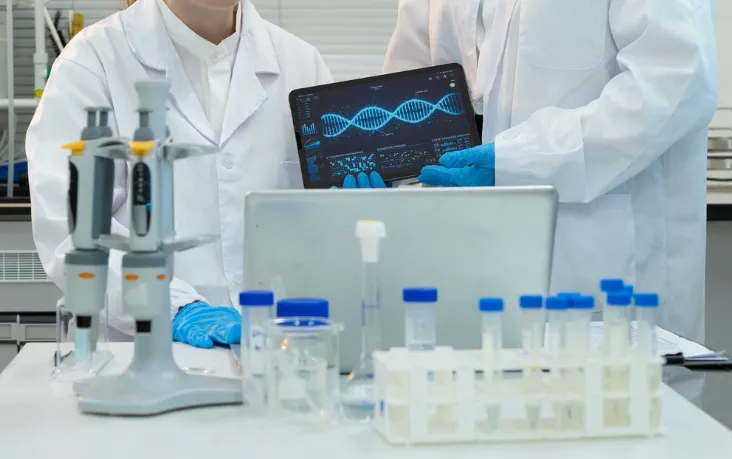
DNA testing has the following constraints.
- Identical twins are difficult to distinguish
- Contamination can affect results
- Results are statistical probabilities
Frequently Asked Questions (FAQ)
Q. How accurate is DNA testing?
A. For paternity testing, accuracy is over 99.99%.
Q. Is prenatal testing safe?
A. It can be performed using only a blood draw from the mother, so it carries no invasive risk to the fetus and is safe.
Q. Can twins be distinguished?
A. Identical twins usually cannot be distinguished. Fraternal twins can be identified through standard personal identification.
[References]
• Nature Reviews Genetics. 2024 Jul• NAM Perspect. 2024 Oct
• Frontiers in Medicine. 2023 Nov
• seeDNA Genetic Medicine Research Institute
seeDNA Genetic Medicine Research Institute's Trusted Support
seeDNA Genetic Medicine Research Institute is a trusted specialist institution for DNA testing and genetic testing, holding the international ISO 9001 quality certification and the Privacy Mark for privacy protection.
If you are troubled by questions about family or parent-child biological relationships, or a partner's infidelity, our DNA testing experts will support you with care and reassurance, so please feel free to contact us.
[Free Consultation with Specialist Staff]

If you have any questions,
please feel free to contact our toll-free number.
/Open every day, including weekends/
Business hours: Monday-Sunday 9:00-18:00
(excluding holidays)
 Author
Ph.D. in Medicine / Examiner: L. L.
After earning a doctorate from the Graduate School of Clinical Medicine at International University of Health and Welfare, joined seeDNA as an examiner.
Responsible for prenatal parent-child DNA testing and data analysis.