
2026.05.27
- ・The Scientific Definition of the "Sample" Needed for DNA Testing
- ・The Most Common Sample: Oral Epithelial Cells
- ・The Difference Between Saliva and Oral Epithelium
- ・Samples Other Than Oral Epithelium That Can Be Used
- ・Comparing the Characteristics of Each Sample Type
- ・The Accuracy of DNA Testing and Scientific Considerations
- ・Summary
The Scientific Definition of the "Sample" Needed for DNA Testing
DNA testing is a molecular genetics technique that estimates individual identity or parent-child relationships by analyzing polymorphic regions in the human genome (mainly STRs: short tandem repeats). Because the length of the repeated sequences in STR regions varies from person to person, they offer high discriminating power and are widely used as the standard approach in forensic science and medicine [1]. Carrying out this kind of analysis requires that the sample contain cells with nuclear DNA.
In forensic science, epithelial cells, white blood cells, and sperm cells are the primary sources of DNA, and the DNA contained in the nuclei of these cells is what gets analyzed. STR analysis can amplify even trace amounts of DNA, but the results are heavily influenced by cell count and DNA quality.
The Most Common Sample: Oral Epithelial Cells
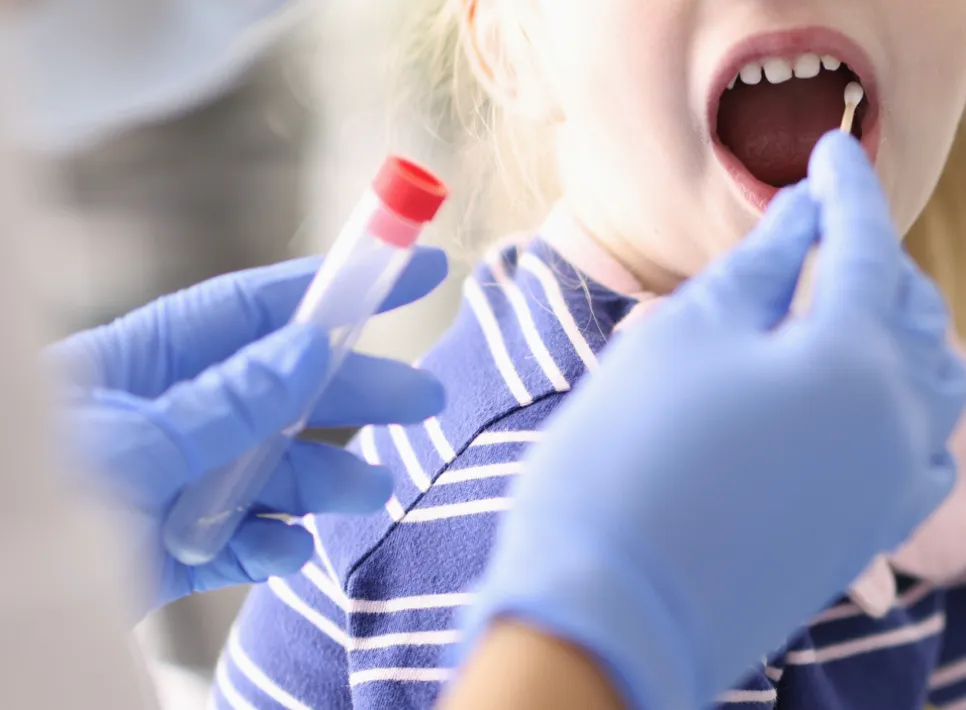
Oral epithelial cells are the most widely used standard sample in DNA testing. By swabbing the inside of the cheek (buccal mucosa) with a dedicated cotton swab, cells can be collected non-invasively and easily [2].
DNA obtained from oral swabs is present in sufficient quantity and quality for STR analysis, and reports indicate it shows a high concordance rate compared to blood-derived DNA. It has also been confirmed that appropriate extraction processing yields high-purity DNA suitable for PCR amplification [2].
Because it is simple to collect and places little burden on the subject, this method has become widely used not only at medical institutions but also as a method well suited to at-home sample collection.
The Difference Between Saliva and Oral Epithelium
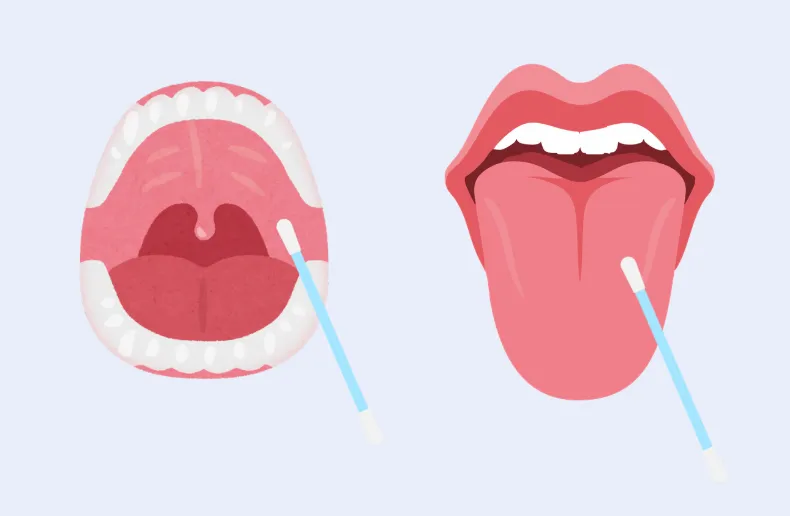
Saliva's main component is water, and the DNA it contains comes primarily from oral epithelial cells. For DNA testing, it is recommended to swab and collect cells from the buccal mucosa; simply moistening a cotton swab with saliva may not secure a sufficient number of cells.
In fact, when the amount of collected cells is small, there is a reported risk of insufficient DNA quantity, resulting in an incomplete DNA profile. For this reason, firmly swabbing the buccal mucosa to collect cells is a critical point directly linked to the success rate of the test.
Samples Other Than Oral Epithelium That Can Be Used
As long as cells containing nuclear DNA are present, a variety of samples can be used for DNA testing. Representative examples include the following.
- Toothbrush (with attached oral epithelial cells)
- Hair (with root attached)
- Semen (sperm cells)
- Bloodstains (white blood cells)
- Nails (residual cells)
- Everyday items (cells from contact)
These samples are known to be susceptible to DNA degradation from environmental conditions and to the effects of mixed DNA, which can cause variation in the quality of analysis results. In particular, care must be taken to keep the sample dry and prevent microbial growth.
Comparing the Characteristics of Each Sample Type
In DNA testing, the amount of DNA and the success rate of analysis vary depending on the type of sample. In general, samples from which cells can be directly collected tend to produce more stable results. Storage conditions after collection are also important, and to prevent DNA degradation, it is recommended to keep samples away from direct sunlight and store them thoroughly dried [3].
| Sample Type | Main DNA Source | Typical DNA Quantity | Analysis Success Rate | Scientific Considerations |
|---|---|---|---|---|
| Oral epithelium | Epithelial cell nuclei | High | High | Varies with collection pressure |
| Blood | White blood cell nuclei | High | High | Watch for degradation |
| Hair (with root) | Root cells | Medium | Medium to high | Shaft alone will not work |
| Semen | Sperm nuclei | High | High | Mixed DNA |
| Nails | Epithelial residue | Low to medium | Medium | Foreign DNA |
| Everyday items | Cells from contact | Depends on the item | Low to medium | Degradation/contamination |
| Saliva only | Mixed cells | Low | Low | Insufficient cells |
Standard samples such as oral epithelium have high stability and are suited to more reliable testing. On the other hand, samples such as everyday items are more susceptible to environmental conditions, so careful attention must be paid not only to the collection method but also to the storage environment.
The Accuracy of DNA Testing and Scientific Considerations

DNA testing based on STR analysis achieves extremely high discriminating power by using multiple genetic loci. In paternity testing, statistical analysis yields an extremely high probability of paternity, producing scientifically reliable results.
On the other hand, the following factors can affect the results.
- DNA degradation (temperature, humidity, ultraviolet light)
- Presence of mixed DNA
- Contamination with external DNA
- Variation in collection method
These are not factors inherent to the analysis technology itself but rather depend on sample quality, so proper collection and storage are essential.
Summary
DNA testing requires securing cells that contain nuclear DNA. Oral epithelial cells have become established as the standard sample for the following reasons.
- Non-invasive
- High yield
- High reproducibility
On the other hand, specialized samples are highly condition-dependent, making proper collection and storage essential. The seeDNA Genetic Medicine Research Institute offers DNA analysis that accommodates a wide variety of sample types.
[References]
[1] BioTechniques, 2018 May[2] Genetics in Medicine, 2012 Dec.
[3] Forensic Science International Genetics, 2010 Apr.
The Reassuring Support of the seeDNA Genetic Medicine Research Institute
The seeDNA Genetic Medicine Research Institute is a trusted, reliable specialist institution for DNA testing and genetic testing that has obtained the international quality standard ISO9001 and Japan's Privacy Mark for personal information protection.
If you are troubled by questions about family or parent-child blood relationships, or a partner's infidelity, our DNA testing experts will provide thorough support to give you peace of mind, so please feel free to contact us.
[Free Consultation with Specialist Staff]

If you have any questions,
please feel free to contact our toll-free number.
/Open every day, including weekends/
Business hours: Monday–Sunday 9:00 AM–6:00 PM
(excluding holidays)
 Author
Examiner: C.H.
Works as an examiner at seeDNA Co., Ltd.
Responsible for testing and data analysis for prenatal paternity DNA testing.