
Why Contraception is Necessary Even During Pregnancy
2025.03.28

A Woman Who Got Pregnant While Already Pregnant
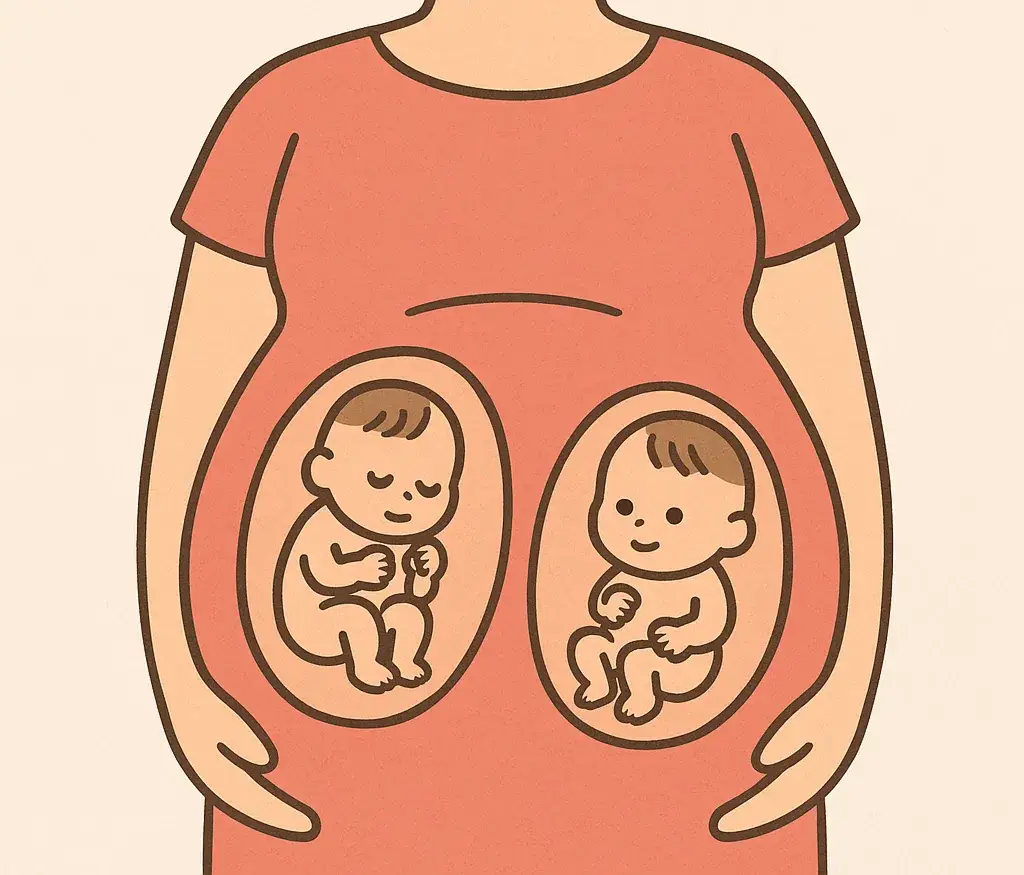
Generally, many people believe that once pregnancy is confirmed, contraception is no longer necessary.
This is likely because they feel safe assuming that since they are already pregnant, there is no risk of becoming pregnant again. However, last week in the US, the MailOnline reported on a woman who became pregnant with a second child while already pregnant.
According to the article, Taylor Henderson (28) from Texas, USA, experienced "Superfetation," an extremely rare phenomenon worldwide where a woman becomes pregnant again while already pregnant, also known as heterochronic or concurrent pregnancy.
Superfetation is a phenomenon where a pregnant woman ovulates again, and a new fertilized egg implants after sexual intercourse, resulting in the concurrent pregnancy of fetuses at different gestational ages.
According to her attending physician, Dr. Michael Rose, initial ultrasound scans showed a clear size difference between the two fetuses, leading them to initially suspect that one fetus might be experiencing delayed growth. However, as examinations progressed, it became evident that the two fetuses were actually at different gestational ages. This means that for Taylor, just two weeks after her initial pregnancy was confirmed, she ovulated again, and a different fertilized egg implanted.
Reliability of DNA Testing Results
Normally, when a woman becomes pregnant, hormones suppress ovulation, making another pregnancy impossible. Because of this, superfetation is medically very rare, with only a few cases reported worldwide.
This means that if superfetation occurs and a woman engages in sexual activity with multiple men, it could lead to a situation where the fetuses in her womb have different fathers.
This phenomenon is one of the reasons why, in fetal DNA testing performed via blood test during pregnancy, a "Probability of Paternity of 99.99%" (affirming the biological relationship between fetus and father) is more reliable than a "Probability of Paternity of 0%" (denying the biological relationship).
Generally, 0% means there is absolutely no possibility, while 99.99% implies a 0.01% chance of variation. However, in DNA testing, the implications of these numbers differ slightly. A "Probability of Paternity of 0%" in DNA testing includes risks where the biological relationship is falsely denied due to phenomena like superfetation (as in this article), chimerism, mutations, or human errors like sample mix-ups, even if there is an actual biological relationship.
A "Probability of Paternity of 99.99%" in DNA testing means "it is practically impossible to deny the biological relationship between the subjects," which provides a reassuring result.
Although the accuracy of DNA testing has improved remarkably compared to 20 years ago, perfect testing remains theoretically and practically impossible.
If you receive a "Probability of Paternity of 0%" (denial of biological relationship) and feel anxious, you can eliminate the risk of a "Probability of Paternity of 0%" due to misjudgment by testing with a partner who is likely to yield an "affirmative" result of "Probability of Paternity of 99.99%".
Frequently Asked Questions
Q.What is Superfetation (Concurrent Pregnancy)?
Q.What is the probability of superfetation occurring?
Q.If superfetation occurs, can the fetuses have different fathers?
Q.What is the difference between a "0%" and "99.99%" Probability of Paternity in DNA testing?
Q.What should I do if I get a negative result (0%) in a DNA test?
References
- (1) MailOnline 'Pregnant phenomenon rare condition superfetation' / March 2025
- (2) European Journal of Obstetrics & Gynecology and Reproductive Biology 'Superfetation: A Review of the Literature' / 2008
- (3) seeDNA Genetic Medical Laboratory 'Prenatal Fetal DNA Testing' Service Overview
- (4) Japan Society of Obstetrics and Gynecology (JSOG) Official Website - Medical Information on Pregnancy and Childbirth
Free Consultation with Genetic Testing and DNA Experts
In 2016, seeDNA developed Japan's first "Prenatal Fetal DNA Test" and is a pioneer in genetic and DNA testing in Japan. We are a trusted DNA testing specialist institution with "0 cases" of misjudgment since the start of our service.
If you have concerns about test results from other companies, questions about biological parent-child relationships, or worries about a partner's infidelity, our DNA testing experts will provide solid support to ensure your peace of mind. Please feel free to contact us.
Find out who the father of your baby is
 Apply / Buy Kit
[Free Consultation with Experts]

If you have any questions,
please feel free to call our toll-free number.
\ Open Weekends and Holidays /
Business Hours: Mon-Sun 9:00-18:00
(Excluding Public Holidays)