
The Truth About Non-Invasive Prenatal Testing That Hospitals Don't Tell You
Non-Invasive Prenatal Testing "NIPT"

Many of you may have heard of Non-Invasive Prenatal Testing (NIPT), which tests the unborn baby for genetic diseases such as Down syndrome, Patau syndrome, and Edwards syndrome between the 7th and 18th weeks of pregnancy.
Although NIPT is not as widely performed in Japan compared to the United States (where around 2 million cases are done annually, more than 20 times the volume in Japan), the number of cases is rising every year. Recently, it has become a hot topic frequently discussed in maternal communities such as Mamari.
Did you know that undergoing NIPT, also known as Non-Invasive Prenatal Testing, actually means participating in a clinical research study while paying a fee of 150,000 to 250,000 yen?
Clinical Research Under the Name of Prenatal "Diagnosis"
When people hear the term 'clinical research,' many might imagine negative rumors like urban legends, such as 'a subject participating in a clinical trial losing their life due to side effects of a new drug.'
However, clinical research consists of 'research activities' conducted on actual human subjects to evaluate the efficacy and safety of new treatments, diagnostic methods, drugs, and other medical interventions.
Rather than a definitive diagnosis made in a typical hospital to identify an illness, it serves as a critical means to improve treatment and diagnostic methodologies in clinical settings.
While clinical tests are tests performed at medical institutions or hygiene laboratories to determine a patient's diagnosis or treatment policy, NIPT is a screening test conducted as 'clinical research' for the purpose of studying and evaluating the risk of genetic diseases caused by fetal chromosomal number abnormalities.
<Differences Between Clinical Research and Clinical Tests>
| Item | Clinical Research | Clinical Test |
|---|---|---|
| Purpose | Clinical ResearchTo investigate the efficacy and safety of new treatment or testing methods | Clinical TestTo diagnose diseases or symptoms and determine treatment policies |
| Subject | Clinical ResearchPatients or volunteers targeted by the study | Clinical TestActual patients |
| Ethics & Consent | Clinical ResearchRequires approval from an institutional review board (IRB) and written consent from participants | Clinical TestRequires patient consent, but does not require approval from an institutional review board (IRB) |
NIPT is a "Test," Not a "Diagnosis"
Although NIPT is not a 'clinical diagnosis' like electrocardiograms performed in hospitals or tests for sexually transmitted diseases (STD tests) such as AIDS, it is commonly referred to as 'Non-Invasive Prenatal "Diagnosis"' in Japan.
NIPT stands for Non-Invasive Prenatal Test, which translates to 'Non-Invasive Prenatal "Test".' Why, then, did it come to be translated and used as prenatal 'Diagnosis' in Japan?
One of the reasons may lie in the fact that the number of NIPT tests remained at only 14,288 cases, according to a 2019 report by the Japan Society of Obstetrics and Gynecology. To popularize a test with guaranteed accuracy, the name 'Prenatal Diagnosis' might have seemed more compelling and effective than 'Prenatal Test' performed in clinical research.
Even if we do not call it fetal chromosome testing via maternal blood or non-invasive prenatal genetic testing, we believe we should clearly inform participants that they are participating in a clinical research study under the name 'Non-Invasive Prenatal "Test"' rather than diagnosis.
It has been about 10 years since NIPT was introduced in Japan. Compared to when it was barely recognized, the number of tests has increased rapidly in the last few years.
In the future, undergoing NIPT when pregnant will likely become common practice in Japan, just as it is in the United States and European countries.
seeDNA's Non-Invasive Prenatal Test (NIPT)
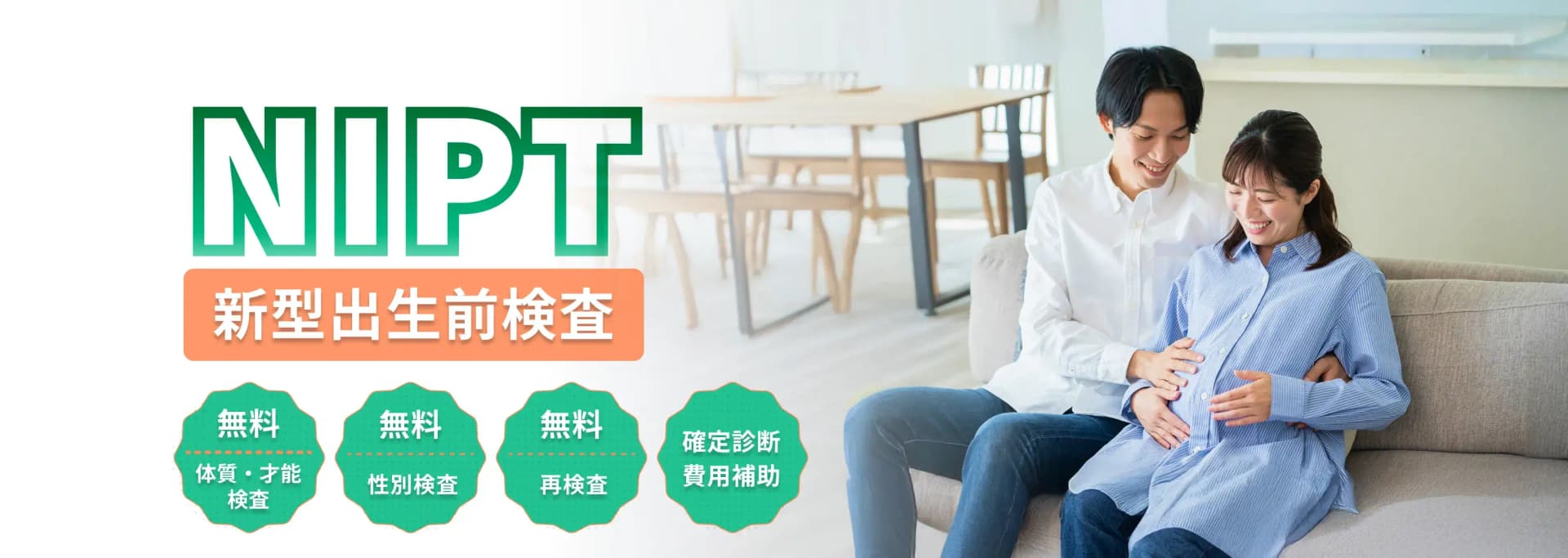
seeDNA's Non-Invasive Prenatal Test (NIPT) uses the blood of the mother in early pregnancy (from 10 weeks) to check for chromosomal abnormalities in the unborn baby safely, securely, and affordably.
With no age limit, no referral required, and some of the lowest testing fees in Japan, you can check your baby's genetic disease risks.
Test Items
- ●Down Syndrome (Trisomy 21)
- ●Edwards Syndrome (Trisomy 18)
- ●Patau Syndrome (Trisomy 13)
- ●Turner Syndrome (XO)
- ●Klinefelter Syndrome (XXY)
- ●Triple X Syndrome (XXX)
- ●XYY Syndrome (XYY)
- ●All Chromosomal Abnormalities (Aneuploidy)
: Chromosomes 1–22 - ●Gender Test

seeDNA's Prenatal Diagnosis Plan

seeDNA's Prenatal Diagnosis Plan uses the maternal blood in early pregnancy (from 10 weeks) to examine chromosomal abnormalities in the unborn baby, such as Down syndrome and microdeletion syndromes, safely, securely, and affordably.
With no age limit and no referral required, you can easily receive world-class NIPT testing.
Test Items
- ●Down Syndrome (Trisomy 21)
- ●Edwards Syndrome (Trisomy 18)
- ●Patau Syndrome (Trisomy 13)
- ●Turner Syndrome (XO)
- ●Klinefelter Syndrome (XXY)
- ●Triple X Syndrome (XXX)
- ●XYY Syndrome (XYY)
- ●All Chromosomal Abnormalities (Aneuploidy)
: Chromosomes 1–22 - ●1p36 Deletion Syndrome
- ●4p Deletion Syndrome
(Wolf-Hirschhorn Syndrome) - ●5p Deletion Syndrome
(Cri-du-chat Syndrome) - ●Prader-Willi Syndrome
- ●Angelman Syndrome
- ●22q11.2 Deletion Syndrome
(DiGeorge Syndrome) - ●Gender Test
seeDNA's Reliable Support System
seeDNA is a reliable DNA testing institution that has acquired the international quality standard ISO9001 and the Privacy Mark for personal information protection.
If you have concerns about your unborn baby's health or parental relationship during pregnancy, our DNA testing specialists will support you to ensure peace of mind. Please feel free to contact us.
[Free Consultation with Specialized Staff]

If you have any questions,
please feel free to contact us via our toll-free number.
\Open on weekends as well/
Business Hours: Mon–Sun 9:00–18:00
(except national holidays)
Frequently Asked Questions
Q.What is Non-Invasive Prenatal Testing (NIPT)?
Q.Why should NIPT be called a 'test' instead of a 'diagnosis'?
Q.How much does NIPT cost?
Q.What items can be tested with NIPT?
| Test Category | Test Items |
|---|---|
| Major Trisomies | Down Syndrome (21), Edwards Syndrome (18), Patau Syndrome (13) |
| Sex Chromosome Abnormalities | Turner Syndrome (XO), Klinefelter Syndrome (XXY), Triple X Syndrome (XXX), XYY Syndrome |
| All Chromosomes | Aneuploidy of Chromosomes 1–22 |
| Microdeletion Syndromes (Diagnosis Plan) | 1p36 deletion, 4p deletion (Wolf-Hirschhorn), 5p deletion (Cri-du-chat), Prader-Willi, Angelman, 22q11.2 deletion (DiGeorge) |
| Others | Gender Test |
Q.What is the difference between seeDNA's NIPT and NIPT at other clinics?
References
- (1) Japan Society of Obstetrics and Gynecology NIPT Consortium 'Trends in the Number of NIPT Examinees and Test Performance'
- (2) Ministry of Health, Labour and Welfare 'Information Provision on Prenatal Examinations such as NIPT'
- (3) seeDNA Genetic Medical Institute 'New Prenatal Screening (NIPT) Service Overview'
- (4) ACOG Practice Bulletin 'Screening for Fetal Chromosomal Abnormalities'