
Infertility Treatment and Public Support
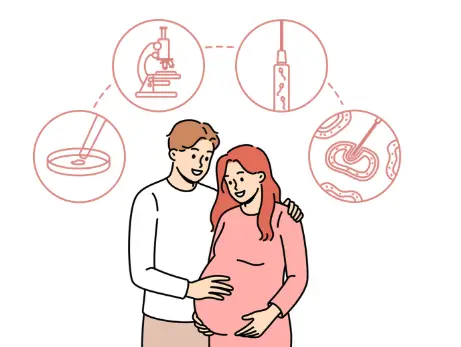
It is estimated that the number of children born through infertility treatment worldwide exceeded 12 million by 2023 (*1), and it is reported that more than 2.5 million assisted reproductive technology (ART) treatments are performed annually as of fiscal year 2022 (*2).
In Japan, the number of people undergoing infertility treatment is also increasing year by year, and it was announced that 77,206 children were born through IVF in 2022, representing 1 in 9 newborns (*3).
In this article, we will explain infertility treatment and assisted reproductive technology, which continue to increase year by year, along with the support for infertility treatment provided by the government, referencing links to relevant government organizations.
1. What is Infertility Treatment?
Infertility treatment refers to medical support provided when pregnancy is not achieved for a certain period (generally one year or more) despite desiring a child. It includes not only in vitro fertilization (IVF) where eggs and sperm are fertilized outside the body and the fertilized egg is returned to the uterus, and intracytoplasmic sperm injection (ICSI), which is an advanced treatment method where sperm is injected directly into the egg, but also the timing method to predict the timing of ovulation to increase the probability of natural pregnancy, and artificial insemination (AIH) to inject sperm directly into the uterus to increase the probability of fertilization.
(1) Causes of Infertility
Infertility is caused by various factors such as ovulation disorders, sperm abnormalities, fallopian tube obstruction, and aging, and various treatments are performed depending on the cause. Since these treatments are generally self-funded, they can be highly expensive. The financial burden is significant for many couples struggling with infertility, making it a serious social issue in Japan, which is also facing a declining birthrate. Therefore, the Japanese government and local authorities have established various support systems to help couples who wish to undergo treatment reduce their financial burden.
2. Public Support System for Infertility Treatment
Infertility treatment support available in Japan is broadly divided into two types: 'Infertility Treatment Subsidy System' and 'Expansion of Insurance Coverage'.
(1) Subsidy System for Infertility Treatment
The infertility treatment subsidy system is a subsidy system that was implemented by each local government, but the system was significantly changed in 2022. Previously, only IVF and ICSI were eligible for subsidies, but from April 2022, the scope of insurance coverage was significantly expanded in all aspects, including eligible individuals, subsidy amounts, and treatment methods as follows.
- TargetLegally married couples and common-law couples (conditions may vary by municipality)
- Subsidy AmountVaries by municipality, but in many cases, a subsidy of up to approximately 100,000 yen per treatment can be received
- Number of SubsidiesVaries depending on age and treatment details (e.g., multiple times for those under 40, limits apply for those aged 40 and older)
- Eligible TreatmentsArtificial insemination, IVF, ICSI, etc.
Since the subsidy systems vary by local government, please check your local government's website for details.
For example, the Tokyo Metropolitan Government implements the 'Tokyo Metropolitan Specific Infertility Treatment Cost (Advanced Medical Care) Subsidy Project'. Aomori Prefecture has made infertility treatments such as IVF, which are covered by public medical insurance, completely free of charge as part of its measures against the declining birthrate (Aomori Prefecture Infertility Treatment Cost Subsidy Project).
In particular, it is noteworthy that common-law couples are now eligible in addition to legally married couples, and it is possible that LGBT couples will also be included in the subsidy program in the future.
(2) Expansion of Insurance Coverage for Infertility Treatment
From April 2022, since a part of infertility treatment became covered by public health insurance, the financial burden on people receiving infertility treatment has been significantly reduced. IVF and ICSI, which were previously expensive self-paid treatments, can now be received with a 30% co-payment just like other health insurance benefits.
The main points of insurance coverage are as follows:
- Target Age: Under 43 years old at the start of treatment
- Limit on Count: Up to 6 times for under 40 years old, up to 3 times for 40 to 42 years old
- Eligible Treatments: Artificial insemination, IVF, ICSI, embryo cryopreservation/thawed embryo transfer, etc.
- Co-payment: With a 30% co-payment, the cost per treatment is reduced from several hundred thousand yen to 100,000 yen or less
Many couples can now easily receive treatment for personal egg freezing in addition to infertility treatments (Ministry of Health, Labour and Welfare: Initiatives on Infertility Treatment).
3. Other Support Systems
Although these are not compulsory systems by law, various other support measures related to infertility treatment are being implemented.
(1) Leave Systems & Work Style Support
- Leave System for Infertility Treatment: Depending on the company, special leave may be provided for the purpose of infertility treatment.
- Telecommuting and Shorter Working Hours: The Ministry of Health, Labour and Welfare encourages companies to prepare an environment where employees undergoing infertility treatment can work easily.
(2) Consultation Desks
- Infertility Counseling Centers: Operated by local governments nationwide, they provide advice on infertility treatment concerns and information on medical institutions. (Ministry of Health, Labour and Welfare: Initiatives on Infertility Treatment)
- Free Consultations at Medical Institutions: Some hospitals offer systems where you can receive free counseling before treatment.
4. Summary
Japan is a representative country where the regional population continues to decline due to a low birthrate. The number of newborns has decreased from 1,050,807 in 2011 to approximately 770,000 in recent years. (Official Statistics of Japan: Vital Statistics).
To raise the birthrate, it is crucial to reduce the financial and mental burden on couples who wish to undergo infertility treatment. The expansion of insurance coverage in 2022 was a major transformation, making advanced infertility treatment, which was previously a self-paid treatment, more accessible. However, continued support such as various subsidy systems, further expansion of insurance coverage, and leave systems will be necessary in the future.
Since the subsidy programs of each local government are updated every year, those who are considering infertility treatment should check the latest information.

seeDNA has developed the world's first 'DNA paternity test after IVF' so that everyone who has undergone infertility treatment can spend a secure and enjoyable maternity life.


seeDNA's Reliable Support
seeDNA is a pioneer in DNA testing, having developed the domestic first 'prenatal DNA paternity test' in 2016. We are a specialized DNA testing institution with zero misjudgments, offering peace of mind and trust.
If you have any concerns such as anxiety about mix-ups associated with IVF or parent-child blood relationships, our DNA testing experts will support you to ensure your peace of mind. Please feel free to contact us.

If you have any questions,
please feel free to contact our toll-free number.
\Open on Saturdays and Sundays/
Business hours: Mon - Sun 9:00-18:00
(excluding holidays)