
The baby's gender was different?!
Table of Contents
Are you hoping for a boy or a girl?
Many people think, "As long as the baby is born healthy, the gender doesn't matter." On the other hand, some people strongly hope for "a girl (or a boy)." In Japan, where the birth rate is declining, there is an increasing need to know the baby's gender early.
Gender confirmation by ultrasound
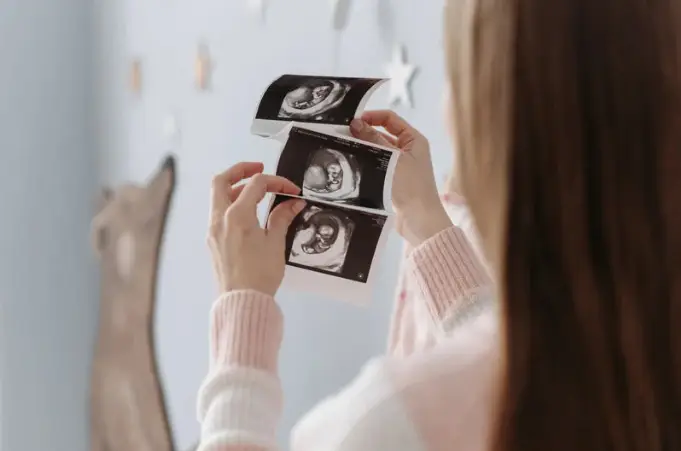
The most common way to confirm gender is through an ultrasound examination at an obstetrics and gynecology clinic. Because the image is visually judged, it is often thought to be "the most certain."
However, the doctor estimates the gender based on the appearance of the crotch area on the ultrasound. If the posture or image quality is poor, it may not be possible to judge, or it may be mistaken.
The background to stories like "The gender was different after birth" or "I was told the gender changed halfway through" is this issue of appearance.
Gender confirmation by DNA testing

If you want to confirm earlier and with higher accuracy, DNA gender testing is an option. Gender is determined at the time of fertilization; if the sex chromosomes are "XY," it's a boy, and if "XX," a girl.
Since DNA testing directly checks the sex chromosomes, the gender can be determined early and with high accuracy. Here, we summarize the advantages and disadvantages, such as accuracy and cost, of "gender testing," which is increasingly used in recent years.
DNA gender testing
Accuracy
The accuracy of gender testing varies depending on the condition of the sample and the quality of the testing agency. At seeDNA, which boasts the highest accuracy in Japan, it is over 99.99% for tests from 7 weeks of pregnancy.
Cost
43,800 yen (tax included). Includes express round-trip shipping for the test kit. However, an additional blood collection fee of about 2,000 to 5,000 yen is required at the hospital.
Testing Method
Fetal DNA contained in maternal blood is analyzed using NGS (Next Generation Sequencing).
Features of the Test
It has higher accuracy than the simple PCR tests commonly used for COVID-19 and is an excellent method for gender determination.
Theoretical Basis
Simple PCR tests mainly detect "whether the Y chromosome is present." NGS strictly determines the presence or absence of the Y chromosome after confirming the possibility that the fetus is female and that the fetal DNA amount is sufficient.


Current status of gender testing
seeDNA succeeded in developing fetal DNA testing and next-generation gender testing as the first in Japan in 2016, and there have been "0" misjudgments to date.
On the other hand, there are reviews online stating, "The result was different, but I wasn't compensated." Since many agencies do not specify the number of mistakes or accuracy, you need to be careful when selecting a testing agency.
Causes of gender misjudgment in DNA testing
Theoretically and operationally, it is impossible to make the test accuracy 100% all the time. Accuracy varies by agency and is generally considered to be around 95-99%. The main causes of misjudgment are as follows.
1. Insufficient percentage of fetal-derived DNA
A certain percentage (usually 1% or more) of fetal-derived DNA is required for determination. It may be insufficient due to mailing delays, high maternal BMI, hemolysis, etc. In this case, even if the Y chromosome is present, it may not reach the detection sensitivity and may be determined as female.
2. Vanishing Twin Syndrome
In a twin pregnancy of a boy and a girl, if the development of the boy stops in the early stages of pregnancy (vanishing twin), the Y chromosome from the tissue remaining in the placenta may flow into the maternal blood. As a result, the Y chromosome may be detected even if the surviving fetus is a girl, leading to a misjudgment as a boy.
3. Contamination of maternal blood with male DNA
Rarely, maternal blood may contain Y chromosome DNA (e.g., genetic conditions such as maternal mosaicism). There are also cases where male DNA is mixed in during processes like blood collection. It is possible to read a Y chromosome not derived from the fetus and misjudge a girl as a boy.
4. Errors in handling samples
During collection, storage, and processing, mix-ups may result in someone else's results being reported. DNA contamination or degradation can also lead to a misjudgment by failing to correctly detect the Y chromosome signal.
5. Placental mosaicism
If the genetic information differs between the placenta, the source of cfDNA, and the fetus, misjudgment may occur. This occurrence is extremely rare.
6. Testing timing is too early
This can happen with blood collected before 6 weeks of pregnancy. If the number of weeks is shallow, there is a high possibility that there is not enough fetal DNA and the existing Y chromosome signal cannot be picked up.
Recommendations for accurately finding out the gender of your unborn baby
The accuracy of the results greatly increases by choosing a testing agency with extensive experience in cfDNA analysis and thorough quality control. Accuracy depends not only on technology but also on the system and track record (experience).
Furthermore, by observing the following points, you can reduce the risk of "crying yourself to sleep over incorrect results."
- - Perform the test with blood collected from 7 weeks of pregnancy onwards.
- - Return the collected blood to the testing agency on the same day.
- - Use the blood collection tube included in the test kit sent by the testing agency.
seeDNA's reliable support
seeDNA is a specialized DNA testing agency that has acquired the international quality standard ISO9001 and the Privacy Mark (P Mark). If you have concerns about gender determination during pregnancy or the risk of genetic diseases, experts will support you until you are satisfied.

[Free consultation with specialized staff]
If you have any questions, please contact our toll-free number.
\Open on weekends and holidays/
Business hours: Mon-Sun 9:00-18:00 (excluding holidays)